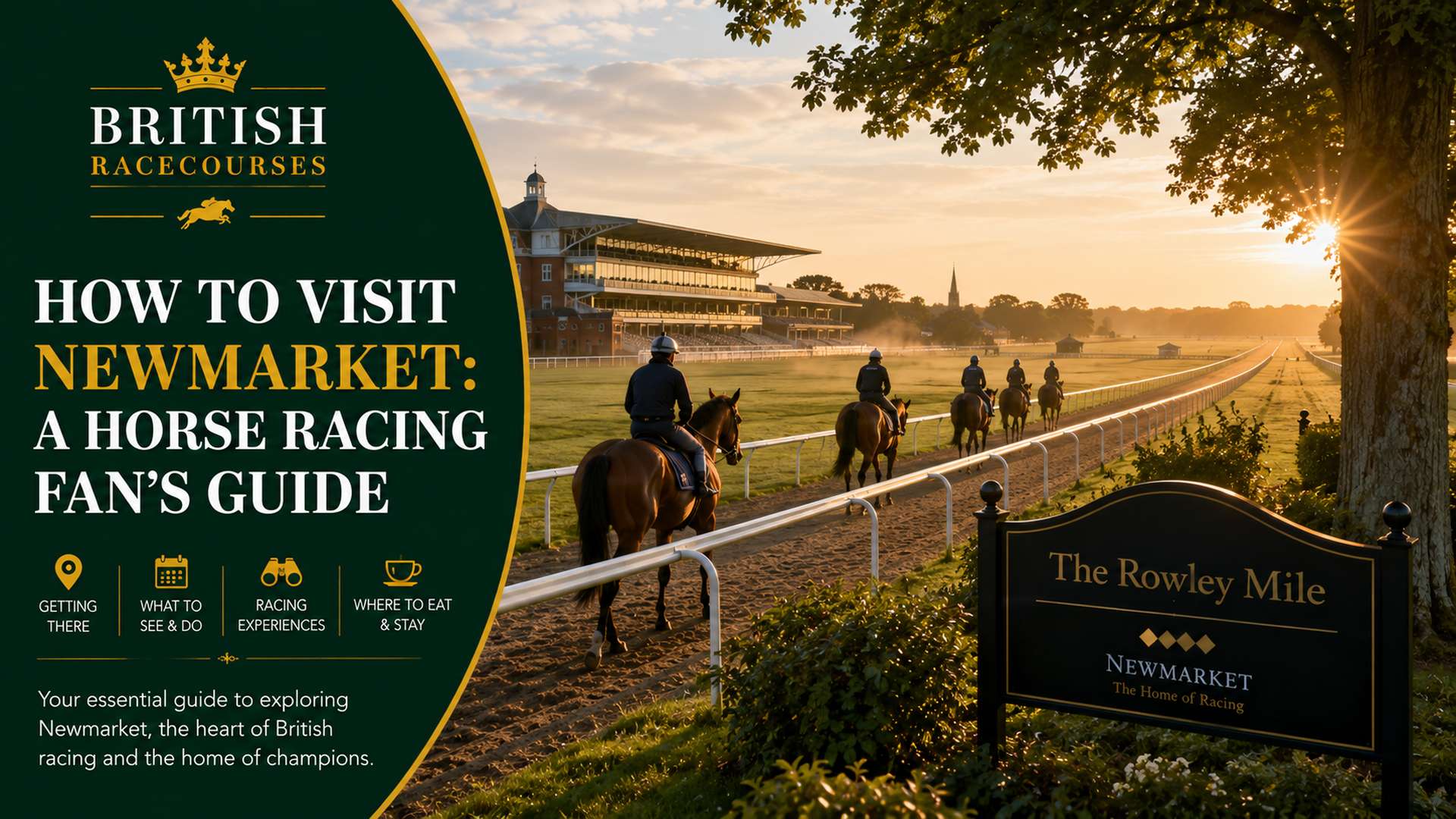
For racing enthusiasts, there are few destinations more important than Newmarket.
Often referred to as the home of British racing, this historic Suffolk town sits at the heart of the thoroughbred industry. It is home to some of the country’s leading trainers, thousands of racehorses, world-famous training grounds and two racecourses that host some of the most prestigious Flat racing fixtures in Britain.
Unlike many racecourses that come alive only on race days, Newmarket lives and breathes horse racing every day of the year.
Whether you’re planning a racing weekend, attending a major fixture or simply want to experience the sport’s rich heritage, Newmarket offers an experience unlike anywhere else in Britain.
For racing fans, it should be near the top of any bucket list.
Why Is Newmarket Known as the Home of British Racing?
Newmarket’s connection to horse racing stretches back more than 350 years.
The town became closely associated with the sport during the reign of King Charles II, who regularly raced horses in the area and helped establish Newmarket as a centre for racing and breeding.
Today, Newmarket remains the headquarters of British Flat racing and is home to:
- More than 3,000 racehorses
- Numerous training yards
- The National Horseracing Museum
- Tattersalls bloodstock sales
- The British Horseracing Authority’s Flat racing operations
The concentration of racing expertise found in Newmarket is unmatched anywhere else in Britain.
Learn more about the racecourse here:
Understanding Newmarket’s Two Racecourses
Many first-time visitors are surprised to learn that Newmarket actually has two racecourses.
Rowley Mile Racecourse
The Rowley Mile is Newmarket’s most famous track.
It hosts several major fixtures, including:
- The 2,000 Guineas
- The 1,000 Guineas
- Future Champions Festival
The course features one of the most famous finishing stretches in British racing and regularly stages some of the sport’s most important races.
July Course
Known affectionately as the Summer Course, the July Course provides a more intimate racing experience.
Popular fixtures include:
- July Festival
- Falmouth Stakes
- July Cup
Many racing fans consider the July Course one of Britain’s most attractive racecourses.
Both courses are covered within our Newmarket racecourse guide:
Watching the Morning Gallops
One of the most memorable experiences for visitors is watching racehorses train on Newmarket’s famous gallops.
Unlike race days, these sessions provide an opportunity to see the daily work that goes into preparing racehorses for competition.
Thousands of horses exercise across Newmarket’s extensive training grounds every morning.
Watching horses canter and gallop through the early morning mist is often considered one of the most authentic racing experiences available anywhere in the world.
Those interested in the training process may also enjoy:
How Racehorses Are Trained
The organisation Discover Newmarket provides information about visiting the training grounds and arranging guided experiences:
Visit the National Horseracing Museum
No trip to Newmarket is complete without visiting the National Horseracing Museum.
The museum provides an excellent introduction to the history and development of the sport.
Visitors can explore:
- Racing history
- Famous horses
- Legendary jockeys
- Historic trophies
- Interactive exhibits
The museum also incorporates a working yard and retired racehorse programme.
For newcomers to the sport, it offers valuable context that helps bring racing to life.
Museum information:
Experience Tattersalls
Tattersalls is the world’s oldest bloodstock auctioneer and one of the most important institutions in horse racing.
Many of the world’s best racehorses have passed through its sales rings.
Visitors interested in ownership, breeding and the business side of racing often find a visit to Tattersalls fascinating.
It provides a unique insight into how racehorses are bought and sold.
Learn more about bloodstock sales here:
You may also enjoy:
- How Much Does It Cost to Own a Racehorse?
- Racehorse Syndicates Explained
- Can You Make Money Owning a Racehorse?
Explore Racing’s Famous Training Yards
Newmarket is home to many of Britain’s most successful trainers.
Some of the sport’s biggest names have trained horses here, including:
- Sir Michael Stoute
- John Gosden
- Charlie Appleby
- William Haggas
- Roger Varian
While many training yards are private, guided tours are occasionally available through organised racing experiences.
Visitors often find these tours provide a fascinating perspective on life behind the scenes.
Learn more about trainers here:
Spend a Day at the Races
Of course, attending a race meeting remains one of the highlights of any visit.
Newmarket’s racing calendar includes some of the most important Flat races in Britain.
Popular meetings include:
The Guineas Festival
The 2,000 Guineas and 1,000 Guineas are among the most prestigious races in the Flat racing calendar.
July Festival
One of the highlights of the British summer racing season.
Future Champions Festival
A showcase for some of the most exciting young horses in training.
Those new to racing may find these articles useful before attending:
- How to Read a Racecard
- Horse Racing Terms Explained
- What Does the Going Mean in Horse Racing?
- Flat Racing vs Jump Racing
Discover Newmarket’s Racing Heritage
One of the most enjoyable aspects of visiting Newmarket is simply walking around the town.
Horse racing is everywhere.
Visitors will encounter:
- Racing-themed public art
- Historic buildings
- Training facilities
- Equine statues
- Racing landmarks
Unlike many racecourse towns, Newmarket’s entire identity revolves around horse racing.
The result is an atmosphere unlike anywhere else in Britain.
Where to Stay
Newmarket offers accommodation options for a wide range of budgets.
Visitors can choose from:
- Boutique hotels
- Traditional inns
- Guest houses
- Luxury accommodation
Many racing fans choose to stay overnight in order to experience both the morning gallops and an afternoon race meeting.
If you’re planning a longer trip, you may also enjoy:
The Best Racecourses for a Weekend Break in Britain
How to Get to Newmarket
Newmarket is relatively easy to reach from many parts of Britain.
By Train
Services connect Newmarket with:
- Cambridge
- Ely
- Ipswich
- London connections
National Rail journey planning:
By Car
Newmarket is accessible via major road networks throughout East Anglia and the South East.
Parking is generally available at race meetings, although major fixtures can be particularly busy.
You may also enjoy:
The Best British Racecourses You Can Reach by Train
What Else Is Nearby?
Visitors often combine Newmarket with other attractions in the region.
Popular options include:
- Cambridge
- Bury St Edmunds
- Ely Cathedral
- The Suffolk countryside
This makes Newmarket particularly suitable for a long weekend rather than simply a single-day visit.
Why Every Racing Fan Should Visit Newmarket
Every racecourse has its own character.
Ascot delivers prestige.
Cheltenham offers atmosphere.
Aintree provides history.
Newmarket is different.
It provides a complete immersion into the sport.
No other location allows visitors to experience:
- Racecourses
- Training grounds
- Bloodstock sales
- Museums
- Racing heritage
all within a single destination.
For anyone who loves horse racing, Newmarket remains one of the most important places in the world to visit.
Sample Newmarket Racing Weekend
| Day | Activity |
|---|---|
| Friday | Arrive and explore town |
| Saturday Morning | Watch the gallops |
| Saturday Afternoon | Attend racing |
| Saturday Evening | Explore local restaurants |
| Sunday Morning | Visit National Horseracing Museum |
| Sunday Afternoon | Visit Tattersalls or local attractions |
This provides a balanced introduction to everything Newmarket has to offer.
Frequently Asked Questions
Why is Newmarket called the home of British racing?
Newmarket has been at the centre of British horse racing for centuries and remains home to major trainers, racecourses and racing institutions.
Can you watch racehorses training in Newmarket?
Yes. Visitors can watch horses exercising on the famous training grounds, particularly during the morning.
How many racecourses are there in Newmarket?
There are two racecourses: the Rowley Mile and the July Course.
Is Newmarket worth visiting if there is no racing?
Absolutely. The gallops, museum, training yards and racing heritage make it worthwhile throughout the year.
What is the best time to visit Newmarket?
Many visitors choose the Guineas Festival or July Festival, although Newmarket offers racing and equine attractions throughout the season.
Continue Exploring British Racing
You may also enjoy:
- How Racehorses Are Trained
- A Day in the Life of a Jockey
- Racehorse Syndicates Explained
- How Much Does It Cost to Own a Racehorse?
- The Best Racecourses for a Weekend Break in Britain
- The Best British Racecourses You Can Reach by Train
- How to Plan the Perfect Day at the Races
Together, these articles provide a deeper understanding of the people, places and traditions that make British horse racing unique.
Final Thoughts
Newmarket occupies a unique position within British racing.
It is more than a racecourse and more than a racing town.
It is the beating heart of the sport.
From world-class racing and historic training grounds to museums, bloodstock sales and centuries of racing heritage, Newmarket offers an experience that cannot be replicated anywhere else.
Whether you’re attending your first race meeting or have followed the sport for decades, a visit to Newmarket provides an unforgettable insight into the world of British horse racing.