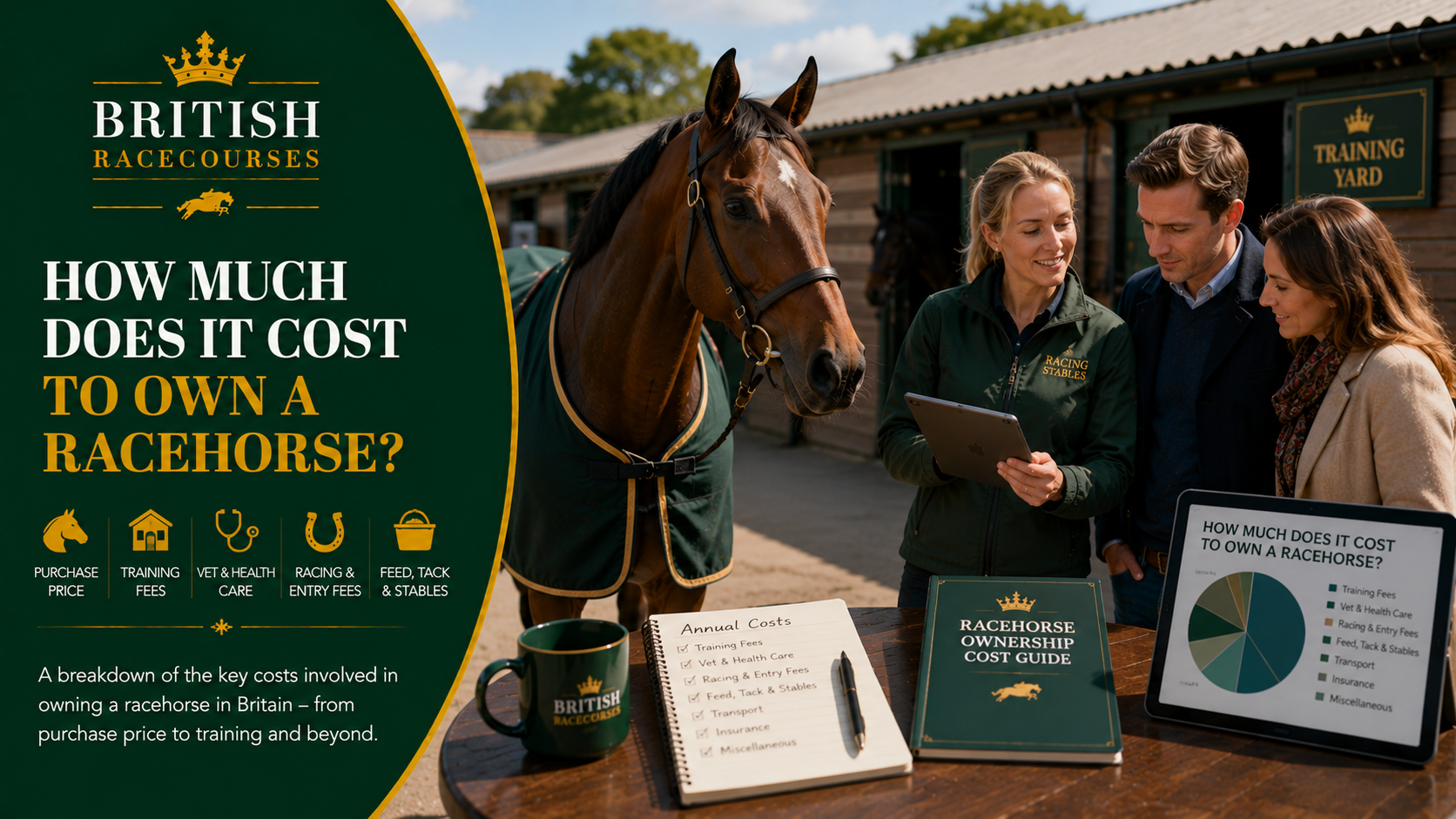
For many racing fans, owning a racehorse represents the ultimate connection to the sport.
Watching a horse you’ve invested in thunder down the home straight is an experience few sporting pursuits can match. From visiting training yards to attending race meetings and celebrating winners, racehorse ownership offers a unique glimpse behind the scenes of British racing.
One of the most common questions asked by racing enthusiasts is simple:
How much does it actually cost to own a racehorse?
The answer depends on several factors, including the type of horse you buy, where it is trained and whether you own it outright or share ownership through a syndicate.
While racehorse ownership can be expensive, there are more options available today than ever before, making involvement in the sport accessible to a much wider audience.
Buying a Racehorse
The first expense is purchasing the horse itself.
Costs vary enormously depending on factors such as:
- Age
- Breeding
- Previous race performances
- Trainer recommendations
- Sales demand
Some horses can be purchased for a few thousand pounds.
Others sell for hundreds of thousands, or even millions, of pounds at major bloodstock sales.
Buying an Unraced Horse
Many owners choose to purchase young horses before they begin racing.
These horses often offer the excitement of developing a future star, but they also carry greater uncertainty.
Young horses may cost anywhere from:
- £5,000
- £20,000
- £50,000+
- Six-figure sums for elite prospects
There are no guarantees in racing, and expensive horses do not always become successful racehorses.
Buying a Horse Already in Training
Another option is purchasing a horse that has already raced.
This can provide a clearer picture of ability and potential.
Owners can review:
- Form figures
- Ratings
- Ground preferences
- Distance suitability
If you’re unfamiliar with analysing race performance, our article on Horse Racing Form provides a useful starting point:
Training Fees
For most owners, training fees represent the largest ongoing expense.
Once a horse enters a professional yard, daily costs begin to accumulate.
These fees cover:
- Accommodation
- Feeding
- Exercise
- Staff wages
- Routine care
Typical training fees range from approximately:
| Type of Training | Monthly Cost |
|---|---|
| Flat Racing | £2,000 – £3,500+ |
| National Hunt Racing | £2,000 – £4,000+ |
Exact figures vary considerably between trainers.
Britain’s leading trainers often charge higher rates because of their facilities, staff and track record.
You can learn more about some of the country’s most successful trainers here:
Veterinary Costs
Like any elite athlete, racehorses require regular veterinary care.
Common expenses include:
- Vaccinations
- Routine health checks
- Physiotherapy
- Dental work
- Injury treatment
Most horses remain healthy throughout their careers, but veterinary costs can occasionally rise unexpectedly if injuries occur.
Owners should always budget for these additional expenses.
Transport Costs
Racehorses travel frequently throughout the season.
Whether competing at Ascot, York, Cheltenham or Aintree, horses must be transported safely between training yards and racecourses.
Transport expenses may include:
- Horseboxes
- Professional transport services
- Overnight accommodation where required
Owners rarely arrange this themselves, as trainers typically manage travel logistics.
Browse Britain’s racecourses here:
Entry Fees and Race Expenses
Every race carries associated costs.
Owners may need to contribute towards:
- Entry fees
- Declaration fees
- Jockey fees
- Travel expenses
The exact amount depends on the race and its status.
Higher-profile races often involve larger entry costs.
However, these events also offer greater prize money opportunities.
Jockey Fees
Jockeys receive payment for riding in races regardless of the result.
Winning bonuses and prize-money percentages may also apply.
The jockey’s fee forms part of the wider cost of running a horse.
Those interested in the life of professional riders may enjoy reading:
A Day in the Life of a Jockey
You can also learn more about leading jockeys here:
Can Owners Win Prize Money?
Yes.
Successful horses can earn prize money for their owners.
The amount varies dramatically depending on:
- Race quality
- Racecourse
- Number of runners
- Finishing position
Major races can offer six-figure prize funds.
However, most owners view prize money as a bonus rather than a guaranteed return on investment.
The reality is that only a small percentage of horses generate enough prize money to cover all ownership costs.
Flat Racing vs National Hunt Ownership Costs
The type of horse you own can influence overall costs.
Flat Horses
Flat horses often begin racing at a younger age.
Many compete from the age of two and have relatively short racing careers.
Learn more about Flat racing here:
Flat Racing vs Jump Racing: What’s the Difference?
National Hunt Horses
National Hunt horses generally race later and often remain in training for longer periods.
This can mean higher long-term costs, but it also allows owners to enjoy multiple seasons of racing.
Those wanting to learn more about jump racing should visit:
The Rise of Racing Syndicates
Not everyone wants to own an entire horse.
Fortunately, there is another option.
Syndicates allow multiple people to share ownership.
Instead of paying all costs yourself, expenses are divided among members.
Benefits include:
- Lower costs
- Shared risk
- Access to race-day experiences
- Visits to training yards
- Ownership involvement
For many people, syndicates provide the most affordable route into racehorse ownership.
A dedicated article on racehorse syndicates is a natural next step for anyone considering ownership.
What Do Owners Receive?
Ownership is about much more than financial returns.
Benefits often include:
- Owners’ badges on race days
- Access to paddocks and parade rings
- Stable visits
- Meeting trainers and jockeys
- Behind-the-scenes access
For many racing enthusiasts, these experiences are the main attraction.
Watching your horse compete at venues such as Ascot, York or Cheltenham creates memories that are difficult to replicate elsewhere in sport.
You may also enjoy exploring:
Top Ten Racecourses in Britain
and
Most Scenic and Historic Racecourses in the UK
Is Racehorse Ownership Worth It?
For most owners, racehorse ownership should be viewed as a hobby rather than an investment.
While prize money can offset some expenses, the primary rewards are often emotional rather than financial.
Owners enjoy:
- Following a horse’s progress
- Visiting training yards
- Attending race meetings
- Celebrating victories
- Meeting like-minded racing fans
Many owners remain involved in the sport for decades because of the unique experiences ownership provides.
Common Mistakes New Owners Make
Underestimating Ongoing Costs
The purchase price is only the beginning.
Training fees and running costs often exceed the original purchase cost over time.
Expecting Immediate Success
Even talented horses require patience.
Development takes time.
Choosing Price Over Trainer
The cheapest option is not always the best option.
Trainer quality and communication often play a major role in the ownership experience.
Frequently Asked Questions
What is the cheapest way to own a racehorse?
Joining a syndicate is usually the most affordable option.
It allows costs to be shared between multiple members.
Can you make money owning a racehorse?
It is possible, but uncommon.
Most owners participate because they enjoy the experience rather than expecting significant profits.
How much do racehorse trainers charge?
Training fees vary considerably but often range from several thousand pounds per month.
How long does a racehorse race for?
Some horses race for only a few seasons, while others, particularly National Hunt horses, can remain in training for many years.
Final Thoughts
Racehorse ownership is one of the most exciting ways to become involved in British racing.
While costs can be substantial, there are now options available for almost every budget, from full ownership through to syndicates and partnerships.
For those with a passion for horse racing, the opportunity to follow a horse from the training yard to the racecourse offers an experience unlike any other.
Whether you’re considering ownership for the first time or simply curious about how the system works, understanding the costs involved is an important first step towards becoming part of the sport.