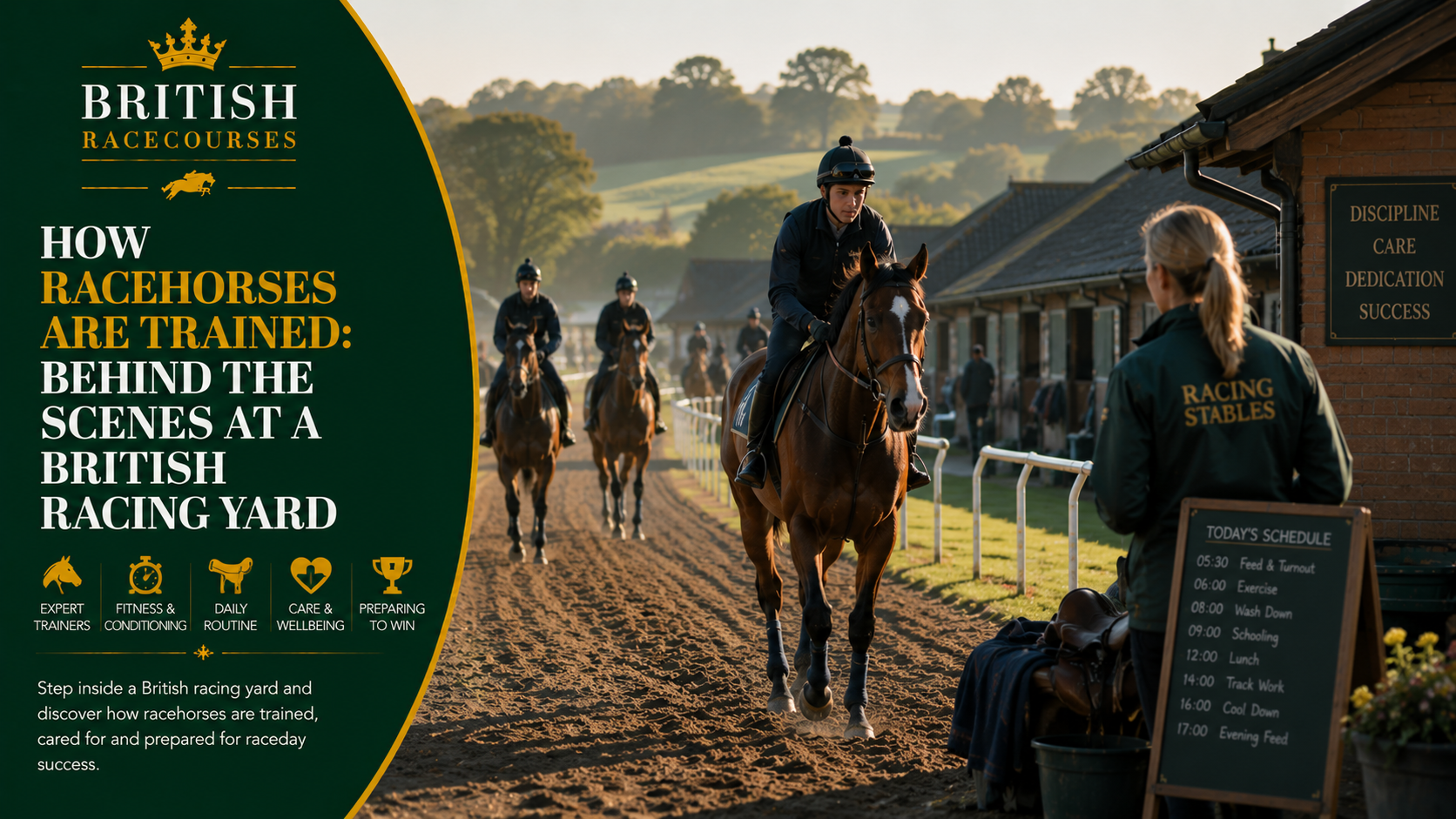
When racegoers watch horses competing at racecourses across Britain, they are seeing the final stage of a process that often begins months or even years earlier.
Every horse that steps onto a racecourse has undergone extensive preparation. Behind the scenes, trainers, jockeys, stable staff and veterinarians work together to develop the fitness, strength and confidence needed to compete.
Training a racehorse is a highly specialised profession that combines experience, science and horsemanship.
While race day attracts the headlines, much of the real work takes place long before the starting stalls open or the tapes rise.
Understanding how racehorses are trained provides a fascinating insight into the dedication that underpins British horse racing.
The Role of a Racehorse Trainer
A trainer is responsible for preparing horses to perform at their best.
This involves far more than simply improving fitness.
A trainer must manage:
- Exercise programmes
- Feeding routines
- Veterinary care
- Race planning
- Travel arrangements
- Staff management
- Horse welfare
Every horse is different.
Some thrive on intensive training schedules, while others require a more patient approach.
The best trainers develop programmes tailored to each individual horse.
You can learn more about Britain’s leading trainers here:
Where Are Racehorses Trained?
Britain has several major racing centres where many of the country’s top trainers are based.
Newmarket
Often referred to as the home of British racing, Newmarket features extensive gallops and training facilities.
Many of the sport’s most successful trainers operate from the town.
Learn more about Newmarket here:
Lambourn
Located in Berkshire, Lambourn is another important training centre and home to numerous successful yards.
Middleham
Middleham in North Yorkshire has a long association with racing and remains one of Britain’s leading training hubs.
These locations provide access to specialist facilities that help trainers prepare horses for competition.
Starting a Racehorse’s Education
Training often begins long before a horse enters a race.
Young horses spend considerable time learning basic skills.
This early education includes:
- Wearing tack
- Walking and trotting under saddle
- Following instructions
- Becoming accustomed to exercise routines
- Travelling
Patience is particularly important during this stage.
The aim is to build confidence and develop good habits that will benefit the horse throughout its career.
Building Fitness
Fitness forms the foundation of every training programme.
Racehorses require a combination of:
- Aerobic fitness
- Strength
- Stamina
- Speed
- Balance
Different methods are used to develop these qualities.
Roadwork
Many horses begin their day with steady exercise on roads and tracks.
This helps build fitness gradually while strengthening muscles and tendons.
Cantering
Cantering forms a major part of most training programmes.
These controlled exercise sessions improve cardiovascular fitness without placing excessive strain on the horse.
Gallops
Gallops are where racehorses begin to work at higher speeds.
Training gallops allow trainers to assess fitness levels and monitor progress.
Many famous training centres feature purpose-built gallops specifically designed for racehorses.
The Importance of Routine
Racehorses are creatures of habit.
Most thrive when following a consistent daily routine.
A typical day may include:
- Morning exercise
- Grooming
- Feeding
- Rest periods
- Veterinary checks if required
- Evening care
Consistency helps horses remain relaxed and focused.
It also allows trainers to spot changes in behaviour that may indicate health or fitness issues.
Feeding and Nutrition
Nutrition plays a vital role in training.
Racehorses require carefully balanced diets that provide enough energy for exercise while maintaining overall health.
Feeding programmes often include:
- High-quality forage
- Oats and grains
- Specialist racing feeds
- Supplements where appropriate
Every horse has different nutritional requirements depending on its workload, age and physical condition.
Working With Jockeys
Jockeys play an important role during training.
Many riders spend their mornings riding work at training yards before heading to race meetings later in the day.
Exercise sessions allow jockeys to:
- Assess fitness levels
- Learn about individual horses
- Provide feedback to trainers
- Practise race tactics
Our article A Day in the Life of a Jockey explains how these morning rides fit into a jockey’s daily routine.
You can also learn more about leading riders here:
Preparing for Different Types of Racing
Training methods vary depending on the type of racing involved.
Flat Racing
Flat horses generally focus on:
- Speed
- Acceleration
- Tactical positioning
Training programmes often emphasise pace and sharpness.
Many Flat horses begin racing as two-year-olds.
National Hunt Racing
National Hunt horses require additional preparation.
Alongside fitness work, they must learn to jump safely and efficiently.
Training often focuses on:
- Stamina
- Jumping technique
- Endurance
- Balance
You can read more about jump racing here:
and in our article:
Flat Racing vs Jump Racing: What’s the Difference?
Schooling Over Obstacles
National Hunt horses regularly practise jumping during training.
This process is known as schooling.
Schooling helps horses:
- Develop confidence
- Improve technique
- Learn jumping rhythm
- Gain experience
Young jumpers may spend many months schooling before making their racecourse debut.
Monitoring Progress
Modern trainers have access to a wide range of tools and technologies.
These may include:
- Heart rate monitors
- GPS tracking
- Video analysis
- Veterinary diagnostics
Combined with traditional horsemanship, these tools help trainers assess whether a horse is improving.
Monitoring progress carefully allows training plans to be adjusted when necessary.
Planning Race Targets
Choosing the right race is almost as important as preparing the horse itself.
Trainers consider numerous factors, including:
- Distance
- Ground conditions
- Official ratings
- Course suitability
- Strength of opposition
The going is particularly important.
A horse that thrives on soft ground may struggle on a fast summer surface.
Those unfamiliar with the topic should read:
What Does the Going Mean in Horse Racing?
and:
The Importance of Recovery
Training does not simply involve exercise.
Recovery is equally important.
Racehorses need time to:
- Rest
- Rebuild muscle
- Recover from hard work
- Remain mentally fresh
Successful trainers carefully balance training intensity with adequate recovery periods.
Overtraining can be just as harmful as undertraining.
Race Day Preparation
As race day approaches, trainers often reduce workloads slightly.
The aim is to ensure the horse arrives at the racecourse in peak condition.
Final preparations may include:
- Veterinary checks
- Travel arrangements
- Tactical discussions
- Equipment selection
Racecards frequently include details about trainers, jockeys and equipment choices.
If you’re still learning how racecards work, our article on How to Read a Racecard explains the key information to look for.
Famous British Trainers
British racing has produced many outstanding trainers.
Names such as:
- Sir Michael Stoute
- Nicky Henderson
- Paul Nicholls
- John Gosden
- Willie Mullins
- Aidan O’Brien
have become synonymous with success at the highest level.
Many have spent decades refining their training methods and developing championship-winning horses.
You can read more about leading yards and trainers here:
Frequently Asked Questions
How long does it take to train a racehorse?
Training begins long before a horse makes its racecourse debut. Most horses spend months developing fitness, confidence and racing knowledge before competing.
Do racehorses train every day?
Most racehorses exercise regularly, although workloads vary depending on age, fitness and race schedules.
How do trainers decide where a horse runs?
Trainers consider distance, ground conditions, ratings, course suitability and the strength of opposition.
What is schooling?
Schooling refers to practising over hurdles or fences during training.
Do jockeys help train racehorses?
Yes. Many jockeys ride work at training yards and provide valuable feedback to trainers.
Final Thoughts
Successful racehorses are not created overnight.
Behind every winner lies months of planning, preparation and hard work from trainers, jockeys and stable staff.
While race day provides the excitement, the foundations of success are built on training grounds across Britain every morning.
Understanding how racehorses are prepared offers a greater appreciation of the skill, patience and dedication involved in producing the athletes that entertain racegoers throughout the year.