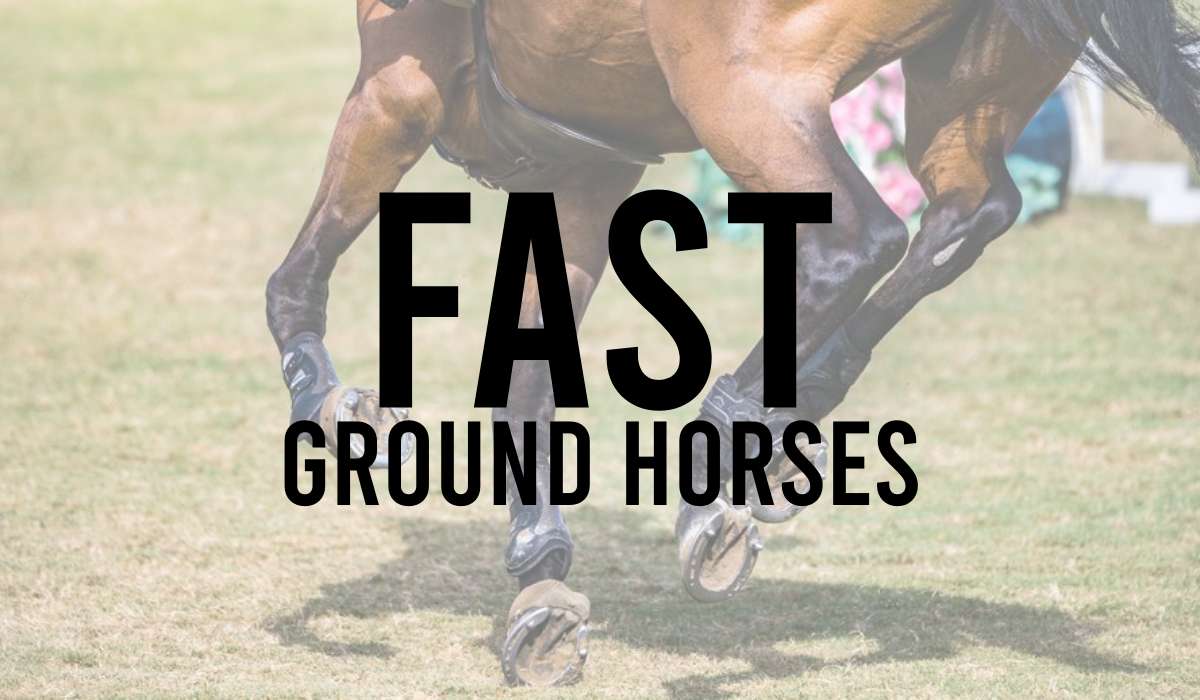
When studying the horse racing form book, the ground conditions are a key part.
Some horses don’t act on certain types of ground, and researching the sire’s statistical data is important.
If a horse prefers soft ground, it will not run to its full potential on firm ground, as it doesn’t suit its running action.
The shrewd punters are looking for which horses will be helped or hindered by the fast ground. You can find significant value in betting odds markets when assessing which horses will appreciate the going.
Observing their breeding is a good way to gauge whether a horse will act on firm or fast ground.
If their sire had winning form on firm ground, there is a good chance that their progeny would also act on fast or firm surfaces.
Fast Ground Horses Running Today
When the ground conditions are quick or firm, shrewd bettors are hunting for fast ground specialists.
Some racehorses thrive when the underfoot conditions are hard ground.
Our best horse racing tipsters provide daily tips and, as part of their analysis, will research selections which will run well in the going conditions.
Check out the free horse racing daily tips that integrate to determine if the horses will cope with the ground:
Horse racing tipsters prefer the conditions to be dry and quick ground because they can search for firm ground horses running today.
In horse racing, ground conditions play a crucial role in a horse’s performance. One of the most significant factors to consider is “fast ground,” a term for a firm, dry track surface. Horses that thrive on this type of ground are known as “fast ground horses.”
What is “Fast Ground” in Horse Racing?
“Fast ground” is a term used to describe the firmest racing surface condition on a turf track. In the UK, racecourses are classified by going, which ranges from “heavy” to “firm.” When a track is labelled “fast,” it means the turf is dry, hard, and has little to no moisture. Fast ground is most commonly seen during dry weather or on well-maintained tracks where watering is controlled.
- Ground Conditions Explained: The going, or track condition, ranges from “heavy” (very soft and waterlogged) to “firm” (hard and fast). Fast ground is the firmest of these conditions.
- Weather Influence: Prolonged periods of dry weather or effective track management practices typically lead to fast ground.
- Impact on Racing: On fast ground, races tend to be quicker, favouring horses that are more comfortable with speed and have a smooth action.
What are Fast Ground Horses?
Fast ground horses are those that perform exceptionally well on firm, dry ground. These horses usually have a quick, efficient stride, allowing them to cover ground swiftly without exerting excessive energy. Their action tends to be more “daisy-cutting,” meaning they do not lift their legs high but rather skim over the surface, reducing the impact and fatigue caused by a firmer track.
- Physical Attributes: Fast ground horses often have a lighter frame and a smooth, low-running action.
- Training and Conditioning: Trainers focus on conditioning these horses to handle firm surfaces, sometimes specifically targeting races on fast ground.
- Historical Performance: A horse’s previous races on fast ground are often a key indicator for punters and trainers when assessing potential performance.
Why Do Ground Conditions Matter in Horse Racing?
Ground conditions, or the “going,” are vital in horse racing because they significantly influence race outcomes. Different horses have varying preferences for track conditions, and understanding these preferences can be the difference between winning and losing.
- Performance Impact: Horses that prefer fast ground tend to perform poorly on softer surfaces and vice versa.
- Race Strategy: Jockeys and trainers adjust their strategies based on the going. For fast ground, they might aim for a front-running strategy, knowing that horses can maintain speed without getting bogged down.
- Betting Considerations: Understanding a horse’s preference for fast ground can give punters an edge when placing bets. Horses with proven records on firm ground are often favoured when conditions are right.
How to Identify Fast Ground Horses
Identifying horses that excel on fast ground involves analysing past performances and paying attention to specific factors:
- Form on Fast Ground: Reviewing a horse’s form on fast ground or “good to firm” conditions is crucial. Horses that consistently perform well under these conditions are likely to be fast ground specialists.
- Breeding: Some bloodlines are known for producing horses that perform well on firmer surfaces. Knowing the breeding can offer insights into a horse’s potential on fast ground.
- Track Workouts: Observing workout times on fast ground can indicate how well a horse handles firm conditions.
- Trainer and Jockey Insights: Trainers and jockeys often have insights into their horses’ preferred going. Their comments before races can provide valuable clues.
Sire Stats for Quick and Firm Ground
The following table lists the top sires by wins-to-runs strike-rate on firm or quick ground.
| Name | G/F | Firm | Fibresand | Polytrack |
|---|---|---|---|---|
| Wolfhound | 6% | 8% | 9% | 4% |
| Singspiel | 14% | 26% | 16% | 14% |
| Exceed and Excel | 12% | 24% | 20% | 18% |
| Street Cry | 13% | 11% | 27% | 9% |
| Lomitas | 14% | 28% | 0% | 10% |
The fast ground sires have an excellent strike-rate on firmer ground conditions.
Best Fast Ground Horses
Here are the best fast-ground horses to breed from:
- Cape Cross
- Exceed And Excel
- Fastnet Rock
- Henrythenavigator
- New Approach
- Oasis Dream
- Ouija Board
- Paco Boy
- Presenting
- Teofilo
FAQs About Fast Ground Horses
Q1: What is meant by ‘fast ground’ in horse racing?
A1: ‘Fast ground’ refers to a racecourse surface that is dry and firm, allowing horses to run at faster speeds due to minimal resistance.
Q2: What type of horse is best suited for fast ground?
A2: Horses with a light frame, quick action, and a history of performing well on firm surfaces are best suited for fast ground.
Q3: How do weather conditions affect the ground in horse racing?
A3: Weather conditions, particularly prolonged dry spells, can lead to fast ground. Conversely, heavy rainfall creates softer ground conditions, such as “soft” or “heavy.”
Q4: How can I identify a fast ground horse?
A4: By analysing a horse’s past performance on fast or good to firm ground, looking into breeding, observing track workouts, and listening to insights from trainers and jockeys.
Q5: Does the going affect betting strategies in horse racing?
A5: Yes, understanding the going and a horse’s preference for certain conditions can provide a significant advantage in betting, helping to identify likely winners under specific ground conditions.
Summary
Understanding the concept of “fast ground horses” is essential for both enthusiasts and bettors. Horses that excel on fast ground have specific attributes that allow them to perform optimally on firm, dry surfaces. Ground conditions greatly influence racing strategies and outcomes, making it vital for anyone interested in horse racing to pay close attention to the going and a horse’s historical performance on different surfaces. By leveraging this knowledge, punters can make more informed betting decisions, and trainers can better prepare their horses for races on fast ground.
Savvy sports bettors always hunt for horses that like firm ground after a drought.
Quick ground lovers perform well in the firm and even better in hard ground conditions.
If there is a bone-dry weather forecast, punters should look at all the fast ground horses running today or tomorrow.
Popular Questions
What is fast ground in horse racing?
The fast ground in horse racing is quick and dry with minimal moisture.
Horses can move quicker and post significantly faster times in firm ground conditions.