When racegoers watch a horse thunder past the winning post, most of the attention naturally falls on the horse itself.
Yet behind every successful racehorse stands a jockey whose preparation, discipline and skill often make the difference between victory and defeat.
Being a jockey is one of the most demanding professions in sport. Long hours, strict weight management, constant travel and the ever-present risk of injury are all part of everyday life.
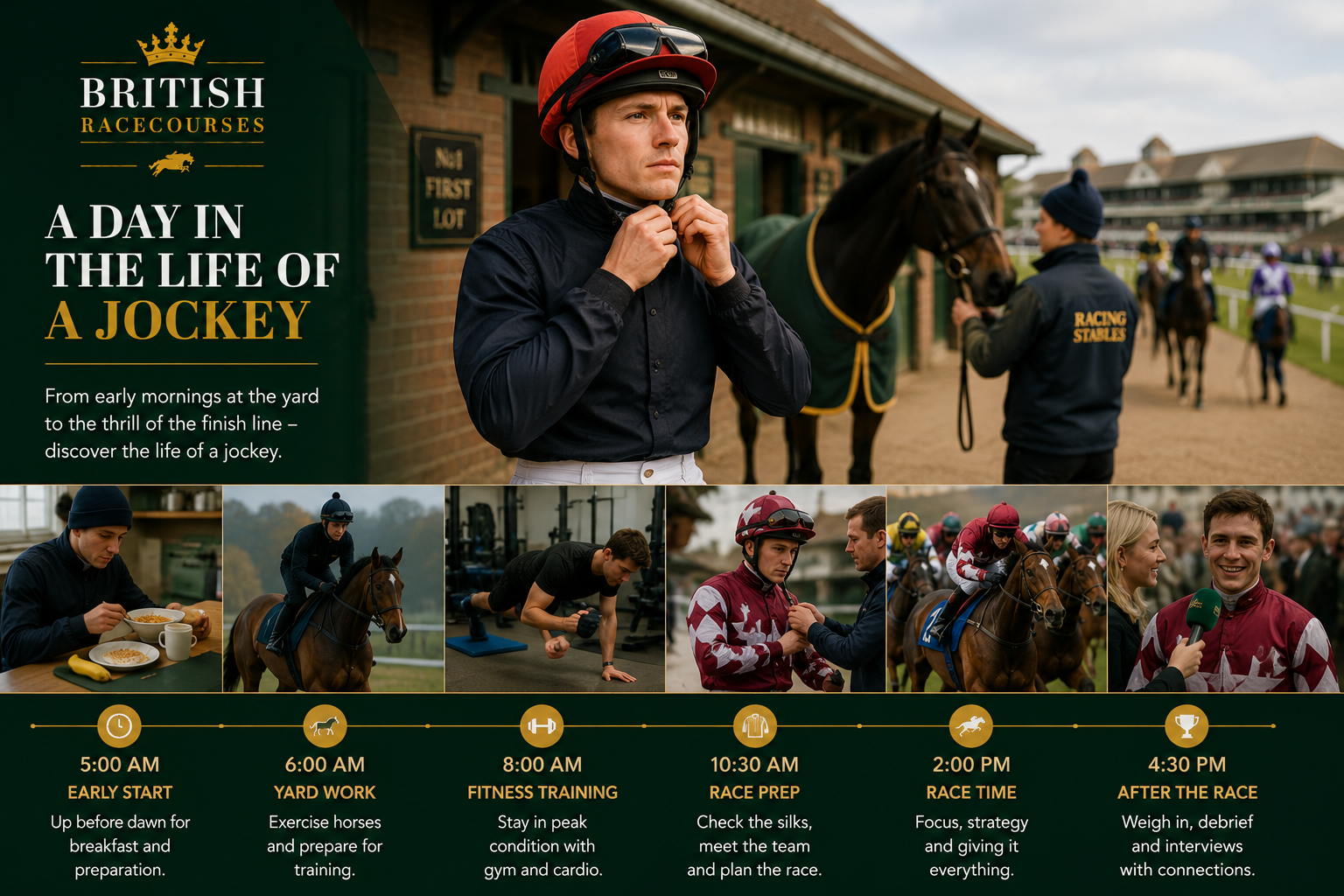
While many people see only a few minutes of action on the racecourse, the reality is that a jockey’s working day often begins before sunrise and finishes long after the final race has been run.
Understanding what jockeys do behind the scenes offers a fascinating insight into one of the most important roles in horse racing.
What Does a Jockey Do?
A jockey is responsible for riding horses in races.
That may sound straightforward, but the job involves far more than simply sitting in the saddle.
Professional jockeys must:
- Ride work at training yards
- Maintain strict fitness levels
- Manage their weight
- Study racecards
- Build relationships with trainers
- Travel extensively
- Make tactical decisions during races
Success requires a unique combination of athletic ability, courage and dedication.
Those interested in Britain’s leading riders can learn more on our Horse Racing Jockeys page:
An Early Start
For most jockeys, the working day begins well before most people are awake.
Many riders arrive at training yards between 5:00am and 6:00am.
The morning is usually spent riding work horses.
These exercise sessions allow trainers to assess fitness levels and prepare horses for upcoming races.
A jockey may ride several horses before breakfast.
Each horse requires a slightly different approach depending on its temperament, fitness and training programme.
Morning Work at the Training Yard
Riding work is one of the most important parts of a jockey’s job.
It allows riders to:
- Build relationships with horses
- Provide feedback to trainers
- Assess fitness levels
- Practise race tactics
The information gathered during morning exercise often helps trainers decide which races to target.
Britain is home to many world-class training centres, particularly in locations such as Newmarket, Lambourn and Middleham.
Those wanting to learn more about racing’s leading trainers can visit:
Weight Management
Perhaps the most challenging aspect of being a jockey is maintaining the required weight.
Most Flat jockeys ride at extremely low weights throughout their careers.
Even National Hunt jockeys, who generally ride at slightly higher weights, must carefully monitor their diet and fitness.
A typical jockey’s routine may include:
- Strict meal planning
- Regular exercise
- Gym sessions
- Cardiovascular training
- Frequent weigh-ins
Weight management is a year-round commitment rather than something addressed only on race days.
Many riders describe this aspect of the profession as one of the biggest challenges they face.
Travelling to the Racecourse
After completing morning work, many jockeys begin travelling to their race meetings.
Some days involve only a short journey.
Others may require several hours of travel.
It is not unusual for leading jockeys to compete at different racecourses on consecutive days, or even travel hundreds of miles within a single week.
Britain’s racing calendar includes fixtures at more than 50 racecourses.
You can browse the full directory here:
Preparing for the Races
Upon arriving at the racecourse, jockeys begin preparing for the day’s rides.
This preparation often includes:
- Studying racecards
- Reviewing tactics
- Speaking with trainers
- Inspecting the course
- Assessing the going
Ground conditions can have a major impact on race tactics.
Those unfamiliar with the subject may enjoy reading:
What Does the Going Mean in Horse Racing?
and:
Understanding the going helps jockeys make better decisions once the race begins.
The Weighing Room
The weighing room serves as the centre of operations for jockeys on race day.
Before every race, riders must weigh out to ensure they are carrying the correct amount of weight.
After the race, they return to weigh in.
Only once the weight has been confirmed does the result become official.
This process ensures fairness and integrity throughout the sport.
Race Tactics
One of the most overlooked aspects of jockeyship is tactical decision-making.
A race can be won or lost through positioning alone.
During a race, jockeys constantly assess:
- Pace
- Ground conditions
- Rivals’ positions
- Their horse’s energy levels
- Opportunities to make a move
These decisions often need to be made within seconds.
Many of the sport’s greatest riders are renowned not only for their balance and strength but also for their tactical awareness.
Flat Jockeys vs National Hunt Jockeys
While all jockeys perform similar roles, there are important differences between the two main racing codes.
Flat Jockeys
Flat jockeys generally ride shorter races without obstacles.
The emphasis is often on:
- Positioning
- Timing
- Acceleration
- Tactical judgement
Many Flat races are decided by fractions of a second.
National Hunt Jockeys
National Hunt jockeys compete over hurdles and fences.
In addition to race tactics, they must also manage:
- Jumping rhythm
- Stamina
- Pace over longer distances
National Hunt racing places different physical demands on both horse and rider.
You can read more here:
and in our article:
Flat Racing vs Jump Racing: What’s the Difference?
Working With Trainers
The relationship between trainer and jockey is crucial.
Many successful partnerships develop over years of collaboration.
A trainer provides information about:
- The horse’s fitness
- Preferred tactics
- Ground preferences
- Race objectives
The jockey then uses that information during the race itself.
Communication between trainer and jockey is often one of the key ingredients behind a successful racing operation.
The Risks of Being a Jockey
Horse racing remains one of the most physically demanding sports in Britain.
Falls and injuries are an unfortunate reality of the profession.
National Hunt riders face additional risks due to the obstacles involved, but all jockeys accept a degree of danger as part of the job.
Despite these risks, the vast majority remain passionate about the sport and continue riding because of their love of racing.
Life After the Final Race
Many people assume a jockey’s work ends once the final race has finished.
In reality, there is often plenty left to do.
The evening may include:
- Reviewing race performances
- Speaking with trainers
- Travelling home
- Preparing for the next day’s rides
For many jockeys, the process begins again before dawn the following morning.
Famous British Jockeys
British racing has produced many legendary riders.
Some of the most recognisable names in recent years include:
- Frankie Dettori
- Hollie Doyle
- Ryan Moore
- Oisin Murphy
- Brian Hughes
- Harry Cobden
Each has achieved success through years of dedication and hard work.
You can discover more about leading riders here:
How to Become a Jockey
Most professional jockeys begin riding from a young age.
Many progress through:
- Pony racing
- Amateur racing
- Racing schools
- Apprenticeships
Successful riders often spend years developing the skills required to compete professionally.
Only a small percentage ultimately reach the highest level of the sport.
Why Jockeys Matter
Even the best horse requires an effective rider.
A jockey’s ability to judge pace, position a horse correctly and respond to changing circumstances can significantly influence the outcome of a race.
This is one reason why racecards include jockey information alongside details about horses and trainers.
If you’re new to racing, our article on How to Read a Racecard explains how jockey information fits into race analysis.
Frequently Asked Questions
What time does a jockey’s day start?
Many jockeys begin work between 5:00am and 6:00am, particularly when riding work at training yards.
Do jockeys ride every day?
Many professional jockeys ride work most mornings and race regularly throughout the week.
Why do jockeys have to be so light?
Horse racing uses weight allowances to create competitive races. Maintaining a low riding weight allows jockeys to meet race requirements.
Is being a jockey dangerous?
Horse racing carries risks, particularly in National Hunt racing, but extensive safety measures help protect riders.
Final Thoughts
The life of a jockey involves far more than the few minutes spent racing in front of spectators.
Early mornings, strict discipline, constant travel and split-second decision-making are all part of the profession.
While racegoers often focus on the horses, the contribution of jockeys should never be underestimated.
Their skill, fitness and tactical awareness play a vital role in every race, helping to create the thrilling sporting spectacle that attracts millions of fans to racecourses across Britain each year.