

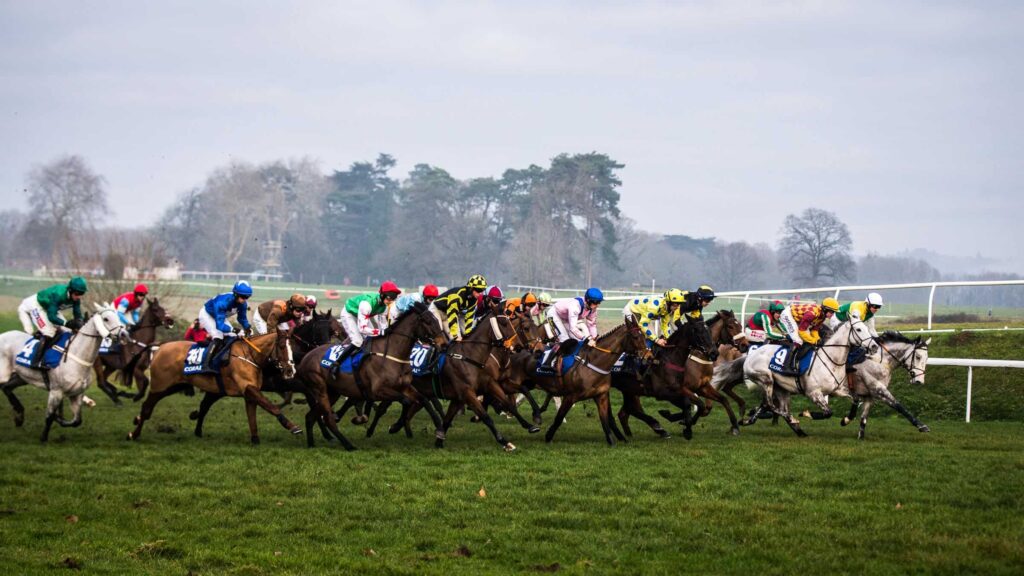
The Welsh Grand National is one of Britain’s leading staying handicap chases. Run at Chepstow during the Christmas racing period, it demands stamina, accurate jumping and the ability to maintain a strong gallop in winter conditions.
The 2026 Coral Welsh Grand National takes place on Bank Holiday Monday 28 December. The race has moved from its traditional 27 December date as part of a revised Christmas racing programme.
Chepstow has confirmed the raceday but has not yet published a final off-time for the Welsh Grand National itself.
Haiti Couleurs won the 2025 renewal for trainer Rebecca Curtis and jockey Sean Bowen. His victory added another name to a roll of honour that includes Burrough Hill Lad, Bonanza Boy, Earth Summit, Synchronised and Native River.
The Welsh Grand National is a major target in its own right. Its demanding conditions also make it an important form reference for the Cheltenham Gold Cup, the Aintree Grand National and other staying chases later in the season.
Welsh Grand National 2026: Race Overview
The Welsh Grand National is a long-distance handicap chase at Chepstow Racecourse. Horses carry different weights according to their official handicap ratings and the race conditions.
The race is run over approximately three miles and six furlongs. Its exact advertised distance and number of fences should be checked against the final 2026 race conditions.
| Race detail | Welsh Grand National 2026 |
|---|---|
| Date | Monday 28 December 2026 |
| Racecourse | Chepstow |
| Race name | Coral Welsh Grand National |
| Race type | Staying handicap chase |
| Distance | Approximately 3m 6f |
| Surface | Turf |
| Prize fund advertised by Chepstow | £170,000 |
| Scheduled off-time | To be confirmed |
| Previous winner | Haiti Couleurs (2025) |
The date change matters for anyone using an older fixture list. Chepstow originally advertised the race for 27 December before confirming the move to Bank Holiday Monday.
The 2026 race is part of a four-day Christmas racing programme that also includes the King George VI Chase at Kempton.
Why is the Welsh Grand National so demanding?
Chepstow is a left-handed, undulating course with a long home straight. The Welsh Grand National adds an extended distance and a large number of fences to those demands.
The ground is often soft or heavy in late December, although the actual going depends on the weather.
A horse must jump efficiently, settle into a sustainable rhythm and conserve enough energy for the closing stages.
Runners that travel comfortably for much of the race can still struggle once the field turns for home. Horses that race too freely or make repeated jumping mistakes may use energy they need later.
The race often rewards proven stamina, but simply having won over a long distance is not enough. A contender must also cope with Chepstow’s course, the prevailing ground and its allocated weight.
Welsh Grand National History
The Welsh Grand National was first run in 1895 at Ely Racecourse in Cardiff.
The race moved to Chepstow in 1949, when Fighting Line won the first renewal at its present home.
Coral began sponsoring the race in 1973, establishing one of the longest-running sponsorship associations in British jump racing.
The Welsh Grand National has developed into a major Christmas racing event, attracting leading staying chasers from Britain and Ireland.
Its history includes horses that subsequently won the Cheltenham Gold Cup and the Aintree Grand National.
Famous Welsh Grand National Winners
Corbiere: Welsh and Aintree Grand National winner
Corbiere won the Welsh Grand National in 1982 for trainer Jenny Pitman.
He subsequently won the 1983 Aintree Grand National, becoming the first horse trained by a woman to win the famous race.
His achievements helped establish the Welsh Grand National as an important target for horses capable of competing successfully over extreme distances.
The two Nationals present different tests. Chepstow places considerable emphasis on stamina in winter ground, while Aintree introduces the challenge of its distinctive fences and a longer race distance.
Corbiere demonstrated that a horse could possess the jumping ability and stamina required for both.
Burrough Hill Lad: From Chepstow to Cheltenham
Burrough Hill Lad won the Welsh Grand National in 1983 for Jenny Pitman.
He subsequently won the 1984 Cheltenham Gold Cup and became one of the outstanding staying chasers of his generation.
His Welsh Grand National success was an important stage in his development.
Burrough Hill Lad demonstrated that a horse capable of winning a demanding handicap at Chepstow could progress into championship company.
Bonanza Boy: Back-to-back victories
Bonanza Boy won the Welsh Grand National in 1988 and 1989 for trainer Martin Pipe and jockey Peter Scudamore.
He carried 10st 1lb for his first victory before returning under 11st 11lb the following year.
The second success was particularly significant because he had to overcome a much higher weight.
Bonanza Boy’s achievements demonstrated that a high-class staying chaser could remain competitive even after a substantial rise in its handicap rating.
Carvill’s Hill: An exceptional performance
Carvill’s Hill won the 1991 Welsh Grand National for Martin Pipe.
He carried 11st 12lb and produced an outstanding performance in demanding conditions.
Carvill’s Hill subsequently became a leading contender for the Cheltenham Gold Cup.
His Welsh Grand National victory remains an example of a horse whose ability allowed him to overcome a substantial handicap burden.
Earth Summit: Winner of three British Nationals
Earth Summit won the Welsh Grand National in 1997 for Nigel Twiston-Davies.
He subsequently won the 1998 Aintree Grand National, having already won the Scottish Grand National in 1994.
Earth Summit became the first horse to win all three of Britain’s major Grand Nationals.
His career demonstrated the importance of stamina, jumping and the ability to cope with demanding race conditions.
Silver Birch: Welsh National success before Aintree
Silver Birch won the 2004 Welsh Grand National when trained by Paul Nicholls.
He later joined Gordon Elliott and won the 2007 Aintree Grand National at 33/1.
His career provides another example of the Welsh Grand National producing a horse capable of winning at Aintree.
However, previous Chepstow success does not automatically establish suitability for Aintree. The fences, race distance, ground and likely pace all need separate consideration.
Dream Alliance: A remarkable Welsh victory
Dream Alliance won the 2009 Welsh Grand National at 20/1.
The horse was owned by a syndicate formed in a Welsh village, and his story later became the subject of the documentary Dark Horse and the feature film Dream Horse.
His victory remains one of the race’s most recognisable modern stories.
Dream Alliance also demonstrated that the Welsh Grand National can produce unexpected results when a horse is well suited to the race conditions.
Synchronised: Welsh National and Gold Cup winner
Synchronised won the Welsh Grand National in 2010 for Jonjo O’Neill and Tony McCoy.
He subsequently won the 2012 Cheltenham Gold Cup.
Synchronised was particularly effective when stamina became the decisive factor. His ability to sustain a long finishing effort made him well suited to demanding staying chases.
His progression from handicap company to the Cheltenham Gold Cup remains one of the strongest examples of the Welsh National’s significance.
Mountainous: Two victories for the Lee family
Mountainous won the Welsh Grand National in 2013 and 2015.
Richard Lee trained him for his first success, while his daughter Kerry Lee prepared him for his second victory.
Mountainous was particularly effective in demanding ground and demonstrated the value of proven stamina at Chepstow.
His two victories also showed that an experienced staying chaser can return to the race successfully when the conditions suit.
Native River: A future Cheltenham Gold Cup winner
Native River won the 2016 Welsh Grand National for Colin Tizzard and Richard Johnson.
He carried 11st 12lb to victory and subsequently won the 2018 Cheltenham Gold Cup.
Native River’s relentless galloping style and accurate jumping made him particularly effective in demanding staying races.
His Welsh National success was an important achievement in a career that established him as one of Britain’s leading staying chasers.
Potters Corner: A Welsh-trained winner
Potters Corner won the 2019 Welsh Grand National for trainer Christian Williams and jockey Jack Tudor.
The victory was particularly significant because he became the first Welsh-trained winner since 1973.
Potters Corner had already demonstrated his stamina by winning the Midlands Grand National earlier that year.
His success was a major achievement for Welsh racing and reinforced the importance of proven form over extended distances.
Welsh Grand National 2025: Haiti Couleurs Wins
Haiti Couleurs won the 2025 Coral Welsh Grand National for trainer Rebecca Curtis and jockey Sean Bowen.
The victory added another major staying chase to the horse’s record and gave the Welsh trainer a notable success at her home racecourse.
Haiti Couleurs had already demonstrated his stamina in major staying contests before returning to Chepstow.
His performance provides a useful reference for the 2026 race, particularly when assessing horses that have already shown they can maintain a strong gallop over extended distances.
The 2025 result should not be treated as a fixed template for the next renewal. Ground conditions, the pace of the race, handicap weights and the strength of the opposition can all change.
Key Welsh Grand National Trials
The Welsh Grand National attracts horses from several different routes. Previous form at Chepstow, major autumn handicaps and other staying chases can all provide useful evidence.
Welsh Grand National Trial at Chepstow
The Welsh Grand National Trial gives horses an opportunity to gain experience of Chepstow before the main race.
A strong performance can demonstrate that a runner handles the course and has the jumping ability required for a competitive handicap.
However, the trial is run over a shorter distance than the Welsh Grand National.
A horse that finishes strongly in the trial still needs to prove it can sustain its performance over the additional distance.
Le Beau Bai won both races in 2011, demonstrating that the trial can provide a useful form reference.
Coral Gold Cup at Newbury
The Coral Gold Cup at Newbury, formerly known as the Hennessy Gold Cup, is another important autumn staying handicap.
It attracts horses with the class and stamina required for major winter chases.
A strong performance at Newbury can be relevant to the Welsh Grand National, but the two courses present different challenges.
Chepstow’s undulations and the possibility of testing ground place additional demands on runners.
A horse’s handicap mark may also change following a strong Newbury performance.
Previous Welsh Grand National form
Previous experience in the race is valuable because it provides direct evidence of a horse’s suitability for Chepstow’s extended distance.
Mountainous demonstrated that a previous winner can return successfully.
A horse that finished well without winning may also deserve consideration, particularly if it encountered a jumping mistake, an unsuitable pace or ground conditions that did not suit.
However, previous course form must be weighed against the horse’s current ability and handicap rating.
Midlands Grand National
The Midlands Grand National at Uttoxeter is another major staying handicap chase.
Its extended distance provides a demanding test of stamina, and several horses have performed well in both races.
Potters Corner won the Midlands Grand National before his Welsh Grand National victory in 2019.
The races take place at different stages of the season, so current form and handicap marks remain important.
Welsh Grand National Betting Trends
The Welsh Grand National is a demanding handicap, and historical trends can help identify the qualities required.
They should not replace an assessment of the individual runners.
The most useful factors are proven stamina, suitability for the going, jumping accuracy and whether a horse remains competitive under its allocated weight.
Stamina over extended distances
The Welsh Grand National is not a suitable race for every three-mile chaser.
A horse that stays three miles comfortably may still struggle over the longer distance at Chepstow, particularly on soft or heavy ground.
Previous form over three and a half miles or further can provide useful evidence.
However, the circumstances of those performances matter. A horse that stayed a long distance on good ground may face a much harder test in deep winter conditions.
Age and experience
The race has been won by improving chasers and experienced staying specialists.
Mountainous won his second Welsh Grand National as an eleven-year-old, while Raz De Maree won the postponed 2017 renewal in January 2018 at the age of thirteen.
Those results demonstrate that older horses can remain competitive when they retain their ability and are suited to the race.
Younger horses may have more scope to improve, particularly if their handicap marks have not fully caught up with their recent performances.
Age is most useful when considered alongside current form, jumping experience and stamina.
Handicap weights
Weight matters over an extended distance, especially when the ground is testing.
However, a high weight does not automatically prevent a horse from winning.
Bonanza Boy won his second Welsh Grand National under 11st 11lb, while Carvill’s Hill and Native River each won carrying 11st 12lb.
These performances demonstrate that a high-class horse can overcome a substantial handicap burden.
The key question is whether a runner’s current rating accurately reflects its ability.
Our horse racing handicap ratings guide explains how official marks affect the weights horses carry.
Soft and heavy ground
Chepstow’s winter conditions are a major consideration.
Soft or heavy ground can increase the stamina required and make accurate jumping more difficult as horses tire.
A horse with strong form on testing ground may have an advantage over a rival whose best performances have come on a quicker surface.
However, the official going should be checked close to the race rather than assumed from the time of year.
Our guide to the going in horse racing explains the different ground descriptions.
Recent form
Recent form helps establish whether a horse is fit and competitive, but finishing positions need context.
A horse that finished well behind the winner in a strong race may have produced a better performance than one that won a weaker contest.
Assess the race distance, ground, opposition, jumping and how the horse finished.
A recent hard race on testing ground is also worth considering when a horse returns to compete over an extended distance.
Starting prices and favourites
The Welsh Grand National has produced winners at a wide range of prices.
Dream Alliance and Mountainous both won at 20/1, while Native River and Elegant Escape were successful as well-supported favourites.
The results demonstrate that neither a short price nor a long price is a reliable selection method on its own.
A betting price should be assessed against the horse’s chance of winning.
Leading Welsh Grand National Trainers and Jockeys
Martin Pipe
Martin Pipe enjoyed a particularly successful period in the Welsh Grand National during the late 1980s and early 1990s.
His winners included Bonanza Boy in 1988 and 1989 and Carvill’s Hill in 1991.
Bonanza Boy’s second victory was especially notable because he carried a substantially higher weight than in his first success.
Pipe’s record illustrates the importance of identifying horses capable of sustaining their form through demanding handicap races.
Nigel Twiston-Davies
Nigel Twiston-Davies trained Earth Summit to win in 1997 and Bindaree to win in 2003.
Both horses also won the Aintree Grand National.
Earth Summit’s achievements were particularly notable because he completed victories in the Welsh, Scottish and Aintree Grand Nationals.
The trainer’s record demonstrates his ability to prepare staying chasers for major long-distance targets.
Colin Tizzard
Colin Tizzard trained Native River to win in 2016 and Elegant Escape to win in 2018.
Native River subsequently won the Cheltenham Gold Cup, while Elegant Escape established himself as a high-class staying chaser.
Both horses demonstrated the stamina and jumping ability required to succeed at Chepstow.
Rebecca Curtis and Sean Bowen
Rebecca Curtis trained Haiti Couleurs to win the 2025 Welsh Grand National, with Sean Bowen in the saddle.
The victory was particularly significant for Welsh racing and added another major staying handicap to the trainer’s record.
Sean Bowen’s success also continued his family’s association with the race.
His younger brother, James Bowen, became the youngest jockey to win the Welsh Grand National when he rode Raz De Maree to victory in January 2018.
Peter Scudamore
Peter Scudamore won the Welsh Grand National four times between 1985 and 1991.
His victories included both of Bonanza Boy’s successes and Carvill’s Hill’s 1991 win.
His record reflects the importance of experience, race judgement and the ability to maintain a horse’s rhythm over an extended distance.
How to Analyse the Welsh Grand National 2026
The 2026 runners and final handicap weights are not yet confirmed. The most useful approach is to assess the declared field against the specific demands of Chepstow.
Check proven stamina
Start with each horse’s performances over extended distances.
A runner that has finished strongly over three and a half miles or further has more direct evidence of stamina than one stepping up from shorter races.
However, previous long-distance form should be assessed alongside the ground and the strength of opposition.
Examine jumping accuracy
The Welsh Grand National places sustained pressure on a horse’s jumping.
A runner that repeatedly loses momentum at its fences may struggle to maintain its position.
Review previous chase performances for mistakes, particularly late in races when the horse was tiring.
Assess the likely pace
A large field containing several front-runners may produce a demanding early gallop.
That can make the race particularly difficult for horses that race too freely.
A more measured pace may allow prominent runners to conserve energy, although the extended distance will still test their stamina.
Our horse racing pace maps guide explains how to assess running styles and likely race pace.
Compare current and previous handicap marks
A horse’s current rating should be compared with the marks from its previous strong performances.
An improving horse may remain competitive despite a recent rise, while an established runner may have dropped to a more suitable mark.
Weight should be assessed in relation to the horse’s ability rather than treated as an isolated statistic.
Check the final going
The official going can change substantially during the build-up to the race.
A horse with proven form on soft or heavy ground may be better suited to a demanding renewal than one whose strongest performances have come on good ground.
The final assessment should use the racecourse’s latest going report.
Betting on the Welsh Grand National
The Welsh Grand National attracts considerable betting interest because of its history, competitive field and demanding race conditions.
Prices and each-way terms can differ between bookmakers.
Win betting
A win bet requires the selected horse to finish first.
For example, a £10 win bet at 10/1 returns £110 in total if successful, including the original stake.
Our horse racing betting odds guide explains how fractional odds and potential returns work.
Each-way betting
Each-way betting combines a win bet with a place bet.
A £10 each-way bet costs £20 in total.
The place part is settled according to the bookmaker’s advertised terms, which depend on the number of runners and the market.
Some bookmakers may offer additional places on the Welsh Grand National. Compare the place fraction and all applicable conditions, not just the number of places.
Ante-post betting
Ante-post markets may be available before the final declarations.
A horse’s participation can depend on its fitness, handicap mark, ground preferences and alternative targets.
Ante-post bets are normally lost if the horse does not run, unless the bookmaker’s specific terms provide otherwise.
Waiting for the final declarations provides greater certainty about the runners.
Comparing bookmakers
Different bookmakers can offer different prices and each-way terms on the same race.
Our comparison of horse racing betting sites explains the features to consider when comparing bookmakers.
The race sponsor does not automatically offer the most competitive odds.
Welsh Grand National Facts
| Fact | Detail |
|---|---|
| First running | 1895 |
| Original racecourse | Ely Racecourse, Cardiff |
| First running at Chepstow | 1949 |
| First Chepstow winner | Fighting Line |
| Racecourse | Chepstow |
| Race type | Staying handicap chase |
| Traditional period | Christmas |
| 2026 date | Monday 28 December |
| 2025 winner | Haiti Couleurs |
The Welsh Grand National has produced winners of both the Cheltenham Gold Cup and the Aintree Grand National.
It is a separate race from the Aintree Grand National and the Scottish Grand National, with its own course, distance and handicap conditions.
Welsh Grand National FAQs
When is the Welsh Grand National 2026?
The 2026 Welsh Grand National takes place on Bank Holiday Monday 28 December at Chepstow. The race has moved from its traditional 27 December date.
What time is the Welsh Grand National 2026?
Chepstow has not yet confirmed the individual race off-time. Check the final raceday programme nearer 28 December.
Where is the Welsh Grand National held?
The race takes place at Chepstow Racecourse in Monmouthshire, Wales.
How far is the Welsh Grand National?
The race is run over approximately three miles and six furlongs. Check the final race conditions for the precise advertised distance in 2026.
Who won the Welsh Grand National in 2025?
Haiti Couleurs won the 2025 renewal for trainer Rebecca Curtis and jockey Sean Bowen.
Has a Welsh Grand National winner also won the Cheltenham Gold Cup?
Yes. Burrough Hill Lad, Master Oats, Synchronised and Native River are among the horses to have won both races during their careers.
Has a Welsh Grand National winner also won at Aintree?
Yes. Corbiere, Earth Summit, Bindaree and Silver Birch are among the Welsh Grand National winners who subsequently won the Aintree Grand National.
Which horse has won the Welsh Grand National twice?
Bonanza Boy won in 1988 and 1989, while Mountainous won in 2013 and 2015.
Is the Welsh Grand National a handicap?
Yes. Horses carry different weights according to their official handicap ratings and the race conditions.
Can I bet on the Welsh Grand National before the final declarations?
Ante-post markets may be available. However, a horse that does not run will normally result in a losing ante-post bet unless the bookmaker’s terms provide otherwise.
Summary of the Welsh Grand National 2026
The Coral Welsh Grand National takes place at Chepstow on Monday 28 December 2026, a new date for this year’s race.
The race is one of Britain’s leading staying handicap chases and has produced major winners including Burrough Hill Lad, Earth Summit, Synchronised and Native River.
Haiti Couleurs won the 2025 renewal for Rebecca Curtis and Sean Bowen.
For the 2026 race, proven stamina, jumping accuracy, suitability for the going and the final handicap weights will be central to assessing the runners. The confirmed off-time and declarations should be added when Chepstow publishes them.












