
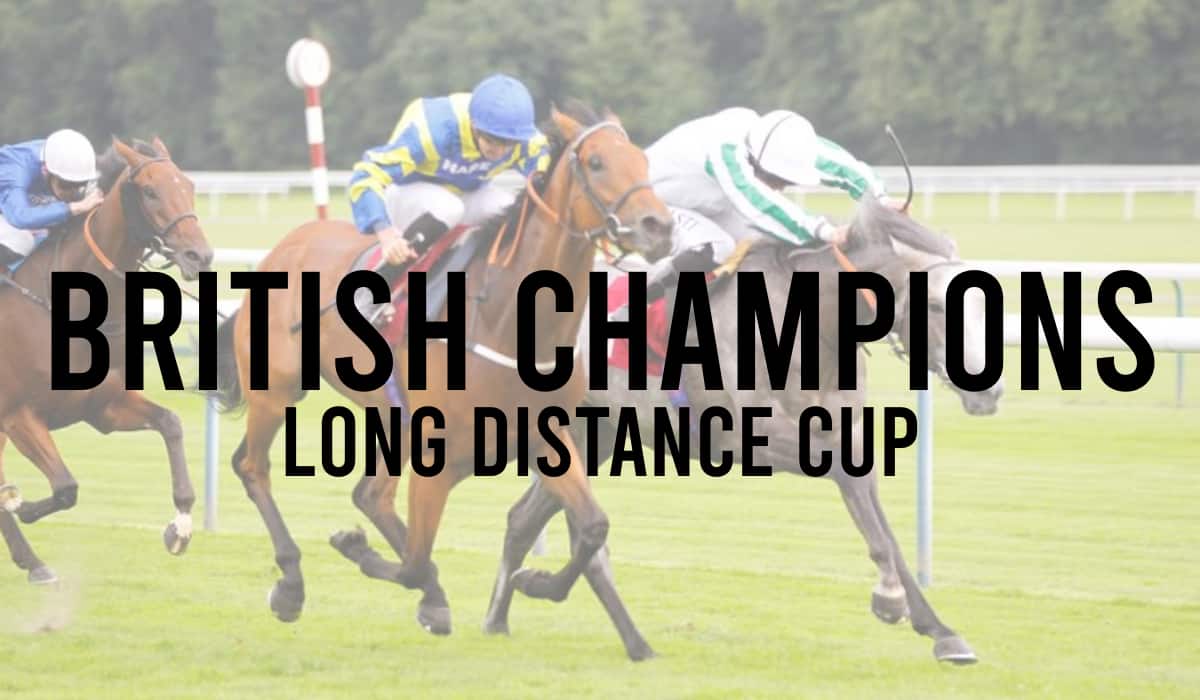
The British Champions Long Distance Cup takes place at Ascot on Saturday 17 October 2026 and provides the leading stayers with their final major championship race of the British Flat season. Run over almost exactly two miles, the race demands stamina but also requires horses to settle, hold a position and retain enough speed to compete when the tempo increases approaching Ascot’s long home straight.
The status of the race has changed significantly. The Long Distance Cup was promoted from Group 2 to Group 1 in 2025, recognising the quality of the horses it had consistently attracted and strengthening the European programme for top-class stayers. Trawlerman won the inaugural Group 1 edition, but his retirement in August 2026 means there will be a new champion this year.
Scandinavia heads the current staying division after an outstanding season for Aidan O’Brien. Victories in the Ascot Gold Cup and Goodwood Cup have established him as the horse the others need to beat, while Jan Brueghel, Caballo De Mar, Gregory, Illinois, Queenstown and several improving stayers give the 2026 race considerable depth.
British Champions Long Distance Cup 2026 Key Facts
- Date: Saturday 17 October 2026
- Racecourse: Ascot
- Meeting: British Champions Day
- Scheduled time: 1.30pm
- Distance: 1 mile, 7 furlongs and 209 yards
- Race type: Group 1
- Eligibility: Horses aged three and older
- Prize money: £500,000 guaranteed
- Maximum field: 14
- Three-year-old colts and geldings: 9st 2lb
- Three-year-old fillies: 8st 13lb
- Older colts and geldings: 9st 9lb
- Older fillies and mares: 9st 6lb
- Three-year-old weight-for-age allowance: 7lb
- Confirmation and supplementation: 12 October
The Long Distance Cup is one of five Group 1 races on the current British Champions Day programme. Its promotion means Ascot now stages a top-level championship race for stayers alongside the Sprint, Fillies & Mares Stakes, Queen Elizabeth II Stakes and Champion Stakes.
British Champions Long Distance Cup 2026 Entries
The final runners have not yet been declared. The race remains at the entry stage ahead of confirmation and supplementation on 12 October, with a maximum field of 14.
Among the leading horses currently associated with the race are:
- Scandinavia
- Jan Brueghel
- Caballo De Mar
- Gregory
- Illinois
- Queenstown
- Defiantly
- Opportunity
- Amiloc
- Daiquiri Bay
The final field matters particularly in a staying race because the presence or absence of prominent front-runners can change the entire tactical shape of the contest. Rather than treating every early entry as a confirmed runner, we will update this section once connections have made their final decisions.
One horse who will definitely not defend the race is Trawlerman. Although his name can still appear in older entry and ante-post information, the dual Long Distance Cup winner was retired in August after suffering a tendon injury.
Scandinavia Has Taken Control of the Staying Division
Scandinavia has developed into the dominant British and Irish stayer of 2026. Aidan O’Brien’s four-year-old entered the season with an already strong profile but has taken another substantial step forward, proving himself over different staying distances and against the strongest available opposition.
His most important performance came in the Ascot Gold Cup at Royal Ascot. The Gold Cup is run over two and a half miles, creating a more severe stamina examination than the Long Distance Cup, and Scandinavia had to overcome an outstanding performance from defending champion Trawlerman. The pair pulled clear before Scandinavia eventually got the better of his older rival in a sustained finish.
That victory established his stamina beyond doubt, but his subsequent Goodwood Cup success was arguably even more relevant to the Long Distance Cup because it came over two miles. Scandinavia travelled strongly before asserting himself decisively, beating Trawlerman by eight and a half lengths and confirming that he possesses enough speed to dominate elite stayers at the shorter championship distance.
The combination of those performances makes him an unusually complete stayer. Ascot has already suited him, two miles presents no concern and his Gold Cup victory demonstrates that a strongly run race is unlikely to expose a lack of stamina.
The Gold Cup Form Matters, But Ascot Is a Different Test in October
The Royal Ascot Gold Cup provides an obvious form line into the Long Distance Cup, but the two races should not be treated as identical examinations. The Gold Cup extends to two and a half miles, while the October race is approximately half a mile shorter. That difference changes the balance between stamina, speed and tactical position.
A horse can stay the Gold Cup distance yet find two miles around Ascot too sharp if the early pace is moderate and the race develops into a test of acceleration. Equally, a horse with plenty of speed at shorter distances can struggle if the Long Distance Cup is run strongly from an early stage.
Scandinavia’s advantage is that he has already demonstrated both sides of the equation. He stayed the Gold Cup trip strongly and then produced an emphatic performance over two miles at Goodwood, giving him a broader body of evidence than a horse whose reputation rests on one particular staying distance.
When assessing the final field, the important question will therefore be how each horse is likely to cope with the specific tempo of the Long Distance Cup rather than simply whether it has previously stayed two miles.
Caballo De Mar Arrives After Winning the Doncaster Cup
Caballo De Mar strengthened his claims when winning the Doncaster Cup in September. George Scott’s five-year-old defeated Beylerbeyi over two miles and two furlongs, producing a solid staying performance to return to winning form after earlier defeats at the highest level.
His season has not been completely straightforward. Caballo De Mar had been unable to make the same impact in the Gold Cup, where Scandinavia and Trawlerman established themselves at the head of the division, but the Doncaster victory demonstrated that he remains a serious staying horse when conditions allow him to perform at his best.
The reduction from two miles and two furlongs at Doncaster to Ascot’s two miles should not present an obvious stamina problem. The more important issue is whether he possesses enough pace to trouble Scandinavia if the favourite is able to travel comfortably into the home straight.
Caballo De Mar’s Doncaster performance nevertheless gives him valuable current form at a time of the season when some stayers are beginning to feel the effects of long campaigns. Arriving at Champions Day in form is particularly important after horses have already been competing in major staying races since the spring.
Gregory Has Returned as a Serious Stayer
Gregory is one of the more interesting older horses because his career has not followed a straightforward path. He demonstrated his ability at Ascot as a three-year-old when winning the Queen’s Vase at Royal Ascot in 2023, but interruptions have prevented him from building a conventional sequence of staying performances.
His 2026 campaign has brought him back into the picture. Gregory won at York in June before producing a dominant performance in the Jockey Club Rose Bowl at Newmarket in September, winning the two-mile Listed race by 11 lengths.
The quality of the opposition at Newmarket was below what he will encounter in a Group 1 at Ascot, so the winning margin needs to be placed in context. What mattered was the manner in which he travelled and stayed the distance, showing that the ability which made him an exciting young stayer remains intact.
Ascot experience is another positive. Gregory has already performed successfully at the course and should have no difficulty with the distance, leaving class and current form as the principal questions if he takes his place in the final field.
Jan Brueghel Brings High-Class Middle-Distance Form
Jan Brueghel offers a different profile from the established specialist stayers. The Aidan O’Brien-trained horse has demonstrated considerable class over middle and extended middle distances, making his presence potentially important to the tactical character of the race.
Horses moving into the staying division from shorter distances can be particularly dangerous over two miles because they often possess more natural speed than rivals who have built their careers around extreme stamina. The trade-off is that they still need to prove they can use that speed after racing efficiently for almost two miles.
That distinction matters at Ascot. A steadily run Long Distance Cup could place greater emphasis on Jan Brueghel’s speed, whereas a sustained gallop from a long way out would ask a much stronger question about stamina.
His participation would also strengthen Aidan O’Brien’s tactical options considerably. If both Scandinavia and Jan Brueghel line up, the stable would have two high-class horses with different racing profiles rather than relying solely on the established divisional leader.
Illinois Has Extensive Staying Experience
Illinois is another Aidan O’Brien-trained horse with substantial experience over staying distances. He finished second in the St Leger earlier in his career and has since been campaigned regularly in races beyond a mile and a half.
His 2026 season has included a victory in the Queen Alexandra Stakes at Royal Ascot, a race run over considerably further than the Long Distance Cup. He subsequently finished second in the Lonsdale Cup at York, demonstrating that he can remain competitive when returning to approximately two miles.
That versatility is useful, although the Long Distance Cup represents a higher standard. A Group 1 over two miles can expose horses that possess abundant stamina but lack the necessary cruising speed when the strongest stayers begin to accelerate.
Illinois therefore brings proven stamina and plenty of experience to the equation. Whether that is enough against Scandinavia and the strongest two-mile performers is a different question, but he has the racing profile to contribute to a genuinely run contest.
Queenstown Has Strengthened His Staying Form
Queenstown has spent much of his career operating just below the very best of Aidan O’Brien’s middle-distance and staying horses, but his 2026 performances have strengthened his position within the division.
He won over a mile and three-quarters at the Curragh in August before finishing second to Scandinavia the following month. Those races provide useful evidence that he is capable of maintaining his form at staying distances while also giving a direct comparison with the leading horse in the division.
The Long Distance Cup would require him to reverse that form. That is a significant challenge, but the circumstances at Ascot could differ enough to make the comparison worth examining rather than simply assuming the previous finishing order must be repeated.
Ground, pace and race position will all matter. A stronger gallop over the additional distance could alter the demands, while a tactical contest might favour whichever horse is able to settle most efficiently before the pace increases.
Trawlerman Leaves a Major Gap in the Race
Trawlerman’s retirement removes one of the defining stayers of recent seasons. John and Thady Gosden’s gelding won the Long Distance Cup in 2023 and returned to win it again in 2025, when the race was staged as a Group 1 for the first time.
His 2025 season was particularly strong. Trawlerman won the Henry II Stakes, Gold Cup and Lonsdale Cup before completing his campaign with victory on Champions Day. That sequence demonstrated both his stamina and his ability to maintain form across a demanding season.
He remained competitive at eight in 2026, finishing a close second to Scandinavia in the Gold Cup and again chasing him home in the Goodwood Cup. A tendon injury subsequently brought his racing career to an end.
His absence matters tactically as well as historically. Trawlerman was comfortable racing prominently and could help ensure that major staying races became genuine tests rather than slowly run contests. The final 2026 declarations will tell us which horse is most likely to perform that role in his absence.
The Long Distance Cup Became a Group 1 in 2025
The promotion of the Long Distance Cup to Group 1 status was one of the most important changes to the British staying programme in recent years. Before 2025, the race had been classified as a Group 2 despite regularly attracting horses already proven at the highest level.
The European Pattern Committee upgraded the race as part of a wider effort to strengthen opportunities for staying horses. That matters because the modern breeding and racing industries often place greater commercial emphasis on speed and middle-distance performance, increasing the importance of a programme capable of retaining elite stayers in European racing.
The upgrade also changed the structure of British Champions Day. Ascot now stages five Group 1 races on the card, with the Long Distance Cup providing a championship contest for stayers alongside top-level races for sprinters, milers and middle-distance horses.
Trawlerman became the first winner under the new classification in 2025. The 2026 winner will therefore become only the second horse to win the race officially at Group 1 level.
Kyprios Won the Final Group 2 Edition in 2024
Kyprios won the Long Distance Cup in 2024 during another outstanding season for Aidan O’Brien. Already established as one of the finest stayers of his generation, he defeated Sweet William with Trawlerman finishing third.
That renewal brought together three horses who had been central to the staying division. Kyprios possessed exceptional stamina and class, Sweet William had developed into a consistently high-level performer and Trawlerman had already won the race the previous year.
The result also illustrates why the subsequent Group 1 upgrade made sense. The Long Distance Cup was already attracting horses of Group 1 quality before the official classification caught up with the standard of the race.
Kyprios’s success came at the end of a season in which he had again demonstrated his superiority over extended distances. The shorter two-mile trip at Ascot did not prevent him from showing his class, reinforcing the importance of balancing stamina with the ability to quicken when analysing this race.
Trawlerman Won the Inaugural Group 1 in 2025
Trawlerman returned to the top of the race in 2025, two years after his first victory. Sent off favourite, he produced another strong staying performance to give John and Thady Gosden the first Group 1 Long Distance Cup.
The victory was the culmination of an excellent campaign rather than an isolated performance. His Gold Cup and Lonsdale Cup victories had already demonstrated that he remained among Europe’s leading stayers, while his Ascot record gave him proven ability under the specific conditions of Champions Day.
Winning the first Group 1 edition gave Trawlerman a distinctive place in the history of the race. Earlier champions include some exceptional stayers, but his name will always be attached to the moment the contest formally joined the highest level of the European Pattern.
His retirement means the 2026 race begins a new chapter immediately after that landmark renewal.
Recent British Champions Long Distance Cup Winners
- 2025: Trawlerman, trained by John and Thady Gosden
- 2024: Kyprios, trained by Aidan O’Brien
- 2023: Trawlerman, trained by John and Thady Gosden
- 2022: Trueshan, trained by Alan King
- 2021: Trueshan, trained by Alan King
- 2020: Trueshan, trained by Alan King
- 2019: Kew Gardens, trained by Aidan O’Brien
- 2018: Stradivarius, trained by John Gosden
- 2017: Order Of St George, trained by Aidan O’Brien
- 2016: Sheikhzayedroad, trained by David Simcock
- 2015: Flying Officer, trained by John Gosden
- 2014: Forgotten Rules, trained by Dermot Weld
- 2013: Royal Diamond, trained by Johnny Murtagh
The recent roll of honour demonstrates the quality of horse required to dominate the staying division. Stradivarius, Kyprios, Trueshan and Order Of St George all produced top-class staying performances elsewhere, while Trawlerman proved himself repeatedly at Ascot.
The list is more useful as evidence of the standard of the race than as a source of arbitrary betting systems. Each renewal develops differently according to the horses involved, the ground and the pace.
Trueshan Won Three Consecutive Renewals
Trueshan holds an important place in the modern history of the Long Distance Cup after winning three consecutive editions between 2020 and 2022 for trainer Alan King and jockey Hollie Doyle.
His success was particularly notable because ground conditions played such an important role throughout his career. Trueshan was at his most effective when there was sufficient ease in the surface, and his connections were prepared to alter plans when conditions became too quick.
That provides a useful lesson when assessing modern staying races. Proven ability over the distance is important, but it does not follow that a top-class stayer will produce the same performance on every surface.
Ascot in October can range from relatively sound ground to a much more demanding test after sustained rain. A horse’s effectiveness under the actual conditions should therefore carry more weight than broad historical trends about previous winners.
Stradivarius Won the Race in 2018
Stradivarius won the 2018 Long Distance Cup during a period in which he dominated the British staying division. Trained by John Gosden and ridden by Frankie Dettori, he developed into one of the most recognisable stayers of the modern era.
His career included multiple Gold Cup, Goodwood Cup and Yorkshire Cup victories, demonstrating the versatility required to win major staying races at different courses and over different distances.
The Long Distance Cup formed part of that wider body of work rather than defining his career by itself. That distinction is useful when considering Scandinavia in 2026. The strongest stayers prove their quality repeatedly across the programme rather than relying on one favourable race.
Scandinavia’s Gold Cup and Goodwood Cup victories have already placed him in that category. Champions Day provides another opportunity to strengthen the comparison.
From the Jockey Club Cup to British Champions Day
The history of the Long Distance Cup stretches much further back than the creation of British Champions Day. The race was originally established as the Jockey Club Cup and was traditionally staged at Newmarket.
Its historical winners include some exceptional stayers. Further Flight won five consecutive editions between 1991 and 1995, an extraordinary sequence that demonstrated both his durability and consistency. Persian Punch later won three times, adding another hugely popular staying horse to the roll of honour.
The race moved to Ascot in 2011 as part of the creation of British Champions Day. Fame And Glory won the first Ascot edition before Rite Of Passage followed in 2012.
The subsequent winners have helped turn the race into a genuine end-of-season championship for stayers. Promotion to Group 1 status in 2025 formalised a level of quality that had already been evident for several years.
Why Two-Mile Races Are Tactically Complex
Staying races are sometimes reduced to a simple question of which horse has the most stamina. At Group 1 level, that is rarely enough.
A horse must first settle. Racing too freely during the opening mile wastes energy that will be needed later, particularly if the pace begins to increase a long way from home. Jockeys therefore have to find a rhythm without surrendering so much position that they become vulnerable when the race develops.
The tempo is equally important. A slow first mile can turn a two-mile race into a test of acceleration, favouring horses with greater natural speed. A strong and sustained gallop exposes weaknesses in stamina and places much greater emphasis on racing efficiently.
Those differences explain why our horse racing pace maps guide is relevant even over staying distances. Once the final field is known, identifying likely leaders and prominent racers can provide a much clearer picture of how the race may unfold.
Ascot Places Different Demands on Stayers
Ascot is a right-handed, galloping course with a demanding finish. The Long Distance Cup begins far enough from home for horses to establish a rhythm, but the positioning and pace of the race become increasingly important as the field moves towards the final turn.
Horses that race too aggressively early can pay for that effort in the straight. Those held too far back can encounter a different problem if the leaders are allowed to conserve energy and accelerate before the chasing horses are properly organised.
Course experience therefore has genuine value. Scandinavia has already won the Gold Cup at Ascot, while Gregory’s Queen’s Vase success provides evidence that he can operate effectively at the track.
Our Ascot Racecourse guide covers the course configuration, major meetings and visitor information in more detail.
Ground Could Transform the 2026 Race
October weather makes ground an important part of Long Distance Cup analysis. Two miles on good ground and two miles on soft or heavy ground can place very different demands on the same group of horses.
Testing conditions increase the stamina requirement and can make it harder for horses to produce a sharp change of pace. Sounder ground generally allows the race to be run faster and can bring horses with stronger middle-distance speed into the contest.
The effect is not simply a matter of identifying horses that have previously won on soft ground. How a horse moves, whether it can settle at a slower tempo and how efficiently it uses its energy all influence its ability to cope with different surfaces.
The official going should therefore be considered alongside the weather forecast and evidence from earlier races on Champions Day. Our horse racing going guide explains how the different going descriptions affect race analysis.
The Staying Programme Provides Important Form Lines
The Long Distance Cup sits at the end of a season containing several major staying races, creating a substantial body of form for analysis.
The Gold Cup at Royal Ascot provides the strongest test of extreme stamina, while the Goodwood Cup brings the leading stayers back to two miles. The Lonsdale Cup at York and Doncaster Cup provide further opportunities before Champions Day, alongside races such as the Yorkshire Cup earlier in the season.
These races should not simply be treated as a league table. Different distances, courses, ground and tactical circumstances mean a horse can improve or reverse form when meeting the same rival again.
Scandinavia’s 2026 record is particularly persuasive because he has succeeded under more than one set of conditions. Caballo De Mar arrives with more recent winning form from Doncaster, while Gregory has returned to prominence through a different route.
The task is to determine which pieces of form are most relevant to the conditions likely to be encountered at Ascot.
How to Analyse the 2026 Long Distance Cup
Once the final declarations are available, the strongest analysis should combine several pieces of evidence rather than relying on a single historical trend.
The main factors include:
- Proven form over approximately two miles
- Ability to settle over staying distances
- Current Group-level form
- Ascot experience
- Expected ground
- Likely pace
- Racing position
- Recent workload
- Ability to quicken after a strongly run race
- Form against the other leading stayers
Scandinavia sets the standard because his Gold Cup and Goodwood Cup victories have already answered most of the major questions. The challenge for his rivals is finding an area in which conditions at Ascot might narrow that advantage.
Our guide to analysing a horse race like a professional explains how to combine form, pace, ground and race conditions rather than treating any one factor as decisive.
Historical Trends Need Racing Logic
The previous version of this page relied heavily on historical statistics about favourites, age, ratings and the number of previous winners with Group-race form. Some of those figures described what had happened in a relatively small sample of renewals, but they did not necessarily explain why.
That distinction matters. Saying that a particular number of favourites have won tells us nothing about whether the current favourite represents value or is particularly well suited to the race. Similarly, an age trend can change quickly when a new generation of stayers emerges.
Useful historical evidence should have a racing explanation behind it. Proven stamina matters because the race is run over two miles. The ability to settle matters because wasting energy early is costly over this distance. Ground matters because October conditions can fundamentally alter the stamina requirement.
Those factors remain relevant regardless of what happened to the favourite in an unrelated renewal ten years ago.
British Champions Long Distance Cup Betting
A genuine ante-post market is already available for the 2026 Long Distance Cup, with Scandinavia prominent following his Gold Cup and Goodwood Cup victories. The market should become considerably more informative once confirmation takes place on 12 October and the final tactical shape of the race begins to emerge.
Backing the horse most likely to win and finding a worthwhile bet are not automatically the same thing. Scandinavia’s achievements are obvious, which means the market has also had plenty of opportunity to recognise them. Any assessment therefore needs to compare the chance implied by the available price with the horse’s actual chance of winning.
The same principle applies further down the field. A horse should not be considered attractive simply because it is available at a bigger price. There needs to be a reason why the market may be underestimating its chance, such as suitable ground, a favourable pace scenario or improving recent form.
Our guide to finding value bets in horse racing explains that process in more detail. Readers comparing bookmakers specifically for racing can also use our Best Horse Racing Betting Sites page, while the horse racing betting apps guide covers mobile betting.
Ascot Tips on British Champions Day
The Long Distance Cup is scheduled early on the Champions Day card, making it one of the first significant opportunities to see how the Ascot turf is riding.
A two-mile race cannot provide a perfect guide to what will happen later in the six-furlong Sprint, mile QEII or ten-furlong Champion Stakes because the tactical demands are completely different. It can, however, provide useful information about how horses are moving through the ground and whether conditions appear more testing than the official description suggests.
Watching the race itself therefore matters as much as reading the result. The position of the leaders, how easily horses travel into the straight and whether those making late ground are able to accelerate can all add context for the remainder of the card.
Our Ascot betting tips page carries race-day selections and analysis across meetings at the course.
How to Watch the British Champions Long Distance Cup
The 2026 British Champions Long Distance Cup is scheduled for 1.30pm at Ascot on Saturday 17 October and is due to be shown on ITV as part of its British Champions Day coverage.
Race times and broadcast arrangements can change, so viewers should check the final schedule before the meeting.
British Champions Long Distance Cup FAQs
When is the British Champions Long Distance Cup 2026?
The race takes place at Ascot on Saturday 17 October 2026 as part of British Champions Day.
What time is the Long Distance Cup?
The 2026 British Champions Long Distance Cup is currently scheduled for 1.30pm.
How far is the British Champions Long Distance Cup?
The race is run over 1 mile, 7 furlongs and 209 yards, effectively two miles.
Is the British Champions Long Distance Cup a Group 1?
Yes. The Long Distance Cup was promoted from Group 2 to Group 1 status in 2025. The live British Racecourses legacy page previously described it as a Group 2, which is no longer correct.
How much is the race worth?
The 2026 British Champions Long Distance Cup has £500,000 in guaranteed prize money.
Who won the Long Distance Cup in 2025?
Trawlerman won the inaugural Group 1 edition in 2025 for trainers John and Thady Gosden and jockey William Buick.
Who won the race in 2024?
Kyprios won the 2024 Long Distance Cup for Aidan O’Brien and Ryan Moore. It was the final edition staged as a Group 2.
Is Trawlerman running in 2026?
No. Trawlerman was retired in August 2026 after suffering a tendon injury. His name can still appear in older entry and ante-post information, but he will not run.
Who won the 2026 Ascot Gold Cup?
Scandinavia won the 2026 Gold Cup for Aidan O’Brien and Ryan Moore, defeating Trawlerman after a sustained battle in the closing stages.
Who won the 2026 Goodwood Cup?
Scandinavia also won the 2026 Goodwood Cup, beating Trawlerman by eight and a half lengths over two miles.
Who won the 2026 Doncaster Cup?
Caballo De Mar won the 2026 Doncaster Cup for George Scott and Oisin Murphy.
Are the 2026 Long Distance Cup runners confirmed?
No. The race remains at the entry stage. Confirmation and supplementation take place on 12 October, with a maximum field of 14.
Why do three-year-olds carry less weight?
Three-year-olds receive a 7lb weight-for-age allowance from older horses in the 2026 Long Distance Cup. This reflects the difference in physical maturity between the generations at this stage of the season.
What was the Long Distance Cup previously called?
The race developed from the Jockey Club Cup, which was traditionally staged at Newmarket. It moved to Ascot in 2011 as part of British Champions Day.
Where can I find Ascot betting tips?
Our Ascot betting tips page carries selections and analysis for racing at Ascot.
Responsible Betting
The strongest horse does not win every staying race. Pace, ground, race position, fitness and how efficiently a horse settles can all affect the result, particularly over two miles.
Analyse the race before betting, decide your stake in advance and only gamble with money you can afford to lose.
British Champions Long Distance Cup 2026 Summary
The British Champions Long Distance Cup takes place at Ascot on Saturday 17 October 2026 and is scheduled for 1.30pm. The race is run over almost exactly two miles, carries £500,000 in guaranteed prize money and is now firmly established as a Group 1 championship event for stayers.
Scandinavia brings the strongest form into the race after winning both the Gold Cup and Goodwood Cup in 2026. Those victories have demonstrated his effectiveness over different staying distances, while his Royal Ascot success provides valuable evidence that the course presents no problem.
The opposition is taking shape around horses with contrasting profiles. Caballo De Mar arrives after winning the Doncaster Cup, Gregory has returned to form with an emphatic two-mile success at Newmarket, and Jan Brueghel, Illinois and Queenstown give Aidan O’Brien considerable depth among the current entries.
Trawlerman will not return to defend his title after being retired in August. His absence guarantees a new winner and removes one of the most influential stayers of recent seasons from the tactical equation.
Once the final runners are confirmed, the most important factors will be current staying form, pace, ground, Ascot experience and each horse’s ability to settle before producing its effort through the home straight. That evidence provides a much stronger basis for analysing the race than the outdated favourite and age statistics previously used on this page.
For the complete meeting, visit our British Champions Day guide or check our Ascot betting tips closer to race day.












