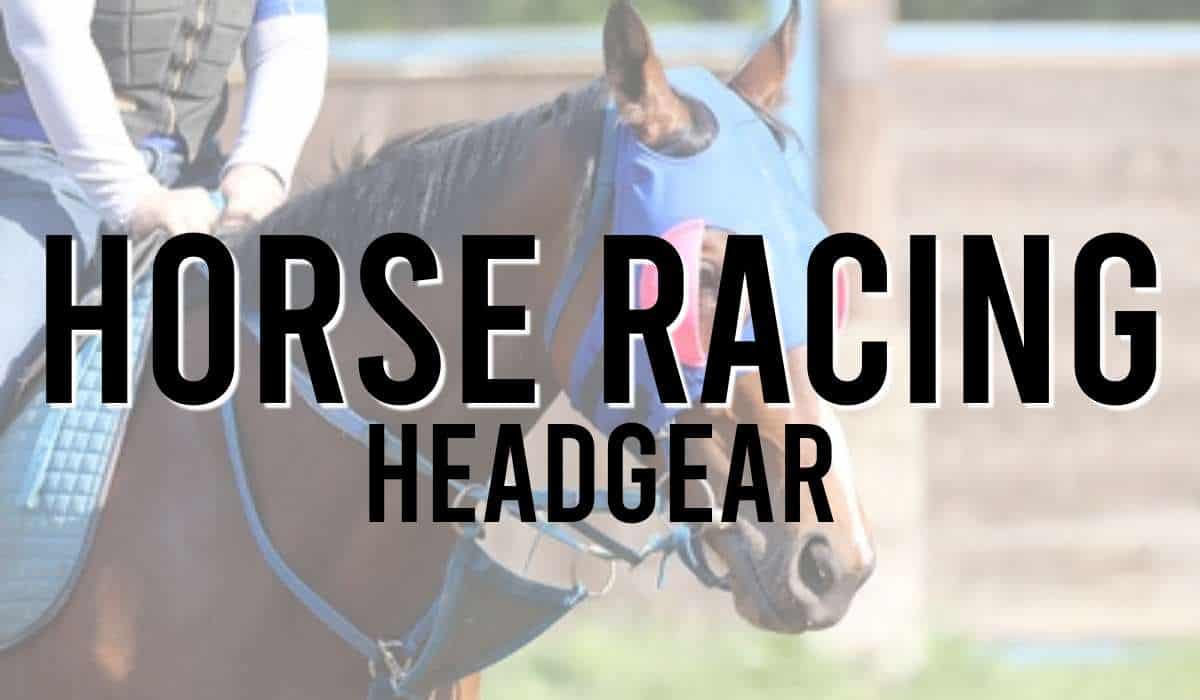
Horses run in various applications of headgear to assist the racehorse’s chances of winning.
The variety of horse racing headgear used in horse racing can be confusing for punters.
Trainers use headgear in horse racing to enhance a horse’s overall performance and address issues such as a horse running green or a lack of concentration during racing.
We explain the different types of headgear and the purpose of deploying headgear on racehorses.
Why is headgear used on racehorses?
The application of headgear is used on racehorses to enhance the horse’s chances of winning a race.
Leading horse racing trainers use headgear to enhance a horse’s overall performance, and various types of headgear can be employed to address other issues.
Many different types of headgear help the horse concentrate more and remain relaxed.
Many racehorses overexert and waste energy prior to the race, and the header apparatus is used to help keep horses calm.
Deploying headgear on racehorses helps keep the horse focused on its job and on racing, with some headgear limiting side or rear vision.
Types of Horse Racing Headgear
Here are the main types of horse racing headgear apparatus:
- Blinkers
- Visor
- Hood
- Cheek pieces
- Tongue strap
- Eye covers
- Eyeshield
- Earplugs
- Noseband
The list of horse headpieces is designed to improve control over the racehorses.
Blinkers
Blinkers are a piece of horse tack that prevent the horse from seeing to the rear and to the side.
Blinkers (aka blinders) are worn over a horse’s head with holes for both the eyes and ears.
Eye holes are fitted with cups that stop any peripheral and rear vision, but allow the horse to see forward.
Horse racing blinkers are used on racehorses to try to get them to focus and concentrate on racing and not be distracted by what is happening to the side or rear.
Check out our full guide on all horses running today in blinkers headgear.
Visors
Visors are a piece of horse tack that prevent the horse from seeing to the rear, but allow vision to the side with slits cut into the eye-cups.
Horse racing visors are similar to blinkers in appearance, except that they have slits cut into the eye-cups, allowing a horse partial peripheral vision.
The slits in the eye-cups are designed to prevent a racehorse from panicking if it can’t see the other runners.
The slit on the visor headgear provides reassurance that there are other runners, while maintaining the focus on moving forward.
Check out our full guide on all horses running today in visor headgear.
Hood
A hood is headgear with ear covers and no eye cups.
The horse racing hood is not used for concentration; it is intended for horses that may be nervous about crowds and noise.
The hoods are padded around the ears and so restrict the noise of the crowd, allowing a nervous horse to be calmed down.
An application of a hood on a racehorse is similar to using earplugs, and the hood headgear is great for settling highly strung horses.
Hoods are particularly useful with juveniles and are sometimes used in just the parade ring.
Why are racehorses wearing red hoods?
Racehorses wear red hoods to cover their ears and head, keeping them calm.
The red hood has padded areas that block out sound, allowing those who get a bit nervous and edgy from the noise of racing and crowds to settle down.
Cheekpieces
Cheekpieces are two pieces of soft, lengthened sheepskin of equal length that are attached to the horse’s bridle and down the side of the horse’s head from ear to mouth.
Cheekpieces are a form of headgear (aka French blinkers) that racehorses are allowed to wear for UK or Irish racing.
Cheek pieces have a similar purpose to horse racing blinkers or visors, which significantly reduce a horse’s range of vision and make the horse focus on what’s happening in front rather than by the horse’s side or rear.
Check out our full guide on all horses running today in cheekpieces and headgear. Cheekpieces are usually worn by horses that find it hard to maintain a straight line and perhaps wander off the track.
Tongue Strap
Tongue straps are used to tie down a horse’s tongue and help the racehorse breathe during the race.
Some horses race with their tongues out of their mouths, and the tongue straps stop the tongue from impeding a horse’s breathing during racing.
For racehorses who struggle with breathing during a race, the application of tongue straps helps the horse run to its optimum.
Check out our full guide on all horses running today in tongue straps and headgear.
Eye Covers
Eye covers are used when a racehorse is blind in one eye, and they are used as protection for the damaged eye.
Eye covers are applied to one eye only with a non-transparent cover.
Eye covers are rarely used on the racecourse and serve a similar purpose to blinkers, which are a type of headgear.
Eyeshield
Eye shields are similar to blinkers but cover the whole eye, like wearing goggles.
The eyeshield is used as protection for the eyes on all-weather surfaces where the horse’s face kicks back.
The eyeshield has eye-cups to restrict the horse’s view, and the headgear is also used to make the horse focus.
Ear Plugs
Earplugs are used on nervous horses to block noises that can distract and upset them.
When horses get worked up pre-race, they can waste a lot of energy, so earplugs help settle them.
Made from memory foam, the earplugs are placed in the horse’s ears and kept in place with a cord attached to the horse’s bridle.
Noseband
Sheepskin nosebands are a type of fabric attached to the noseband that is used on horses to improve their concentration.
The application of a noseband on horses that have shown a high head carriage when racing.
It encourages the horse to look down towards its nose and therefore keeps the horse’s head carriage down.
Does Headgear Need To Be Declared Before Racing?
All horse racing headgear (except nosebands) must be declared when at the final declaration stage.
The headgear that has been declared must then be worn on the way to the start of the race and in the race itself.
If the headgear is not worn, which is part of the declaration on the racecard, then the horse will be withdrawn.
Horse Racing Headgear Abbreviations
Here are the horse racing headgear abbreviations as they appear on a racecard:
- Blinkers – b
- Visor – v
- Hood – h
- Cheek pieces – p
- Eye covers – ec
- Eyeshield – es
- Tongue strap – t
- Earplugs – no denotation shown on racecards
- Noseband – no denotation shown on racecards
When a racehorse wears blinkers, a visor, a hood or cheekpieces for the first time, the abbreviation will be accompanied by the number 1.
For example, v1 means visors are being worn for the first time.
Summary
Many horse racing trainers are trying to find ways to improve their horses’ performances on the race track, and the application of headgear is undoubtedly a popular decision among the top-rated trainers.
When studying horse racing form for some quirky racehorses who get worked up before the race, the headgear application is a must. It has been proven to achieve higher RPR ratings or official ratings.
The use of blinkers and visors for colts can stop them from being distracted by the opposite sex (fillies and mares), and some trainers castrate the horse to help them remain focused on the job of racing.
Researching which horses are using headgear is part of the analysis from the top horse racing tipsters like David Dooley, and it was recently voted in the top 10 most important factors by shrewd punters when studying the formbook of horse racing.