
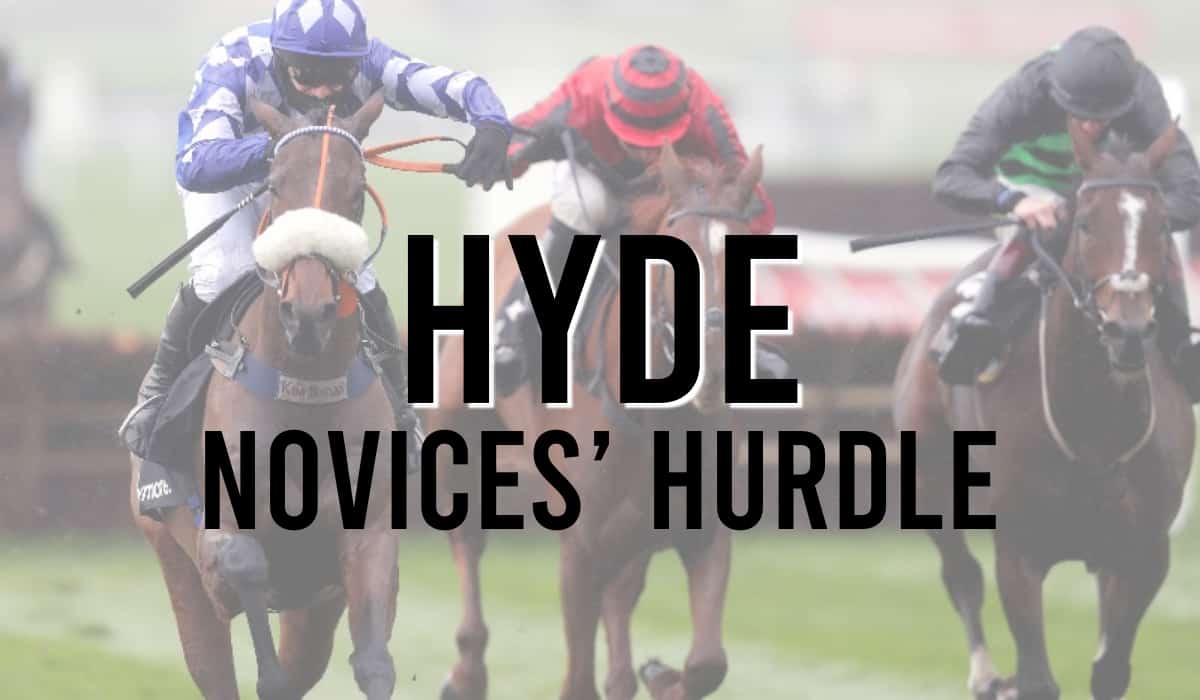
The Hyde Novices’ Hurdle is a Grade 2 National Hunt race for novice hurdlers aged four and older at Cheltenham Racecourse.
Run over approximately two miles and five furlongs on the Old Course, the race forms part of Cheltenham’s November Meeting and provides an important early-season test for novice hurdlers with the potential to develop into leading middle-distance or staying performers.
The roll of honour includes Black Jack Ketchum, Diamond Harry, Coneygree, Thyme Hill and Hermes Allen, while several winners have subsequently achieved major success over hurdles or fences.
Hyde Novices’ Hurdle Key Facts
| Race detail | Information |
|---|---|
| Racecourse | Cheltenham |
| Course | Old Course |
| Race type | Novice hurdle |
| Classification | Grade 2 |
| Distance | About 2m5f |
| Eligibility | Novice hurdlers aged four and older |
| Obstacles | 10 hurdles |
| Time of year | November |
| First running | 1996 |
The Hyde Novices’ Hurdle is the registered name of the race. Sponsorship has resulted in different commercial titles being used over the years.
Hyde Novices’ Hurdle History
The Hyde Novices’ Hurdle was first run in 1996, when Hunting Lore won for trainer Nicky Henderson and jockey Mick Fitzgerald.
It was initially staged below its present level before developing into an established Grade 2 contest for novice hurdlers.
The race’s position in November makes it particularly useful for assessing horses during the early stages of their novice hurdle campaigns. Some runners arrive with only a small amount of hurdling experience, while others have already demonstrated a high level of ability.
Different sponsors have been associated with the race. Neptune Investment Management and Ballymore are among the names that became familiar through their involvement with the contest, while Albert Bartlett has more recently sponsored the race.
The registered Hyde Novices’ Hurdle name provides continuity through those sponsorship changes.
Course and Distance
The Hyde Novices’ Hurdle takes place over approximately two miles and five furlongs on Cheltenham’s Old Course.
Ten hurdles are jumped.
The distance occupies an interesting position between the minimum-distance novice hurdles and the longer three-mile contests.
Horses need enough speed to stay competitive through the early and middle stages, but also enough stamina to finish strongly at Cheltenham.
The Old Course adds another dimension.
Cheltenham’s undulations and uphill finish can expose horses that have looked comfortable on flatter tracks, while inexperienced hurdlers need to maintain their jumping rhythm as the pressure increases.
A mistake does not necessarily end a horse’s chance, but repeated errors can become costly over ten obstacles.
Our Cheltenham Racecourse guide explains the course and its characteristics in greater detail.
What Type of Horse Wins the Hyde Novices’ Hurdle?
The Hyde has frequently rewarded progressive five-year-olds with the combination of speed and stamina required for an intermediate trip.
There is no single route to success, but several characteristics are particularly useful.
Stamina
Two miles and five furlongs requires more stamina than a conventional two-mile novice hurdle.
A horse that travels strongly at shorter distances still needs to prove it can maintain that effort through the closing stages at Cheltenham.
Previous form over intermediate distances provides useful evidence, although inexperienced horses can improve considerably when stepping up in trip.
Jumping
Ten hurdles provide repeated opportunities for inexperienced runners to lose momentum.
Efficient jumping becomes particularly important when the pace increases.
A horse that hurdles accurately can conserve energy and maintain its race position, while one that repeatedly slows into its obstacles may struggle to recover.
Tactical speed
Stamina alone is not enough.
The race does not provide the same sustained test as a three-mile staying hurdle, so horses still need enough pace to hold their position and respond when the leaders increase the tempo.
Scope for improvement
Novice hurdlers are developing horses.
Previous ratings and finishing positions provide useful evidence, but they do not necessarily represent the limit of a horse’s ability.
A lightly raced novice that is learning quickly can improve enough to compete with horses possessing stronger established form.
Previous Hyde Novices’ Hurdle Winners
The winners since 2013 demonstrate the strong record of five-year-olds in the race.
| Year | Winner | Age | Jockey | Trainer |
|---|---|---|---|---|
| 2025 | No Drama This End | 5 | Harry Cobden | Paul Nicholls |
| 2024 | Potters Charm | 5 | Sam Twiston-Davies | Nigel Twiston-Davies |
| 2023 | Minella Missile | 5 | Adam Wedge | Evan Williams |
| 2022 | Hermes Allen | 5 | Harry Cobden | Paul Nicholls |
| 2021 | Blazing Khal | 5 | Donal McInerney | Charles Byrnes |
| 2020 | Does He Know | 5 | David Bass | Kim Bailey |
| 2019 | Thyme Hill | 5 | Richard Johnson | Philip Hobbs |
| 2018 | Coolanly | 6 | Paddy Brennan | Fergal O’Brien |
| 2017 | On The Blind Side | 5 | Nico de Boinville | Nicky Henderson |
| 2016 | Peregrine Run | 6 | Roger Loughran | Peter Fahey |
| 2015 | Shantou Village | 5 | Noel Fehily | Neil Mulholland |
| 2014 | Parlour Games | 6 | Barry Geraghty | John Ferguson |
| 2013 | Creepy | 5 | Ian Popham | Martin Keighley |
Five-year-olds have been particularly successful, but the age record should provide context rather than become an automatic betting rule.
The more useful question is why that age group performs well. Progressive five-year-olds often combine enough physical maturity for the demands of Cheltenham with significant potential for further improvement.
Famous Hyde Novices’ Hurdle Winners
The Hyde has produced several horses whose achievements extended far beyond this race.
Black Jack Ketchum
Black Jack Ketchum won the Hyde in 2005 for Jonjo O’Neill and Tony McCoy.
He subsequently won the Albert Bartlett Novices’ Hurdle at the Cheltenham Festival, establishing a clear connection between strong November novice form and the championship staying novice races later in the season.
His progression also demonstrated that a horse with enough speed for the intermediate Hyde trip could develop into a high-class three-mile hurdler.
Diamond Harry
Diamond Harry won in 2008 for trainer Nick Williams and jockey Timmy Murphy.
He later finished third at the Cheltenham Festival before developing into a high-class chaser.
His biggest success over fences came in the Hennessy Gold Cup at Newbury.
Diamond Harry is a useful example of a Hyde winner whose long-term future ultimately lay over fences rather than in the staying hurdle division.
Coneygree
Coneygree’s victory in 2012 became particularly significant because of what followed later in his career.
Trained by Mark Bradstock, he developed into an exceptional staying chaser and won the Cheltenham Gold Cup in 2015 while still a novice.
He became the first novice to win the Gold Cup since Captain Christy in 1974.
His career is one of the strongest examples of the Hyde identifying a horse with the stamina and jumping potential to progress far beyond novice hurdling.
Thyme Hill
Thyme Hill won the Hyde in 2019 for Philip Hobbs and Richard Johnson.
He developed into one of Britain’s leading staying hurdlers, competing successfully in major races over three miles.
His progression reinforces the race’s value as an early test for horses that may eventually move towards the staying division.
Hermes Allen
Hermes Allen produced an impressive performance to win the 2022 renewal for Paul Nicholls and Harry Cobden.
He subsequently won the Challow Novices’ Hurdle at Newbury at Grade 1 level.
That progression strengthened the link between the Hyde and other important middle-distance novice hurdles later in the season.
Age Profile
Five-year-olds have an outstanding record in the Hyde Novices’ Hurdle.
From 2019 through 2025, every winner was aged five. The sequence included Thyme Hill, Does He Know, Blazing Khal, Hermes Allen, Minella Missile, Potters Charm and No Drama This End.
The wider history shows that success is not restricted entirely to five-year-olds.
Six-year-olds including Parlour Games, Peregrine Run and Coolanly have also won, while earlier editions produced winners from other age groups.
Age should therefore be used to understand the typical profile rather than as a rigid selection rule.
A progressive novice with the right form, jumping ability and stamina remains more important than age alone.
Key Form Routes Into the Hyde Novices’ Hurdle
The Persian War Novices’ Hurdle at Chepstow has historically provided one useful route into the Hyde.
Fingal Bay won both races in 2011, while Thyme Hill completed the same double in 2019.
That connection makes sense.
Both races provide an opportunity to assess developing novice hurdlers over an intermediate distance during the autumn.
However, the Persian War should not be treated as a required preparation.
Novices can arrive at Cheltenham through different routes, and the quality of an individual performance matters more than following a particular historical path.
When comparing previous runs, consider the strength of opposition, ground, distance and manner of performance rather than concentrating solely on finishing position.
Where Do Hyde Novices’ Hurdle Winners Go Next?
The race can lead towards several different targets.
Some horses remain over intermediate distances and progress towards races such as the Challow Novices’ Hurdle at Newbury.
Others move up in distance as the season develops.
Black Jack Ketchum ultimately succeeded over three miles at the Cheltenham Festival, while Thyme Hill became an established staying hurdler.
The Bristol Novices’ Hurdle has also provided a possible subsequent target for horses moving towards a greater stamina test.
Other winners eventually develop into chasers.
Coneygree and Diamond Harry are strong examples of horses whose novice hurdle campaigns helped establish the foundations for major success over fences.
That variety means the Hyde should not be viewed purely as a trial for one later race.
It is better understood as an important test of a developing National Hunt horse at an intermediate distance.
How Ground Conditions Affect the Hyde
Ground can materially alter the demands of a race over two miles and five furlongs.
On quicker going, tactical speed and fluent jumping become particularly important because horses can maintain a stronger pace.
Softer conditions place greater emphasis on stamina.
The same nominal distance can become a substantially harder examination when the ground is testing, particularly for inexperienced horses that race too freely or waste energy at their hurdles.
Previous form should therefore be considered in the context of the conditions under which it was achieved.
A horse proven over the distance on good ground has not automatically demonstrated that it wants the same trip on heavy going.
Pace and Race Position
The Hyde can attract horses with different long-term distance profiles.
Some possess the speed to compete effectively around two miles, while others are developing stayers likely to move towards three miles.
That mixture can make pace particularly important.
A steadily run race may favour horses with greater tactical speed. A strong gallop can bring stamina into play and expose novices whose jumping deteriorates under pressure.
Race position also deserves attention.
Horses do not necessarily need to race prominently, but becoming detached can create problems if the leaders are able to accelerate.
Our guide to horse racing pace maps explains how running styles can help when assessing the likely shape of a race.
Trainer and Jockey Records
Philip Hobbs has a particularly strong historical association with the Hyde.
His winners include Tidal Force, Massini’s Maguire, Fingal Bay and Thyme Hill.
Paul Nicholls has also enjoyed success with Hermes Allen and No Drama This End, both ridden by Harry Cobden.
Tony McCoy holds an important place in the race’s earlier history. He rode Tarxien, Taming and Jollyolly to three consecutive victories from 2001 to 2003 before winning again on Black Jack Ketchum in 2005.
Trainer and jockey records can identify connections with a history of targeting the race successfully, but they should not outweigh the credentials of the individual horse.
How to Analyse the Hyde Novices’ Hurdle
Start with the quality of each horse’s novice hurdle form.
A wide-margin victory can look impressive, but the strength of the opposition needs to be considered.
Next assess stamina.
Horses moving up from around two miles need to show why the longer distance should suit, while runners with proven intermediate-distance form have already answered part of that question.
Jumping should then be examined closely.
Look for horses that maintain momentum over their hurdles rather than losing ground through hesitation or poor technique.
Ground conditions can change the stamina requirement, so compare previous performances under similar conditions.
Pace is another factor. Establish which horses are likely to lead, race prominently or be held up and consider how the expected gallop suits each runner.
Finally, allow for improvement.
These are novice hurdlers, often with relatively little experience. A horse can progress substantially between autumn starts.
The strongest assessment combines form, stamina, jumping, ground, pace and potential rather than relying on one historical trend.
Betting on the Hyde Novices’ Hurdle
Novice hurdles contain more uncertainty than races involving established performers.
Some horses arrive with strong reputations based on limited evidence, while others have achieved more on the racecourse without attracting the same attention.
That makes price important.
Assess the horses independently before comparing your view with the betting market.
Consider the strength of previous form, suitability for the distance, jumping, ground, likely pace and scope for improvement.
The favourite does not automatically represent value simply because it is considered the most likely winner.
Our guide to finding value in horse racing explains how to compare a horse’s chance of winning with the odds available.
Hyde Novices’ Hurdle 2026
The 2026 Hyde Novices’ Hurdle is scheduled for Friday 13 November at Cheltenham during the November Meeting.
The Grade 2 contest is scheduled over approximately two miles and five furlongs on the Old Course.
Final runners, race time and going should be checked once declarations and racecards are published.
Hyde Novices’ Hurdle FAQs
What is the Hyde Novices’ Hurdle?
The Hyde Novices’ Hurdle is a Grade 2 National Hunt hurdle race for novice hurdlers aged four and older.
Where is the Hyde Novices’ Hurdle run?
The race is run at Cheltenham Racecourse on the Old Course.
How far is the Hyde Novices’ Hurdle?
The race is run over approximately two miles and five furlongs.
How many hurdles are jumped?
The Hyde Novices’ Hurdle is run over ten hurdles.
When is the Hyde Novices’ Hurdle run?
The race is normally staged in November as part of Cheltenham’s November Meeting.
Is the Hyde Novices’ Hurdle run at the Cheltenham Festival?
No. The Hyde Novices’ Hurdle is an autumn race staged at Cheltenham in November. It is not run at the Cheltenham Festival in March.
What Grade is the Hyde Novices’ Hurdle?
It is a Grade 2 hurdle race.
How old do horses have to be?
The race is open to eligible novice hurdlers aged four and older.
When was the Hyde Novices’ Hurdle first run?
The first running took place in 1996 and was won by Hunting Lore.
Which famous horses have won the Hyde Novices’ Hurdle?
Notable winners include Black Jack Ketchum, Diamond Harry, Coneygree, Thyme Hill and Hermes Allen.
Who won the Hyde Novices’ Hurdle in 2025?
No Drama This End won the 2025 renewal for trainer Paul Nicholls and jockey Harry Cobden.
Has a Hyde Novices’ Hurdle winner won the Cheltenham Gold Cup?
Yes. Coneygree won the Hyde Novices’ Hurdle in 2012 and subsequently won the Cheltenham Gold Cup as a novice in 2015.
Summary
The Hyde Novices’ Hurdle is an important early-season Grade 2 test for novice hurdlers over an intermediate distance at Cheltenham.
Its two-mile-five-furlong trip requires a combination of tactical speed and stamina, while ten hurdles and Cheltenham’s uphill finish provide a significant examination of inexperienced horses.
The roll of honour includes Black Jack Ketchum, Diamond Harry, Coneygree, Thyme Hill and Hermes Allen, demonstrating that successful horses can develop into leading stayers, Grade 1 hurdlers or high-class chasers.
When analysing the Hyde, concentrate on the strength of previous form, stamina, jumping, ground, likely pace and scope for improvement rather than relying on rigid historical trends.












