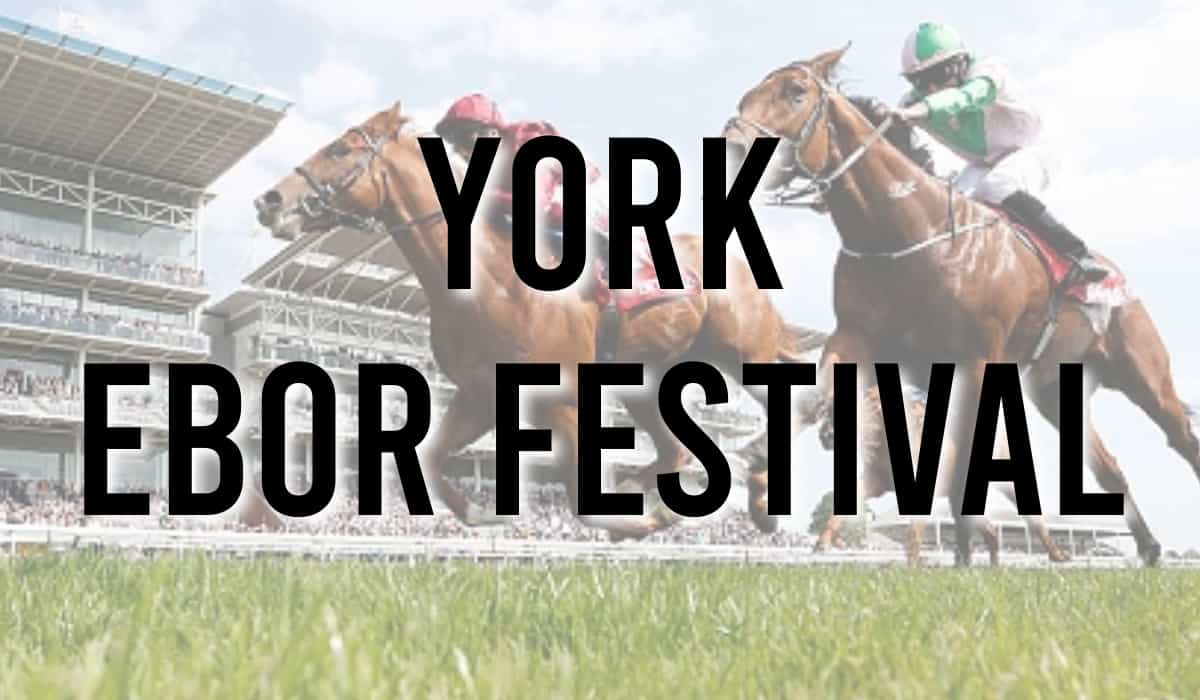
The York Ebor Festival 2026 took place from Wednesday 19 August to Saturday 22 August at York Racecourse.
The four-day Flat racing festival featured a Group 1 race on every day, culminating with the Ebor Handicap on Saturday.
The headline races were the Juddmonte International, Yorkshire Oaks, Nunthorpe Stakes and City of York Stakes, while the Ebor Handicap remained the defining betting race of the final afternoon.
The 2026 festival offered record prize money of almost £7.5 million, including £1.5 million for the Juddmonte International.
York’s broad, galloping track creates a different racing test from sharper summer courses such as Goodwood. Long straights give horses time to build momentum, although draw, pace and positioning can still become important, particularly in the festival’s large handicaps and sprint races.
For detailed information about the track, facilities and racing throughout the season, see our York Racecourse guide. Our York betting tips page covers current selections when racing takes place on the Knavesmire.
Ebor Festival 2026 Dates
The 2026 Ebor Festival ran for four consecutive days.
| Day | Date | Headline Racing |
|---|---|---|
| Wednesday | 19 August 2026 | Juddmonte International, Great Voltigeur Stakes, Acomb Stakes |
| Thursday | 20 August 2026 | Yorkshire Oaks, Lowther Stakes |
| Friday | 21 August 2026 | Nunthorpe Stakes, Lonsdale Cup, Gimcrack Stakes |
| Saturday | 22 August 2026 | Ebor Handicap, City of York Stakes |
The festival forms one of the major late-summer meetings in the British Flat season.
It follows Royal Ascot and Glorious Goodwood before racing moves towards the St Leger Festival and the autumn championship races.
Our horse racing festivals hub covers the wider British and Irish festival calendar, while the 2026 horse racing fixtures page covers the complete British programme.
Ebor Festival at a Glance
Racecourse: York Racecourse
Location: York, North Yorkshire
Dates in 2026: Wednesday 19 to Saturday 22 August
Duration: Four days
Code: Flat racing
Feature race: Ebor Handicap
Group 1 races: Juddmonte International, Yorkshire Oaks, Nunthorpe Stakes and City of York Stakes
Major supporting races: Great Voltigeur Stakes, Lowther Stakes, Lonsdale Cup, Gimcrack Stakes and Strensall Stakes
Course: Left-handed, flat and galloping
2026 festival prize money: Almost £7.5 million
2026 Juddmonte International prize fund: £1.5 million
Why Is It Called the Ebor Festival?
The name Ebor comes from Eboracum, the Roman name associated with York.
The Ebor Handicap gives its name to the wider four-day festival.
Although Saturday’s handicap remains central to the meeting’s identity, the festival now contains top-level races across several divisions.
Middle-distance horses, fillies and mares, sprinters, stayers and juveniles all have major targets during the four days.
That breadth makes the Ebor Festival much more than a single-race meeting.
York Racecourse
The Ebor Festival takes place at York Racecourse on the Knavesmire.
York is a left-handed Flat track with a long home straight.
It is generally regarded as a fair, galloping course.
The layout allows horses more time to find their stride than they receive at tighter tracks, but that does not remove the importance of tactics.
Large festival fields can still create traffic problems.
A horse racing behind several rivals can find itself waiting for a gap while competitors with clear running room begin their challenge.
The straight course also makes draw and pace relevant in sprint races.
Does Draw Matter at York?
Draw bias at York changes according to distance, field size, going and pace.
There is no single rule stating that low or high stalls are permanently best.
The Ebor Festival includes races ranging from five-furlong sprints to staying contests, so applying one draw theory to every race would make little sense.
The Nunthorpe presents a very different draw problem from the Ebor Handicap.
In large fields, consider where the likely front-runners are drawn.
A horse positioned close to the strongest early pace can receive a useful tow into the race.
Our horse racing draw bias guide explains how to use historical stall evidence without treating it as an automatic betting system.
Pace at York
York’s long home straight gives horses time to challenge, but pace remains important.
A slowly run race can make life difficult for a hold-up horse.
If the leaders conserve energy during the early stages, horses racing behind them need to make up ground against rivals that are also capable of accelerating.
A strong early pace creates a different contest.
Front-runners can become vulnerable late, bringing stronger finishers into the race.
This is why we analyse the likely running styles before deciding whether a particular position or draw represents an advantage.
Our pace bias and pace maps guides explain the process in more detail.
Ebor Festival Day 1: Juddmonte International Day
Wednesday opens the Ebor Festival with one of the strongest cards of York’s season.
The principal races include the Acomb Stakes, Great Voltigeur Stakes and Juddmonte International.
Acomb Stakes
The Acomb Stakes is a Group 3 race for two-year-olds over seven furlongs.
Juvenile races require careful interpretation because the runners have limited evidence in the form book.
A horse can improve significantly from one start to the next.
Consider the strength of previous opposition, how professionally the horse travelled and whether the extra experience is likely to help.
Raw finishing positions tell only part of the story.
Great Voltigeur Stakes
The Great Voltigeur Stakes is a Group 2 race for three-year-old colts and geldings over just under a mile and a half.
It is one of Britain’s major trials for the St Leger.
The race’s position in August gives leading three-year-olds time to progress from earlier middle-distance races before connections decide whether to target the longer Classic at Doncaster.
Previous winners include Cracksman, Logician, Pyledriver, Yibir, Continuous, Los Angeles and Pride Of Arras.
The winner does not need to become a St Leger horse, but the race can provide important evidence about stamina.
Our St Leger guide covers the final British Classic of the season.
Juddmonte International
The Juddmonte International is the Group 1 centrepiece of the opening day.
Run over approximately a mile and a quarter, it brings together leading middle-distance horses from different generations.
The race has produced an exceptional roll of honour.
Frankel, Sea The Stars, Baaeed, Australia and other leading horses have won on the Knavesmire.
Its position in August means the form can bring together several strands of the Flat season.
Three-year-olds may arrive from the Derby, Eclipse or other major races, while older horses have had opportunities to establish themselves at meetings such as Royal Ascot.
The 2026 Juddmonte International carried prize money of £1.5 million, making it the richest race ever staged on the Knavesmire at that point.
Ebor Festival Day 2: Yorkshire Oaks Day
Thursday is traditionally Ladies’ Day at the Ebor Festival.
The principal races include the Lowther Stakes and Yorkshire Oaks.
Lowther Stakes
The Lowther Stakes is a Group 2 sprint for two-year-old fillies over six furlongs.
The race can identify some of the strongest juvenile fillies of the season.
Young horses can progress quickly, so do not rely too heavily on the number of races each runner has won.
Look at the level of opposition and how the performance was achieved.
A filly that finished second in a strong race can have better form than one arriving unbeaten from weaker company.
Yorkshire Oaks
The Yorkshire Oaks is a Group 1 race for fillies and mares over a mile and a half.
Three-year-olds can meet older horses, creating an important weight-for-age contest.
The race has been won by outstanding fillies and mares, including Enable, Islington and Midday.
Epsom Oaks and Irish Oaks form can be particularly relevant for the three-year-olds, while older mares can arrive with established Group 1 records.
The long York straight provides a different test from Epsom.
Epsom’s gradients, cambers and Tattenham Corner demand balance and course handling. York gives horses more time to build their challenge.
Who Won the 2026 Yorkshire Oaks?
Kalpana won the 2026 Yorkshire Oaks, ridden by Colin Keane for trainer Andrew Balding.
She defeated Sparan Nua by a short head.
That narrow finish underlines the value of looking beyond simple win and loss records when reviewing festival form later in the season.
Ebor Festival Day 3: Nunthorpe Day
Friday centres on speed.
The Group 1 Nunthorpe Stakes is one of Britain’s leading five-furlong races.
The card also includes the Lonsdale Cup and Gimcrack Stakes.
Lonsdale Cup
The Lonsdale Cup is a Group 2 staying race over approximately two miles.
It provides an important late-summer target for established stayers.
Form from the Gold Cup at Royal Ascot and Goodwood Cup can be highly relevant.
Those races do not provide identical tests.
Ascot has a stiff finish, Goodwood has its distinctive gradients and turns, while York is a flatter and more galloping course.
A horse’s ability to stay two miles therefore needs to be considered alongside how well the track is likely to suit.
Gimcrack Stakes
The Gimcrack Stakes is one of York’s historic juvenile races.
It is a Group 2 contest over six furlongs for two-year-old colts and geldings.
As with the Lowther, improvement can be rapid at this stage of a juvenile’s career.
Speed figures, race experience, pedigree and the quality of previous opposition can all help put limited form into context.
Nunthorpe Stakes
The Nunthorpe Stakes is a Group 1 sprint over five furlongs.
Its age conditions make it particularly unusual because two-year-olds can compete against older sprinters.
Younger runners receive substantial weight allowances, although very few juveniles are good enough to take advantage at Group 1 level.
The race is a test of pure speed.
There is little time to recover from a slow start or poor early position.
Draw should be considered alongside the location of the early pace.
Who Won the 2026 Nunthorpe Stakes?
Bacio won the 2026 Nunthorpe Stakes after travelling from the United States.
The international success reinforced the race’s position as an important sprint target rather than a contest limited to British and Irish horses.
Ebor Festival Day 4: Ebor Day
Saturday is the final day of the festival.
The Ebor Handicap remains the race most closely associated with the meeting, while the programme also contains major supporting races including the City of York Stakes.
Ebor Handicap
The Ebor Handicap is one of Britain’s most important staying handicaps.
It is run over approximately one mile and six furlongs.
Large fields and valuable prize money make it one of the major betting races of the Flat season.
The race requires more than stamina.
A runner also needs to cope with the size of the field, obtain a suitable position and respond when the race begins to develop.
Handicap marks are central to the analysis.
The aim is to identify horses capable of performing better than their current official rating suggests.
That can include progressive younger stayers, horses returning to their best trip or runners whose recent finishing positions disguise better performances.
How to Analyse the Ebor Handicap
Start with stamina.
A horse that does not genuinely stay the trip is unlikely to find the closing stages easy, regardless of how well it travels earlier in the race.
Then consider:
- Handicap Mark
- Recent Form
- Distance Form
- Draw
- Pace
- Going
- York Form
- Weight
- Current Odds
Do not eliminate a horse solely because it carries a big weight.
A high weight usually means the horse has already demonstrated a higher level of ability.
The question is whether its handicap mark still leaves room to perform well.
Our guide to handicap ratings explains how official marks and weights interact.
Who Won the 2026 Ebor Handicap?
Daiquiri Bay won the 2026 Ebor Handicap for trainer Alan King and jockey Rossa Ryan.
He defeated Hopewell Rock by a head, with Opportunity another neck away in third.
The tight finish demonstrated how small margins can decide a large-field handicap after almost a mile and six furlongs.
City of York Stakes
The City of York Stakes provided the fourth Group 1 race of the 2026 festival.
Run over seven furlongs, it occupies a useful position between the sprint and mile divisions.
Seven-furlong specialists can meet horses dropping back from a mile and sprinters stepping up from six furlongs.
That mixture of profiles makes pace particularly important.
Who Won the 2026 City of York Stakes?
Notable Speech won the 2026 City of York Stakes.
His victory provided another major success at York after his established top-level mile form.
The Four Group 1 Races at the 2026 Ebor Festival
The 2026 Ebor Festival featured one Group 1 on each of its four days:
| Day | Group 1 Race |
|---|---|
| Wednesday | Juddmonte International |
| Thursday | Yorkshire Oaks |
| Friday | Nunthorpe Stakes |
| Saturday | City of York Stakes |
The four races cover very different divisions.
The Juddmonte International is a middle-distance race, the Yorkshire Oaks is restricted to fillies and mares, the Nunthorpe is a five-furlong sprint and the City of York Stakes is contested over seven furlongs.
This range helps make York’s festival one of the broadest championship meetings of the British Flat season.
How We Analyse Ebor Festival Races
There is no single system that works across all four days.
A five-furlong Nunthorpe requires different analysis from a mile-and-six-furlong Ebor Handicap.
We begin with the conditions of the individual race:
- Distance
- Class
- Age Restrictions
- Weights
- Handicap Or Conditions Race
- Course Configuration
- Field Size
We then assess each horse’s recent racing form, class, distance record, going, likely pace and York suitability.
The final question is price.
The horse with the strongest form is not automatically a worthwhile bet if the odds underestimate the risk of defeat.
Our guide to finding value in horse racing explains why price needs to be part of the analysis.
Reading Ebor Festival Form
The Ebor Festival takes place late enough in the Flat season for most older horses to have established form.
That does not mean the recent finishing figures tell the full story.
A runner showing:
314
has performed consistently.
But those numbers do not tell you the strength of the races, distances, ground conditions or how the contests developed.
Look at the complete performance.
A horse can run extremely well in defeat after racing on the wrong part of the course or encountering traffic.
Another can win a weaker race without producing form good enough for the next level.
Our horse racing form guide explains how to interpret those details.
Royal Ascot and Goodwood Form at York
Two of the most useful previous festivals are Royal Ascot and Glorious Goodwood.
Many Ebor Festival runners competed at one or both meetings.
The form still needs to be translated to York.
Ascot’s stiff finish provides one type of test.
Goodwood is sharp and undulating.
York is flatter and more galloping.
A horse that was disadvantaged by Goodwood’s tighter configuration can improve when returning to a broad track with a long straight.
The opposite can also apply.
Course suitability should therefore be considered alongside the level of the previous performance.
Going at York
Ground conditions influence every day of the Ebor Festival.
Dry weather can produce fast summer ground, while sustained rain changes the test substantially.
Going can be especially important in staying races and large handicaps.
A horse’s highest rating may have been achieved under very different conditions.
Check the official going and then use the early races to assess how the track is actually riding.
Our guide to what the going means in horse racing explains the standard descriptions.
York Ebor Racecards
Final declarations make detailed race analysis possible.
Once the racecard is available, check:
- Runner
- Draw
- Jockey
- Trainer
- Weight
- Official Rating
- Recent Form
- Course Record
- Distance Record
- Current Odds
The importance of each factor changes between races.
Draw can carry greater significance in a large handicap or sprint, while weight-for-age and Group form can matter more in championship races.
Our today’s racecards cover current British and Irish racing, while tomorrow’s racecards can be used for early analysis.
York Ebor Festival Betting Tips
Our York betting tips page covers current racing at York.
We keep selections separate from this evergreen festival guide because individual tips become obsolete as soon as a race has been run.
Festival analysis should concentrate on the evidence available for each race.
That includes:
- Form
- Class
- Pace
- Draw
- Going
- Course Suitability
- Current Price
Our wider free horse racing tips page covers selections from other meetings taking place on the same day.
Betting on the Ebor Festival
The festival contains very different betting markets.
Group 1 races can have relatively concentrated markets around established top-class horses.
The Ebor Handicap presents a much larger-field problem.
Do not use the same selection method simply because the races take place at the same meeting.
Price comparison is also important.
A horse available at 10/1 represents a different betting proposition from the same horse at 8/1.
Our main horse racing betting sites page compares bookmakers from a racing-specific perspective.
Anyone betting primarily from a phone can use our separate horse racing betting apps comparison.
Ebor Festival Odds
Odds express the market price available for a horse.
They should be considered alongside your own assessment of its chance.
A shorter-priced horse is not automatically a better bet simply because the market considers it more likely to win.
Likewise, a 20/1 runner is not automatically value because the potential return is larger.
Value depends on whether the price is bigger or smaller than the horse’s realistic chance.
Our horse racing betting odds guide explains fractional prices, implied probability and returns.
Each-Way Betting at the Ebor Festival
Large festival handicaps naturally attract each-way betting.
The Ebor Handicap is the obvious example.
Bookmakers can compete by offering additional places, but the number of places should not be assessed alone.
Compare:
- Win Price
- Number Of Places
- Place Fraction
- Field Size
- Total Stake
A bookmaker paying an extra place can simultaneously offer shorter odds.
Our each-way betting tips guide explains how to compare the win and place elements.
Best Odds Guaranteed at York
Best Odds Guaranteed can be relevant during a major festival because prices often move between the morning and the start of a race.
For qualifying bets, BOG generally means a winning selection is settled at the better of the eligible price taken and Starting Price.
Exact terms differ between bookmakers.
Do not assume every race, bet type or early price qualifies.
Our Best Odds Guaranteed guide explains what to check.
History of the Ebor Handicap
The first Ebor Handicap was run in 1843.
The race was created by John Orton, who was Clerk of the Course at York.
Its name derives from Eboracum.
Over time, the race developed into one of the most valuable and competitive staying handicaps in European Flat racing.
The Ebor’s status eventually became large enough for the entire August meeting to become known as the Ebor Festival.
Its appeal comes partly from the nature of handicap racing.
Established stayers can meet progressive horses carrying lower weights, creating a different contest from the Group races staged earlier in the week.
Famous Ebor Festival Horses
York has staged performances by many of the most important Flat horses of the modern era.
Frankel produced one of his greatest performances when winning the Juddmonte International in 2012.
Sea The Stars won the International during his exceptional 2009 season.
Enable won the Yorkshire Oaks twice.
The Nunthorpe roll of honour includes outstanding sprinters, while the Ebor Handicap has produced its own specialists and progressive stayers.
These races require different attributes, which is why success at the Ebor Festival cannot be reduced to a single type of horse.
Visiting the Ebor Festival
The four-day meeting is one of York’s busiest periods of the year.
Plan the practical details before travelling.
Check:
- Ticket And Enclosure
- Dress Code
- Opening Times
- First Race
- Last Race
- Travel
- Return Transport
- Weather
- Accessibility
- Food And Drink Rules
The best day to attend depends on the type of racing you want to see.
Wednesday suits racegoers interested in elite middle-distance racing.
Thursday centres on the Yorkshire Oaks and Ladies’ Day.
Friday provides the festival’s championship sprint.
Saturday combines the Ebor Handicap with the final Group 1 of the meeting.
Our first-time visitors guide to horse racing covers the basics of attending a major British meeting.
Ebor Festival Dress Code
Dress requirements depend on the enclosure.
For the 2026 festival, York required gentlemen in the County Stand to wear a jacket, collared shirt and tie.
Other areas have different conditions.
Always check the rules attached to the enclosure you have booked rather than assuming one dress code applies across the racecourse.
Our what to wear at the races guide provides broader raceday advice.
Getting to York Racecourse
York Racecourse is located on the Knavesmire, south of York city centre.
York railway station provides strong connections with many major British cities, but the racecourse itself is not directly beside the station.
Festival visitors should therefore plan the final stage of the journey.
Large crowds also make the return journey important.
Check transport arrangements before travelling rather than deciding how to get back into the city after the final race.
Ebor Festival Accessibility
Visitors with accessibility requirements should check York’s current arrangements before attending.
Requirements differ between racegoers, so consider:
- Accessible Parking
- Step-Free Access
- Viewing Areas
- Seating
- Accessible Toilets
- Mobility Requirements
- Assistance
Our wider racecourse accessibility guide explains the main points worth checking before a racing trip.
Watching the Ebor Festival on TV
The major races at York receive extensive television coverage.
ITV Racing provides free-to-air coverage of leading British races, while dedicated racing broadcasters provide additional coverage.
Programme times and channels should be checked for the individual day.
Our ITV Racing guide explains the current service and major racing coverage.
Live Streaming the Ebor Festival
Online streaming is another option for eligible viewers.
Access conditions vary.
Bookmaker streams can require an account, funded balance, qualifying bet or other eligibility conditions.
Streaming pictures can also be delayed compared with the action at York.
That delay is particularly relevant to in-running betting.
Our live horse racing streaming guide covers the main viewing options.
What Happens After the Ebor Festival?
The Ebor Festival takes place during the closing stages of the British summer Flat season.
Attention then begins to move towards Doncaster’s St Leger meeting and the major autumn races.
York form can remain important.
Great Voltigeur runners can progress to the St Leger.
Leading Group 1 horses can target British Champions Day, major French races and other international contests.
Juveniles from races such as the Lowther and Gimcrack can emerge as Classic prospects for the following season.
The Ebor Festival therefore has significance well beyond its four days.
Ebor Festival 2027
The Ebor Festival returns annually in August.
British Racecourses will update this page with the confirmed 2027 dates, programme and race information as the next meeting approaches.
Our horse racing fixtures 2027 page covers the wider British racing calendar.
Ebor Festival FAQs
When was the Ebor Festival 2026?
The 2026 Ebor Festival ran from Wednesday 19 August to Saturday 22 August at York Racecourse.
Where is the Ebor Festival?
The Ebor Festival takes place at York Racecourse on the Knavesmire in York.
How long is the Ebor Festival?
The meeting lasts four days, from Wednesday through to Saturday.
What are the four days of the Ebor Festival?
Wednesday is Juddmonte International Day, Thursday is Yorkshire Oaks/Ladies’ Day, Friday is Nunthorpe Day and Saturday is Ebor Day.
What are the Group 1 races at the Ebor Festival?
In 2026 the meeting staged the Juddmonte International, Yorkshire Oaks, Nunthorpe Stakes and City of York Stakes at Group 1 level.
When is the Ebor Handicap?
The Ebor Handicap is staged on Saturday, the final day of the festival. The 2026 race took place on 22 August.
How far is the Ebor Handicap?
The Ebor Handicap is run over approximately one mile and six furlongs.
Who won the 2026 Ebor Handicap?
Daiquiri Bay won the 2026 Ebor Handicap for trainer Alan King and jockey Rossa Ryan.
Who won the 2026 Yorkshire Oaks?
Kalpana won the Yorkshire Oaks under Colin Keane for trainer Andrew Balding.
Who won the 2026 Nunthorpe Stakes?
American-trained Bacio won the 2026 Nunthorpe Stakes.
Who won the 2026 City of York Stakes?
Notable Speech won the City of York Stakes.
Which day is Ladies’ Day at the Ebor Festival?
Thursday is Ladies’ Day and features the Yorkshire Oaks.
Which day is Nunthorpe Day?
Friday is Nunthorpe Day.
Is the Ebor Festival Flat or Jump racing?
The Ebor Festival is a Flat racing meeting.
Is York left or right-handed?
York is a left-handed racecourse.
Does the draw matter at York?
Draw can matter, but its importance changes according to distance, field size, pace and going. It should be analysed in the context of the individual race.
What is the biggest race at the Ebor Festival?
The meeting contains several major races. The Juddmonte International is one of Britain’s leading Group 1 middle-distance races, while the Ebor Handicap is the race from which the festival takes its name.
Where can I find Ebor Festival tips?
Our York betting tips page provides current selections and analysis when racing takes place at York.
Where can I find Ebor Festival racecards?
Use our today’s racecards during the festival and tomorrow’s racecards when preparing for the next day’s racing.
Is the Ebor Festival on ITV?
Major Ebor Festival races receive ITV Racing coverage. Check the current day’s television schedule for exact programme and channel details.
Why is the meeting called Ebor?
The festival takes its name from the Ebor Handicap. Ebor derives from Eboracum, associated with the Roman name for York.
Ebor Festival Summary
The 2026 Ebor Festival took place from Wednesday 19 to Saturday 22 August at York Racecourse.
Four days of racing included a Group 1 on every afternoon.
The Juddmonte International headed Wednesday, the Yorkshire Oaks Thursday, the Nunthorpe Stakes Friday and the City of York Stakes Saturday.
The Ebor Handicap remained the festival’s defining handicap and gave the meeting its name.
The festival also provided important races for stayers, juveniles and developing three-year-olds, including the Great Voltigeur Stakes, Lowther Stakes, Lonsdale Cup and Gimcrack Stakes.
York’s broad, galloping track gives the meeting a different character from Royal Ascot and Glorious Goodwood, while large fields ensure pace, draw and positioning remain important in individual races.
Use our York Racecourse guide for detailed course information, York betting tips for current analysis and the horse racing festivals hub for the wider British and Irish festival calendar.