
The 2027 Grand National takes place at Aintree on Saturday 10 April at 4.00pm. Our final selections will follow an assessment of the declared runners, handicap weights, ground conditions and available odds.
The Grand National is a handicap chase over approximately four miles and two and a half furlongs. A maximum of 34 horses can start, and the runners must negotiate 30 jumps.
Finding a selection involves more than identifying a horse with strong recent form. Stamina, jumping, handicap weight and the likely pace all matter. The available price must also justify the risks.
British Racecourses follows the race from the early ante-post markets through to the final declarations. We distinguish provisional entries from confirmed runners and explain the reasoning behind our selections.
Grand National Tips 2027
British Racecourses has not published a 2027 Grand National selection at this stage.
The final field has not been declared and the official 2027 handicap weights have not yet been published. An early ante-post price also needs to be considered alongside the risk that a horse will not run.
A selection will be published when the horse’s form, likely participation and available price support a reasoned case.
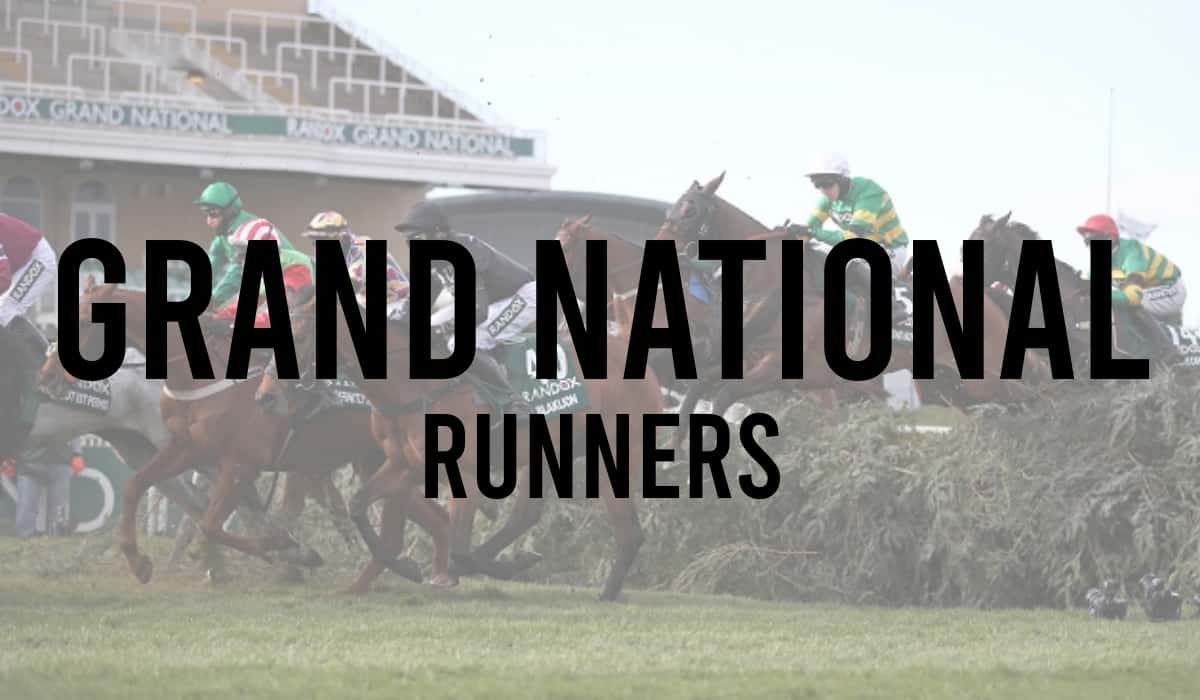
Our Grand National runners and riders page follows the developing field.
How We Assess Grand National Contenders
The Grand National presents a different test from a conventional three-mile handicap chase.
We assess the horse’s stamina, jumping, handicap position, current form, suitability for the ground and experience in large fields.
Those factors help establish whether a runner has a credible chance of performing well. The odds then determine whether the horse is a betting proposition.
A horse can have an appealing profile but still be too short a price for the risks involved.
Stamina for the Grand National Distance
The race covers approximately four miles and two and a half furlongs, considerably further than many established staying chases.
A horse that finishes strongly over three miles has useful form, but it has not necessarily proved that it will stay the National trip.
We look at how a horse performs late in demanding races, particularly when the pace has been strong.
The going also affects the stamina test. A horse that stays well on good ground may face a different challenge if conditions become soft or heavy.
Jumping Ability
A Grand National runner must jump accurately while conserving energy.
A horse that repeatedly loses momentum at fences can use valuable energy recovering its position. That becomes more significant over an extended distance.
Falls, unseated riders and other jumping errors need context. A horse brought down by another runner has not necessarily made a mistake of its own.
One fall does not automatically make a horse unsuitable for the National. The wider jumping record and subsequent performances matter.
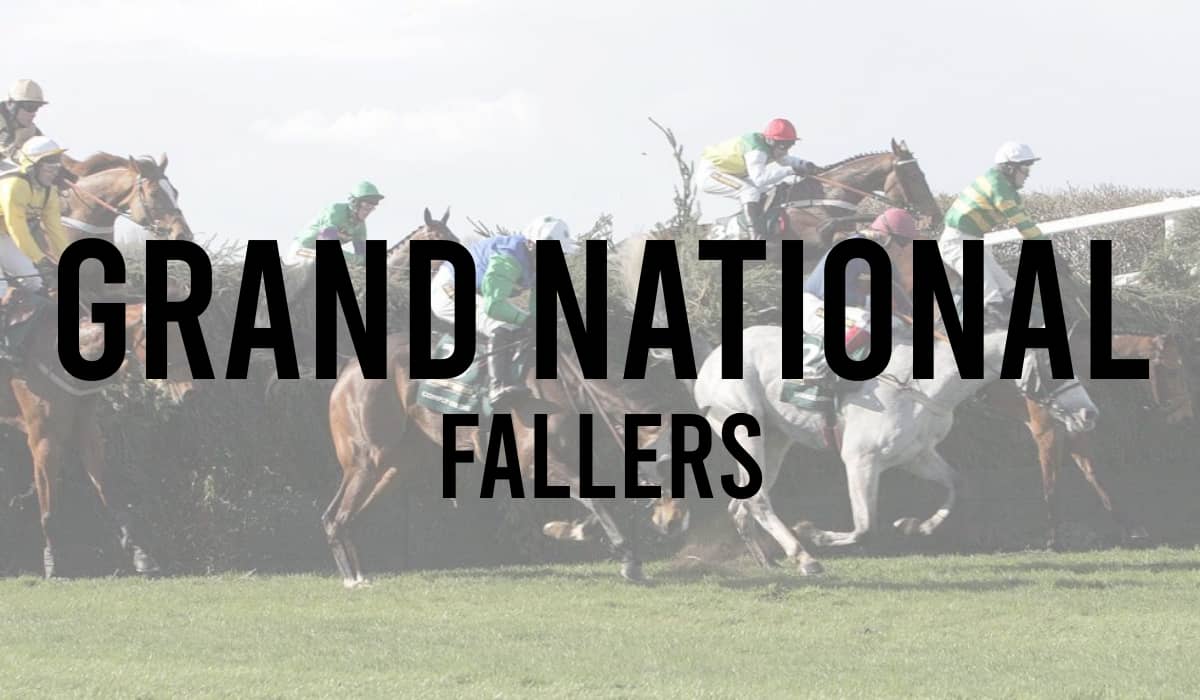
Our Grand National fallers page explains the different non-finishing outcomes.
Experience Over the National Fences
Previous experience of Aintree’s Grand National course is useful evidence.
The Becher Chase and Grand Sefton Chase give horses experience of the National fences over shorter distances. A previous Grand National run also provides information about how a horse copes with the fences and longer trip.
Course experience is not a guarantee of another good performance. A horse may return with a different handicap weight, arrive in different form or encounter different ground.
We assess the circumstances of its previous run rather than relying on the finishing position alone.
Our Grand National fences guide explains the obstacles.
Grand National Handicap Weights
The Grand National is a handicap, so the weight a horse carries is part of its chance.
A highly rated horse may carry more weight but also possess greater ability than rivals lower in the handicap.
We compare the weight with the horse’s previous performances, stamina and jumping record.
A rigid rule that eliminates every horse above a particular weight can overlook strong contenders.
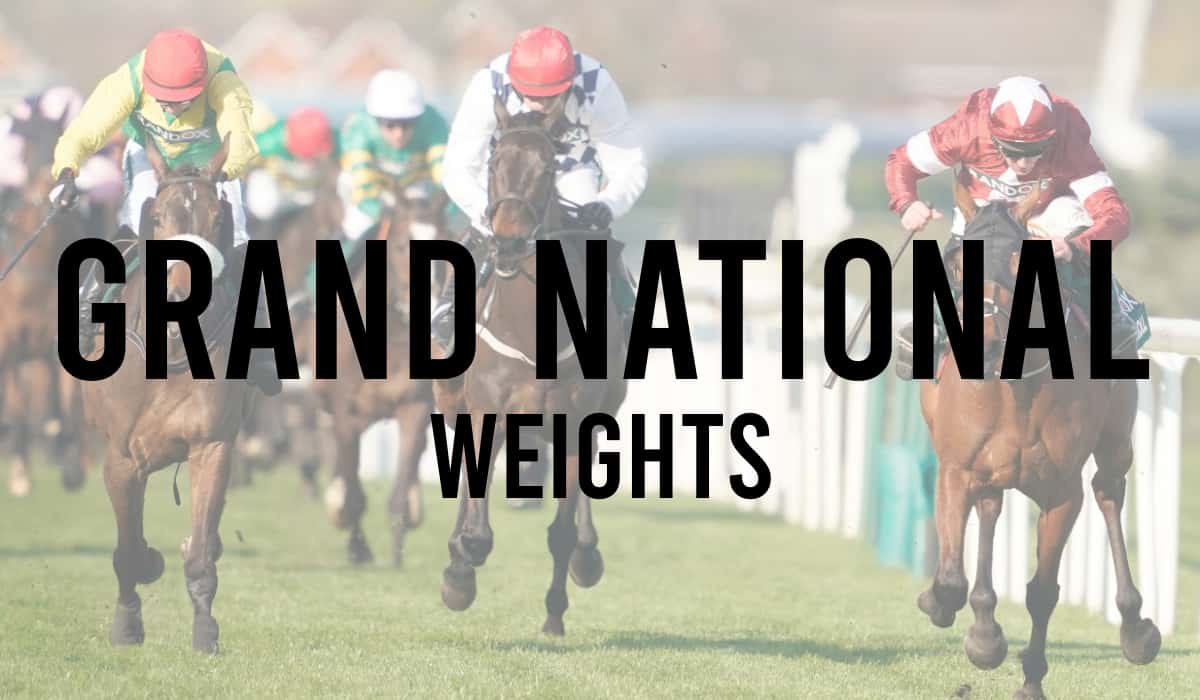
The initial handicap list also needs to be distinguished from the final racecard. Our Grand National weights page explains the system.
Recent Horse Racing Form
Recent form helps establish whether a horse is performing near its best.
We examine the quality of the opposition, race conditions and how the horse travelled and finished.
A narrow defeat in a strong staying chase may be more informative than an easy win against weaker rivals.
A poor finishing position also needs context. The horse may have been unsuited by the ground, made an early mistake or been unable to obtain a clear run.
Our guide to reading horse racing form explains how to assess previous performances.
Trainer Form and Preparation
A trainer’s recent results can provide context, particularly when a yard has several potential Grand National runners.
However, a short losing sequence is not sufficient reason to dismiss every horse from that stable.
We consider the individual horse’s preparation, the races it has contested and verified information released by its connections.
Trainer interviews can help explain why a horse is being aimed at Aintree. Public comments should be considered alongside its racecourse performances.
Jockey Experience
The Grand National demands judgement from its riders.
A jockey must help the horse establish a jumping rhythm, find room in a large field and conserve enough energy for the closing stages.
Previous experience over the National fences can be useful, but the horse and jockey must still perform together on the day.
Jockey bookings should be treated as provisional until confirmed.
Ground Conditions
The official going is an important part of the final assessment.
Some horses have a strong record on soft ground, while others produce their best performances on a sounder surface.
We review previous performances on comparable ground and consider the effect of the conditions on the likely pace and stamina test.
Ground descriptions can change during the build-up to the meeting, so an early forecast should not be treated as the race-day going.
Our horse racing going guide explains the official descriptions.
Grand National Ante-Post Tips
Ante-post betting allows a wager to be placed before the final runners are declared.
A horse may be available at a different price from the one offered closer to the race. The principal risk is that it may not run.
Under ordinary ante-post terms, a bet generally loses if the horse does not take part. A qualifying non-runner, no bet wager returns the stake if the horse does not run, subject to the bookmaker’s terms.
The distinction matters whenever an early Grand National selection is published.
What Makes an Ante-Post Selection Worth Considering?
An ante-post selection needs a reasoned case based on the information available at the time.
We consider the horse’s intended programme, recent form, likely suitability for the race and position in the betting market. We also assess the risk that it will not be declared.
A price should be recorded with the date it was available. An old price should not be presented as though readers can still obtain it.
A later change in circumstances may alter the assessment. A horse could be withdrawn, perform poorly in its preparation or encounter unsuitable ground.
Is Non-Runner No Bet Available for the Grand National?
Bookmakers can introduce non-runner, no bet markets during the build-up.
The offer is not automatically available throughout the ante-post period or across every betting market.
Check that the selected market explicitly carries NRNB terms before placing a wager.
Our horse racing betting sites page explains the wider features to compare when choosing a bookmaker.
Grand National Outsider Tips
An outsider is a horse available at relatively long odds.
A bigger price can be appealing, but it does not establish that the horse represents value.
An outsider may have a stronger staying record than its recent finishing positions suggest, previous experience of the National fences or form that is better than it appears at first glance.
We also consider why the horse is a long price. Concerns about stamina, jumping, current form or participation may be justified.
A long-priced selection needs a credible case, not simply an attractive potential return.
Grand National Each-Way Tips
An each-way bet consists of two equal parts: a win bet and a place bet.
The place part is settled according to the number of places and place fraction offered by the bookmaker when the bet is placed.
Grand National place terms can vary, particularly when bookmakers introduce extra-place promotions.
A £10 each-way bet costs £20 in total. The potential place return should therefore be assessed against the full stake, not just the £10 place portion.
Our Grand National each-way places page explains the calculations.
How to Compare Grand National Betting Odds
A selection should be assessed against the price available.
Different bookmakers can offer different odds on the same horse. The highest win price does not necessarily provide the strongest each-way terms because the number of places and place fraction can differ.
For a win bet, compare the available prices and relevant conditions. For an each-way bet, compare the full potential return.
A bookmaker may also offer Best Odds Guaranteed on qualifying bets, but that benefit should not be assumed to apply to ordinary ante-post wagers or special promotional markets.
Our Grand National betting odds page explains the markets in detail.
What Can Previous Grand National Winners Tell Us?
Previous winners provide useful examples of the different profiles that can succeed at Aintree.
I Am Maximus won in 2024 and 2026, while Tiger Roll won consecutive renewals in 2018 and 2019.
Both demonstrated the value of proven Grand National form, but their victories do not establish a rule that previous winners should always be backed.
Noble Yeats won in 2022 at 50/1, showing that a horse outside the leading positions in the betting can win. That does not mean long-priced runners are automatically better-value bets.
Historical trends need to be considered alongside changes to the race, including the reduction of the maximum field to 34.
Our Grand National previous winners page contains the historical results.
When Are Final Grand National Tips Published?
Final analysis is most useful once the official declarations and racecard are available.
At that point, the confirmed runners, jockey bookings and weights can be assessed alongside the latest going information and available odds.
An earlier ante-post selection may still be relevant, but it should not be treated as a fresh race-day recommendation without reviewing the latest conditions and price.
The reasoning behind a selection matters as much as the horse’s name.
Grand National Tips FAQs
Who is tipped to win the 2027 Grand National?
British Racecourses has not yet published a final 2027 selection. The runners, weights, conditions and available prices need to be assessed before a tip is issued.
When is the 2027 Grand National?
The race takes place at Aintree on Saturday 10 April 2027 at 4.00pm.
How many horses can run in the Grand National?
The maximum field is 34 runners.
Are ante-post runners confirmed?
No. A horse appearing in an ante-post market is not necessarily a confirmed runner.
What happens if an ante-post selection does not run?
Under ordinary ante-post terms, the stake generally loses. A qualifying non-runner, no bet market has different refund terms.
Should I back the Grand National favourite?
Favourite status alone is not sufficient analysis. The available price should be assessed against the horse’s form, stamina, jumping, weight and suitability for the conditions.
Is an outsider a good each-way bet?
A long price can produce a larger return, but the horse still needs a credible chance of finishing in the paid places. Compare the odds, place fraction and number of places.
Does previous Grand National form matter?
Previous experience over the National fences can be useful. It should be considered alongside current form, stamina, weight and ground.
What happens if my selection falls?
A conventional win or each-way bet on a horse that starts and falls loses. A separate qualifying promotion may have different terms.
Where can I find the Grand National runners and weights?
Our Grand National runners and riders and Grand National weights pages carry the relevant information.
Summary
The 2027 Grand National takes place at Aintree on Saturday 10 April.
Our assessment of the race considers stamina, jumping, handicap weights, recent form, ground and available odds. An early ante-post entry is not a confirmed runner, and an attractive price needs to be weighed against the risk that the horse will not take part.
Final selections require a reasoned assessment of the declared field and the terms available when the bet is placed.
Related 2026 Grand National Betting Articles
Here are all the related articles to the Randox Grand National 2026.
-

Aintree Racecourse Guide
-
How Many Places Pay Out in the Grand National?
-
Mersey Novices’ Hurdle
-
Maghull Novices’ Chase
-
Top Novices’ Hurdle
-
Manifesto Novices’ Chase: Aintree Grade 1 Race Guide, Winners & Trends
-
Nickel Coin Mares’ Standard Open NH Flat Race
-
Red Rum Handicap Chase
-
Anniversary 4-Y-O Novices’ Hurdle
-
Topham Chase
-
Liverpool Hurdle
-
Ladies Days At The Races
-
Aintree Festival Day 3 Tips
-
Aintree Festival Day 2 Tips
-
Aintree Festival Day 1 Tips
-
Aintree Festival
-
Aintree Foxhunters Chase
-
Sefton Novices Hurdle
-
Mildmay Novices Chase
-
Melling Chase: Aintree Grade 1 Race Guide, Winners & Trends
-
Aintree Hurdle
-
Grey Horses in the Grand National
-
Grand National Dark Horses
-
Grand National Betting Odds 2027: Compare Prices and Each-Way Terms
-
Watch the Grand National Live
-
Grand National Favourites 2027: Betting Market and Previous Winners
-
Grand National Start Time
-
Bet On Grand National Online
-
Grand National Facts
-
Grand National Runners and Riders 2027: Entries, Horses and Confirmed Field
-
Grand National Fallers: 2026 Results, Non-Finishers and Historical Statistics
-
Grand National Fences: Complete Guide to All 30 Jumps at Aintree
-
Grand National Tips 2027: Ante-Post Analysis, Form and Betting Guide
-
Grand National Weights 2027: Handicap Weights, Entries and How They Work
-
Grand National Tickets
-
Grand National Prize Money
-
Grand National Previous Winners: Full Results, Horses, Jockeys and Trainers
-
Grand National Betting Offers 2027: Free Bets, Extra Places and Promotions
-
Grand National 2027























If you do choose to bet, please bet responsibly.