Everything You Need to Know About Britain’s Greatest Equestrian Sport
Chapter 1: Discovering Horse Racing
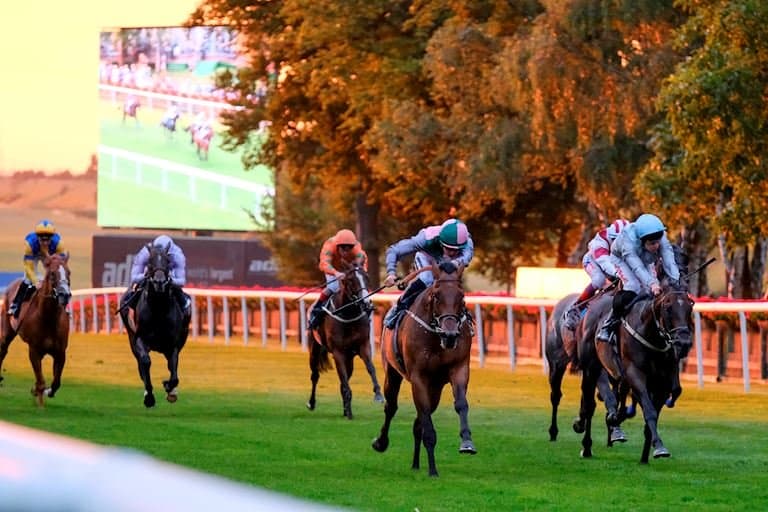
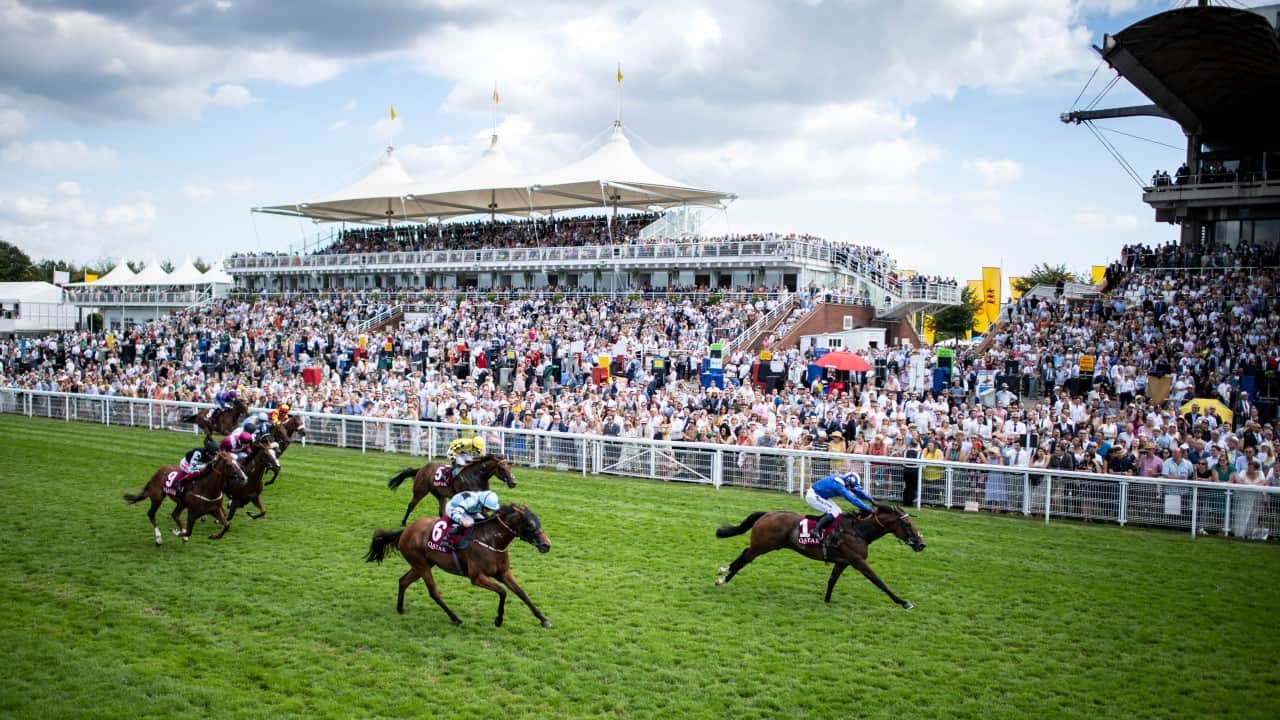
Few sports combine history, tradition, athletic excellence and sheer spectacle quite like horse racing. Whether it is the roar of the crowd as the runners charge towards the winning post at Royal Ascot, the drama of the final fence at the Grand National, or the electric atmosphere of the Cheltenham Festival, racing has an unrivalled ability to captivate both lifelong followers and first-time spectators.
For many people, however, horse racing can seem intimidating at first. The language is unfamiliar, racecards appear full of mysterious abbreviations, betting terminology can be confusing, and there are dozens of different race types, championships and festivals to understand. Even regular sports fans can feel as though they have arrived halfway through a conversation that everyone else has been having for generations.
The reality is far simpler.
At its heart, horse racing is about remarkable athletes, both equine and human, competing at the highest level. Every race tells its own story. Months, and often years, of careful planning, patient training and meticulous preparation come together in contests that can be decided by a matter of inches or fractions of a second. Behind every winner lies an owner with a dream, a trainer with a carefully prepared plan, a jockey making split-second decisions and a dedicated team of stable staff who have cared for the horse every single day.
Horse racing also occupies a unique place within British sporting culture. Unlike many sports that are played in purpose-built stadiums, racing takes place in some of the country’s most beautiful landscapes. Ancient downs, rolling countryside, dramatic coastlines and historic market towns provide the backdrop to racecourses that have welcomed generations of spectators. Many of Britain’s courses have been hosting meetings for well over a century, with traditions that continue to shape the sport today.
One of the reasons horse racing has remained so popular is its extraordinary variety. Flat racing showcases speed, precision and tactical brilliance over distances ranging from five furlongs to more than two miles. National Hunt racing adds another dimension, asking horses to combine stamina and courage with the ability to jump hurdles and fences at speed. Every season brings new stars, fresh rivalries and unforgettable moments.
The calendar itself provides almost constant entertainment. Spring begins with championship jump racing before attention gradually turns towards the Classic races and Royal Ascot. Summer offers picturesque evenings at courses across the country, while autumn produces prestigious festivals and valuable handicaps. As winter arrives, the focus shifts back towards the great jumping stars preparing for Cheltenham and Aintree. There is scarcely a week of the year when horse racing is absent from Britain’s sporting landscape.
Modern racing is also far more accessible than many newcomers realise. Television coverage is extensive, race meetings welcome visitors of every age, and countless resources make it easier than ever to understand the sport. Whether your interest lies in attending a race meeting, following famous trainers and jockeys, learning how to interpret horse racing form, or simply appreciating the incredible athleticism of the horses themselves, there has never been a better time to get involved.
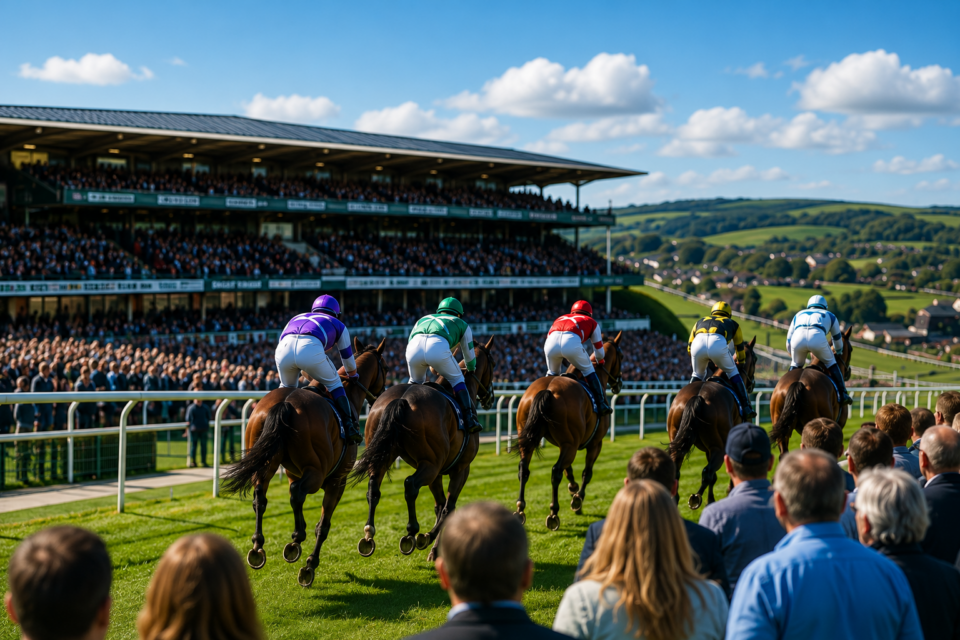
This guide has been written to remove the mystery surrounding horse racing. Rather than assuming prior knowledge, it explains every major aspect of the sport in a logical, easy-to-follow way. By the time you reach the end, you will understand how races are organised, how horses are trained, what happens on race day, how to read a racecard, why different race types exist, how the seasons unfold and what makes Britain’s racing culture so distinctive.
More importantly, you’ll gain an appreciation for the dedication, skill and passion that underpin every meeting, from a quiet weekday fixture at a country course to the world’s most famous festivals.
Horse racing is often described as the Sport of Kings, but today it belongs to everyone. Whether you are planning your first visit to a racecourse or simply want to understand what all the excitement is about when the Grand National or Derby comes around each year, this guide will give you the knowledge and confidence to enjoy one of Britain’s oldest and most fascinating sports.
Why Horse Racing Captivates Millions
There is something uniquely compelling about watching a racehorse in full flight. Even people with little previous interest in the sport often find themselves drawn in by the raw power and elegance of a thoroughbred galloping at over 40 miles per hour. It is a spectacle that combines athletic excellence with unpredictability, where every race can produce a new hero or an unforgettable upset.
Unlike many sports, horse racing is built around partnerships. Victory is never the achievement of one individual alone. Every winning performance reflects months of teamwork involving owners, trainers, jockeys, stable staff, veterinarians, farriers and countless others working behind the scenes. The horse may cross the finishing line first, but success belongs to an entire team.
This partnership between horse and human has fascinated spectators for centuries. The relationship between a jockey and their mount demands remarkable trust and understanding. During a race, split-second decisions can determine the outcome. Choosing when to conserve energy, when to challenge rivals and when to ask a horse for its final effort requires judgement developed over years of experience.
The horses themselves are extraordinary athletes. Thoroughbreds are bred specifically for speed, stamina and competitive spirit. Elite racehorses possess immense cardiovascular fitness, powerful musculature and an instinctive desire to compete. Their preparation mirrors that of Olympic athletes, with carefully managed exercise programmes, specialist nutrition and constant veterinary oversight ensuring they perform at their very best.
History is another reason horse racing continues to capture the imagination. Many of Britain’s most famous races have been contested for well over a hundred years. Legendary horses such as Red Rum, Arkle, Frankel and Desert Orchid remain household names long after their racing careers ended. Their achievements have become woven into the fabric of British sporting history, inspiring new generations of racing enthusiasts.
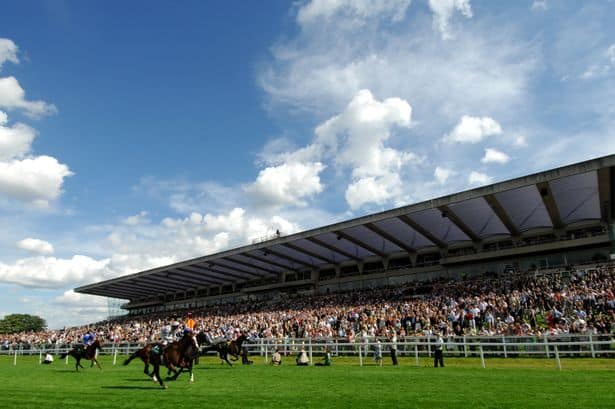
The settings also contribute enormously to the sport’s appeal. Few sporting venues can rival the beauty and character of Britain’s racecourses. From the rolling Berkshire countryside surrounding Ascot Racecourse to the dramatic natural amphitheatre at Cheltenham Racecourse, every venue has its own atmosphere and traditions. Some courses sit beside beaches, others overlook historic cities, while several occupy landscapes that have hosted racing for centuries.
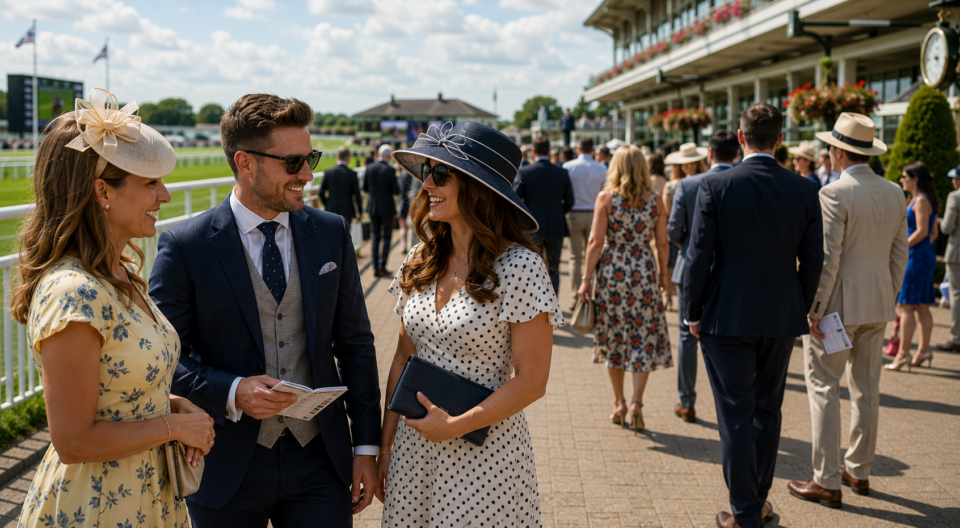
For spectators, a day at the races offers far more than the action on the track. It is a social occasion, a chance to enjoy excellent food and hospitality, admire fashion on Ladies’ Days, explore beautiful venues and share the excitement with friends and family. Many people who attend for the first time discover that the atmosphere alone is enough to bring them back year after year.
Perhaps the greatest attraction of horse racing is that no outcome is ever guaranteed. Form, fitness, weather, tactics, the pace of the race and countless other variables combine to create genuine uncertainty. The favourite does not always win. Outsiders regularly upset expectations. Every race carries the possibility of producing a memorable story.
That unpredictability is what keeps millions of people engaged throughout the year. Every meeting represents another chapter in a sport that is constantly evolving while remaining deeply rooted in centuries of tradition.
Horse racing is ultimately about much more than identifying winners. It is about appreciating remarkable animals, celebrating sporting excellence and becoming part of a tradition that continues to thrive across Britain and Ireland. For newcomers, understanding these foundations makes every race far more rewarding to watch, whether from the grandstand, at home on television or alongside the rail as the field races past.
Chapter 2: The History of British Horse Racing
To understand why horse racing occupies such a special place in British culture, it helps to look beyond the excitement of modern race days and into the sport’s remarkable history. Every meeting held today, whether at a quiet country course or one of Britain’s most famous venues, is part of a tradition that stretches back hundreds of years.
Few sports can claim such deep historical roots. Horse racing has evolved alongside Britain itself, surviving wars, political change, economic upheaval and dramatic shifts in society. While the sport has become faster, safer and more professional over the centuries, its essential appeal remains unchanged. People are still captivated by watching magnificent horses compete at the highest level.
Today’s racing industry, with its carefully maintained racecourses, world-class trainers and internationally recognised festivals, owes everything to generations of breeders, owners, jockeys and organisers who helped shape the sport into what it is today.
The Earliest Horse Races
Horse racing has existed in one form or another for thousands of years. Ancient civilisations, including the Greeks, Romans and Egyptians, all organised contests involving horses, although these were often chariot races rather than the thoroughbred racing we recognise today.
In Britain, organised horse racing can be traced back to the medieval period. Horses were essential for transport, agriculture and warfare, making them some of the country’s most valuable animals. It was only natural that people began comparing their speed.
During the twelfth and thirteenth centuries, informal races between locally owned horses became increasingly common. Wealthy landowners challenged one another to private contests, often wagering significant sums on the outcome. These races were usually held across open countryside rather than on prepared tracks, with few formal rules and little organisation.
Although primitive by modern standards, these early contests established the competitive spirit that still defines horse racing today.
Royal Influence
The sport’s development accelerated dramatically thanks to the enthusiasm of Britain’s monarchy.
Several medieval kings kept fast horses and encouraged racing, but it was during the reign of King James I in the early seventeenth century that horse racing began taking on a more recognisable form.
James discovered the open heathland at Newmarket while travelling between London and Edinburgh. The wide, gently undulating landscape proved perfect for galloping horses, and he quickly recognised its potential.
His decision to establish racing there transformed the future of British horse racing.
Today, Newmarket Racecourse remains widely regarded as the spiritual home of British racing. The town itself has grown into the centre of the thoroughbred industry, housing major training yards, breeding operations and internationally renowned sales companies.
Many of Britain’s greatest horses have been trained on Newmarket’s famous gallops, continuing a tradition that stretches back more than four centuries.
King Charles II later strengthened Newmarket’s position as racing’s headquarters. Often referred to as the “Father of the English Turf”, Charles was passionate about racing and personally competed as an owner. Under his patronage, Newmarket became the fashionable meeting place for aristocracy, politicians and wealthy landowners, firmly establishing horse racing as one of Britain’s leading sports.
The Birth of the Thoroughbred
One of the most significant developments in racing history occurred away from the racecourse.
During the late seventeenth and early eighteenth centuries, British breeders began importing exceptionally fast stallions from the Middle East. Three horses, now famous throughout racing history, became the foundation sires of the modern Thoroughbred.
The Byerley Turk, the Darley Arabian and the Godolphin Arabian contributed bloodlines that still appear in virtually every thoroughbred racehorse alive today.
By carefully crossing these imported stallions with high-quality British mares, breeders produced horses possessing greater speed, stamina and athleticism than ever before.
The result was the creation of the Thoroughbred, a breed developed specifically for racing.
Modern racehorses remain direct descendants of these remarkable animals, making the Thoroughbred one of the most carefully documented breeds anywhere in the world.
This emphasis on breeding continues to shape the sport today, with pedigree playing an important role in determining a horse’s value, potential and future breeding prospects.
Racing Becomes Organised
As racing grew in popularity, it became clear that formal rules were needed.
Different regions used different regulations, distances varied widely and disputes over race results were common.
The solution arrived in 1750 with the formation of what would become The Jockey Club.
Although its influence has evolved over time, the organisation established many of the standards that still underpin British racing today. It introduced greater consistency, oversaw race planning and helped ensure fairness throughout the sport.
Standardised rules transformed racing from a pastime enjoyed mainly by the aristocracy into an organised national sport.
Prize money increased, race meetings became more structured and attendance grew steadily throughout Britain.
Many of today’s historic racecourses also began developing during this period, laying the foundations for the venues that continue to host racing centuries later.
The Classic Races
Perhaps no development has had a greater influence on Flat racing than the creation of Britain’s five Classic races.
These prestigious contests were established during the late eighteenth and early nineteenth centuries to identify the very best three-year-old thoroughbreds.
Collectively known as the British Classics, they remain among the most coveted prizes in racing.
The five races are:
• 2,000 Guineas
• 1,000 Guineas
• The Derby
• The Oaks
• St Leger Stakes
Each presents a different challenge, testing combinations of speed, stamina and temperament.
Winning even one Classic can define a horse’s career.
Completing multiple Classics places a horse among the legends of the sport.
These races also continue to influence breeding decisions around the world, with successful winners often becoming highly sought-after stallions or broodmares after retirement.
The Rise of National Hunt Racing
While Flat racing flourished during the eighteenth century, another form of competition was developing across the countryside.
Farmers, hunters and cavalry officers frequently rode across fields, hedges, streams and stone walls while travelling between villages.
It was only a matter of time before these journeys became competitive.
Early cross-country contests eventually evolved into what we now know as National Hunt racing.
Unlike Flat racing, jump racing tests far more than speed alone.
Horses must combine stamina, bravery, balance and accurate jumping while negotiating hurdles or larger steeplechase fences.
The sport gradually became more organised throughout the nineteenth century, with purpose-built racecourses replacing open countryside.
Today, National Hunt racing remains hugely popular across Britain and Ireland, producing household names such as Red Rum, Arkle, Best Mate, Desert Orchid and Kauto Star.
Its greatest celebration is the Cheltenham Festival, while the Grand National remains one of the world’s most famous horse races.
The Victorian Racing Boom
The nineteenth century transformed horse racing from a largely aristocratic pastime into a truly national sport.
Britain’s expanding railway network allowed racegoers to travel greater distances than ever before.
Suddenly, thousands of spectators could attend meetings that had previously been accessible only to local communities.
Racecourses expanded rapidly.
Grandstands became larger.
Hospitality improved.
New meetings appeared throughout the country.
Racing newspapers flourished, providing form analysis, results and commentary to an increasingly knowledgeable audience.
Bookmakers also became a familiar feature of race meetings, helping to establish betting as an important, although carefully regulated, part of the sport’s culture.
By the end of Queen Victoria’s reign, horse racing had become firmly established as Britain’s leading spectator sport.
Racing Through the Modern Era
The twentieth century brought enormous change.
Both World Wars disrupted racing, with many racecourses temporarily closing or being used for military purposes. Some famous races were relocated, while others were cancelled altogether.
Yet racing always returned.
Following the Second World War, television introduced the sport to millions of households for the first time.
Legendary horses such as Arkle, Mill Reef, Nijinsky, Brigadier Gerard, Red Rum, Desert Orchid and Frankel became national sporting icons.
Training methods also became increasingly scientific.
Veterinary medicine advanced significantly.
Racecourse safety improved.
Prize money grew.
International competition expanded.
Today, British racing enjoys worldwide prestige, attracting owners, trainers and jockeys from across the globe while continuing to produce horses capable of winning the sport’s greatest international prizes.
A Sport That Balances Tradition and Progress
One of horse racing’s greatest strengths is its ability to evolve without losing sight of its heritage.
Modern racecourses offer first-class hospitality, digital betting, live television coverage and advanced veterinary facilities, yet many still stage races first run more than two centuries ago.
Historic venues continue to sit alongside modern innovations.
Centuries-old traditions remain an essential part of race day.
The famous colours carried by jockeys still identify owners, just as they did generations ago.
The parade ring remains the place where spectators first inspect runners before a race.
Winning horses still return to the unsaddling enclosure to receive applause from connections and racegoers alike.
Few sports have preserved their traditions so successfully while embracing modern standards of welfare, safety and professionalism.
Understanding this remarkable history helps explain why horse racing continues to hold such a unique place in British sporting life. Every race is more than a contest between horses. It is another chapter in a story that has been unfolding for hundreds of years and continues to inspire millions of people every season.
Chapter 3: Understanding the Sport
Flat Racing Explained
If you ask someone to picture a horse race, chances are they will imagine Flat racing.
A field of sleek thoroughbreds bursts from the starting stalls, quickly settling into position before accelerating towards the finishing line in an explosive display of speed and athleticism. It is the image most commonly associated with horse racing and remains the foundation upon which the modern sport has been built.
Despite its name, Flat racing is anything but simple.
Success depends on far more than finding the fastest horse. Every contest is shaped by tactics, pace, stamina, ground conditions and split-second decisions made by jockeys travelling at speeds approaching 40 miles per hour. A race lasting little more than a minute may have taken months of careful planning to prepare for.
Understanding Flat racing is the first step towards understanding horse racing as a whole.
What Is Flat Racing?
Flat racing is exactly what the name suggests.
Horses compete over a course without negotiating obstacles such as hurdles or fences. The objective is straightforward. The first horse to cross the finishing line is the winner.
While the concept is simple, Flat racing encompasses a remarkable variety of contests.
Some races are furious five-furlong sprints that are over in less than a minute. Others stretch beyond two miles and demand immense stamina as well as speed. Some are designed exclusively for inexperienced horses, while others attract the finest thoroughbreds in the world competing for millions of pounds in prize money.
Every race asks slightly different questions of both horse and jockey.
The Flat Racing Season
Traditionally, Britain’s Flat racing season runs from spring until autumn.
The season begins in earnest during March, gradually building towards the first Classics before reaching its peak during the summer months. Meetings take place almost every day across the country, giving racing fans an almost endless choice of fixtures to follow.
Some of the sport’s most prestigious events are held during this period, including:
- 2,000 Guineas
- 1,000 Guineas
- The Derby
- The Oaks
- Royal Ascot
- Glorious Goodwood
- York Ebor Festival
These meetings showcase the very best horses, jockeys and trainers, while attracting enormous crowds and worldwide television audiences.
Although many people think Flat racing finishes with the arrival of autumn, the sport actually continues throughout the winter thanks to Britain’s network of all-weather racecourses.
Turf and All-Weather Racing
Britain’s Flat racing takes place on two different surfaces.
The traditional surface is turf.
Grass has been the foundation of British racing for centuries and remains the preferred surface for almost all of the sport’s biggest races. Every racecourse presents slightly different characteristics, with varying gradients, cambers and bends adding further complexity to each contest.
The condition of the turf also changes depending on weather, creating different types of going that can significantly influence results.
Alongside turf racing sits the all-weather programme.
Purpose-built synthetic surfaces allow racing to continue throughout the year, even during the depths of winter when turf courses would be unsuitable.
Britain currently stages all-weather racing at several specialist venues, including Kempton Park Racecourse, Lingfield Park Racecourse, Southwell Racecourse, Newcastle Racecourse, Wolverhampton Racecourse and Chelmsford City Racecourse.
Each surface behaves slightly differently, meaning some horses perform noticeably better on one type than another.
For newcomers, this simply adds another fascinating layer to the sport rather than making it more complicated.
Understanding Race Distances
One of the first things you’ll notice when looking at a racecard is the distance of each race.
British racing measures distance using miles and furlongs.
A furlong is one-eighth of a mile, or approximately 201 metres.
Most Flat races fall into one of three broad categories.
Sprint Races
Sprint races are generally run over five, six or seven furlongs.
These contests demand explosive acceleration from the moment the stalls open.
Position is crucial.
There is little time for jockeys to recover from mistakes, and races are often decided by fractions of a second.
Some of the fastest horses in training spend their entire careers competing over sprint distances.
Middle-Distance Races
Middle-distance contests usually range between one mile and one mile four furlongs.
These races require a blend of speed, stamina and tactical awareness.
The world’s most famous Flat race, The Derby, is run over one mile and four furlongs, a distance widely regarded as the ultimate examination of a three-year-old thoroughbred.
Many of racing’s greatest champions have excelled over these distances.
Staying Races
Staying races extend beyond one mile and four furlongs.
Rather than relying purely on speed, these contests reward horses capable of maintaining a relentless gallop over extended distances.
The oldest of Britain’s five Classics, the St Leger Stakes, is run over almost one mile and six furlongs, demanding exceptional stamina.
Specialist stayers often become fan favourites because of their remarkable endurance and consistency.
How Flat Races Begin
Unlike jump racing, where horses gather behind tapes before setting off together, Flat races begin from starting stalls.
These individual metal stalls ensure every horse starts from exactly the same point.
Loading can sometimes take several minutes.
Some horses walk calmly into their stall, while others require encouragement from experienced handlers.
Once every runner is safely loaded, the starter releases the gates electronically.
The stalls spring open simultaneously and the race begins instantly.
Fast reactions are vital.
A horse that hesitates leaving the stalls may surrender several lengths before the race has properly developed.
At sprint distances, recovering from such a poor start is often impossible.
Why Tactics Matter
Newcomers often assume horse racing is simply a question of riding as fast as possible.
In reality, races are rarely won that way.
Every jockey must judge the pace perfectly.
Move too early and the horse may tire before reaching the finishing line.
Wait too long and there may be insufficient room to challenge.
Positioning is equally important.
Some jockeys prefer to race prominently near the leaders.
Others deliberately settle towards the rear before producing a late challenge.
The ideal tactics vary depending on the horse’s running style, the distance, the pace of the race and even the layout of the racecourse itself.
Watching experienced jockeys execute these tactical plans is one of the sport’s greatest pleasures.
Age Groups in Flat Racing
Flat racing also divides horses according to age and experience.
Many races are restricted to two-year-olds, allowing young horses to compete against rivals at a similar stage of development.
Others are reserved for three-year-olds, particularly the Classic races.
Older horses then compete in open-age contests, where experience often balances youthful enthusiasm.
This structure allows horses to develop naturally while ensuring fair competition throughout their careers.
Understanding age restrictions also makes it much easier to interpret race conditions when studying a racecard.
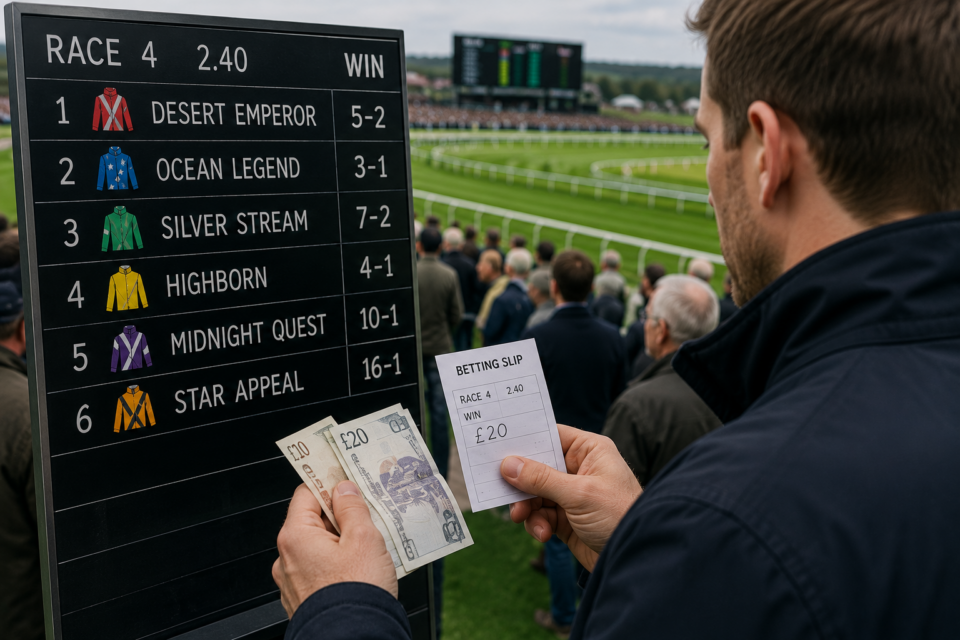
What Makes a Great Flat Horse?
Not every successful Flat horse possesses exactly the same qualities.
Outstanding sprinters are explosive athletes capable of incredible acceleration.
Classic winners combine speed with stamina and the ability to settle calmly before producing a decisive finishing effort.
Elite stayers possess remarkable endurance, often maintaining a strong gallop over distances that would exhaust less capable rivals.
Regardless of distance, however, the very best horses usually share several characteristics.
They have a powerful stride.
They remain relaxed under pressure.
They respond willingly to their jockey.
Most importantly, they possess the competitive instinct that separates champions from merely talented horses.
Some horses appear to relish passing rivals in the closing stages, finding extra effort when challenged.
That determination cannot easily be measured, but it is one of the qualities that has made legends such as Frankel, Sea The Stars and Enable so admired by racing fans.
Flat Racing Today
Modern Flat racing blends centuries of tradition with cutting-edge professionalism.
Training methods continue to evolve.
Veterinary science has advanced enormously.
Nutrition, fitness monitoring and performance analysis are more sophisticated than ever before.
Yet the essence of the sport remains unchanged.
Every race begins with a group of beautifully bred thoroughbreds standing quietly inside the starting stalls.
Moments later, they burst into action, racing at breathtaking speed towards the winning post as thousands of spectators watch in anticipation.
It is a simple concept that has enthralled generations.
For newcomers, Flat racing offers the perfect introduction to horse racing. Once you understand the different distances, surfaces, tactics and race types, the sport becomes infinitely more engaging to follow. Every contest tells a slightly different story, and every meeting offers the possibility of witnessing the next great champion.
Chapter 4: National Hunt Racing Explained
For many racing enthusiasts, National Hunt racing represents horse racing at its most dramatic.
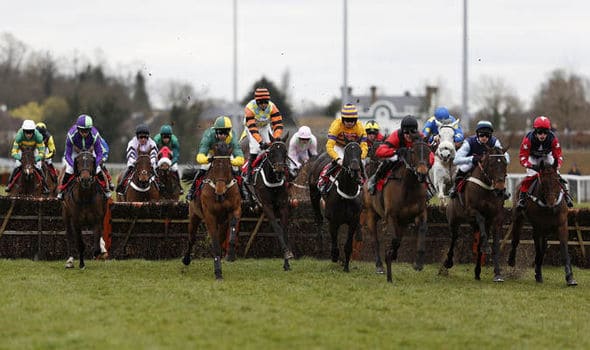
Watching a horse clear a line of hurdles or boldly attack the famous fences of Aintree Racecourse requires an extraordinary combination of speed, balance, courage and trust between horse and rider. Every successful jump is the result of countless hours of training, while every race tests stamina and determination as much as outright ability.
Although Flat racing often captures the attention of casual viewers during the summer, National Hunt racing is the sport that inspires almost fanatical devotion throughout the winter months. It is home to some of Britain’s most iconic sporting moments and produces horses whose careers often span many years, allowing fans to build lasting connections with their favourites.
Legends such as Red Rum, Arkle, Best Mate, Kauto Star, Denman, Desert Orchid and Sprinter Sacre became household names not simply because they won races, but because they returned season after season to delight racing fans across Britain and Ireland.
Understanding National Hunt racing opens the door to one of the richest traditions in the sport.
What Is National Hunt Racing?
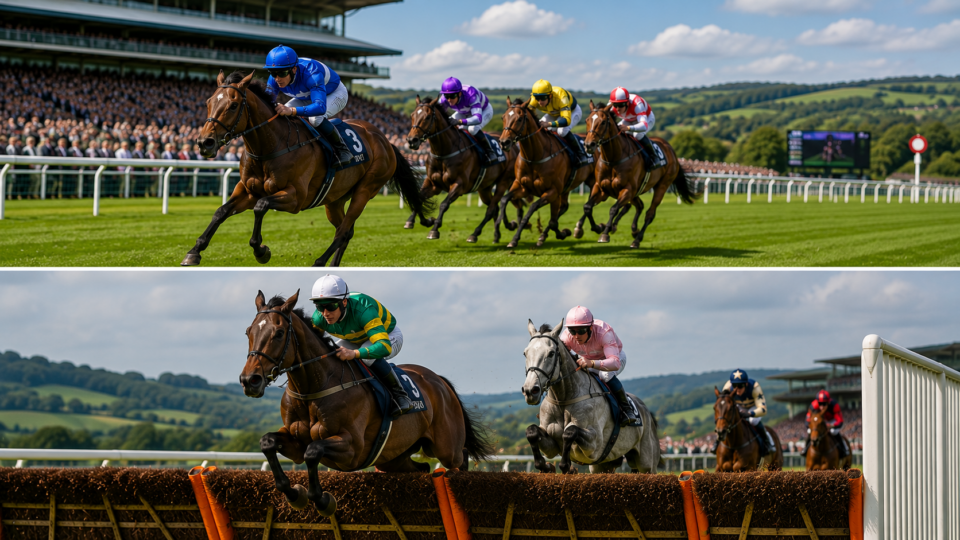
National Hunt racing, often referred to as jump racing, is a form of horse racing in which horses compete over obstacles.
Depending on the race, those obstacles may be hurdles or larger steeplechase fences.
Unlike Flat racing, where explosive speed is often the deciding factor, jump racing places far greater emphasis on stamina, rhythm and jumping ability. Horses must maintain their balance while travelling at speed, judge every obstacle accurately and conserve enough energy to finish strongly after distances that frequently exceed two miles.
The result is a fascinating tactical contest in which mistakes can prove costly, but patience and experience are often rewarded.
It is this combination of athleticism and unpredictability that has helped National Hunt racing develop such a loyal following.
When Does the National Hunt Season Take Place?
The National Hunt season generally runs from autumn through to late spring.
Although jump racing takes place throughout much of the year, the main season begins to gather momentum during October before reaching its peak during the winter months.
As temperatures fall and turf conditions soften, attention gradually shifts away from the Flat season towards the great jumping festivals.
The calendar builds steadily towards several major highlights, including:
- Cheltenham Festival
- Grand National Festival
- Aintree Grand National
- King George VI Chase
- Coral Gold Cup
- Punchestown Festival
For many racing fans, the period between November and April represents the very heart of the sport.
Why Jump Racing Is Different
At first glance, the biggest difference is obvious.
The horses jump obstacles.
In reality, the contrasts run much deeper.
Jump races are usually run over much longer distances than Flat races.
Many contests cover between two and four miles, placing enormous physical demands on both horse and jockey.
Rather than producing one explosive burst of speed, successful jump horses settle into a comfortable rhythm before gradually increasing the pressure as the race develops.
Every fence or hurdle creates another tactical challenge.
A poor jump can cost valuable ground.
An overly aggressive early pace may leave a horse exhausted before the closing stages.
Equally, a patient ride can allow a horse to finish strongly as tiring rivals begin to weaken.
Watching these tactical battles unfold is one of National Hunt racing’s greatest attractions.
Hurdle Races
The first step for most jump horses is hurdle racing.
Hurdles are relatively low, flexible obstacles designed to teach horses the fundamentals of jumping at racing speed.
Although they appear straightforward, successful hurdling still demands balance, timing and confidence.
Young horses or those beginning their jumping careers often start in novice hurdle races, where they compete against similarly inexperienced rivals.
As horses develop, they may progress into valuable handicap hurdles or championship races featuring the sport’s elite performers.
Among the most prestigious hurdle contests are the Champion Hurdle and Stayers’ Hurdle, both run during the Cheltenham Festival.
Winning either race places a horse among the finest hurdlers of its generation.
Steeplechases
Steeplechases, commonly known simply as chases, represent the ultimate challenge in National Hunt racing.
The fences are significantly larger than hurdles and require exceptional bravery and technique.
Unlike hurdles, steeplechase fences are solid obstacles constructed using birch, making accurate jumping essential.
Horses cannot simply brush through them.
Every fence must be attacked with confidence while maintaining momentum towards the next obstacle.
Many horses improve with experience, gradually learning how to measure each fence and use as little energy as possible while jumping cleanly.
The greatest chasers appear almost effortless.
Watching an experienced champion glide over a line of fences is one of racing’s most impressive sights.
What Is a Bumper?
One race type often confuses newcomers.
A bumper is officially known as a National Hunt Flat race.
Although run under National Hunt rules, bumpers contain no obstacles.
Instead, they provide young jump horses with valuable racecourse experience before beginning their hurdling careers.
This allows inexperienced horses to become familiar with travelling, large crowds and competitive racing without immediately facing the challenge of jumping.
Many future champions begin their careers in bumpers before progressing to hurdles and eventually fences.
The Champion Bumper at the Cheltenham Festival has introduced racing fans to numerous future stars.
The Importance of Stamina
If speed defines Flat racing, stamina defines jump racing.
Many races last four or five minutes.
Some continue for considerably longer.
The Grand National, for example, is run over approximately four miles and two and a half furlongs, making it one of the longest races in the British calendar.
By the closing stages, horses have already negotiated thirty demanding fences while maintaining a relentless gallop.
Only those possessing outstanding fitness and endurance remain competitive all the way to the finish.
This is why National Hunt horses often mature later than Flat horses.
Rather than reaching their peak at three years old, many jump horses continue improving until they are eight, nine or even ten years of age.
Some remain at the highest level for many seasons, allowing supporters to follow their careers over an extended period.
The Famous Fences
Every racecourse has its own character, but some fences have become famous in their own right.
None are more recognisable than those found at Aintree Racecourse during the Grand National.
Obstacles such as Becher’s Brook, The Chair and Canal Turn have entered sporting folklore.
Each presents its own unique challenge, testing both horse and rider in different ways.
Elsewhere, courses such as Cheltenham Racecourse, Sandown Park Racecourse, Kempton Park Racecourse and Ascot Racecourse each possess distinctive jumping tracks that reward different styles of horse.
Some favour fluent jumpers.
Others place greater emphasis on stamina or tactical speed.
Understanding these characteristics becomes increasingly rewarding as you follow the sport.
Why Some Horses Become Jumpers
One question many newcomers ask is why some horses compete on the Flat while others become jump horses.
The answer varies.
Some horses are simply bred for stamina rather than outright speed.
Others may not possess the pace required to compete successfully in high-class Flat races but demonstrate excellent jumping ability and endurance.
Many National Hunt horses also enjoy significantly longer careers.
While elite Flat horses often retire to stud after only a few seasons, successful jump horses may continue racing for six, seven or even eight years.
This longevity allows them to build loyal followings and creates rivalries that become part of racing history.
Fans were able to watch legendary horses such as Kauto Star and Denman renew their rivalry over multiple seasons, something that is far less common in Flat racing.
The Atmosphere of Jump Racing
National Hunt meetings possess a character all of their own.
Winter sunshine, crisp mornings and the sight of horses warming up against a backdrop of rolling countryside create a very different atmosphere from the glamour of midsummer Flat festivals.
Crowds often develop close attachments to individual horses, celebrating returning champions with tremendous enthusiasm.
Few sporting occasions generate an atmosphere quite like the opening roar that greets the first race of the Cheltenham Festival.
For many racegoers, it is one of the defining moments of the entire sporting calendar.
Likewise, the excitement surrounding the Grand National extends far beyond regular racing fans.
Millions of people who rarely watch horse racing spend an afternoon following one of Britain’s most famous sporting events, demonstrating the unique place National Hunt racing occupies within British culture.
Why National Hunt Racing Captivates So Many People
Jump racing demands exceptional courage from both horse and rider.
Every race requires precise judgement, immense physical fitness and complete trust between jockey and horse.
Victory is earned through a combination of athletic ability, tactical intelligence and resilience.
That is why National Hunt racing often produces such emotional moments.
When a popular champion returns year after year to defend a title, spectators feel as though they know the horse personally.
When an outsider triumphs after a determined round of jumping, the celebrations can be unforgettable.
It is this blend of history, bravery, unpredictability and sporting excellence that makes National Hunt racing such an essential part of British horse racing.
Whether watching a novice hurdle on a quiet weekday afternoon or witnessing the drama of the Grand National, every race reminds us that success depends on far more than speed alone. In jump racing, courage can be just as important as talent.
Chapter 5: Understanding the Different Types of Horse Races
One of the reasons horse racing can seem confusing to newcomers is the sheer variety of races that take place throughout the year.
Open a racecard at almost any meeting and you’ll encounter unfamiliar descriptions such as maiden, novice, handicap, Listed race or Group 1. At first glance, they appear to be little more than technical labels.
In reality, these race types tell the story of a horse’s career.
Just as footballers progress from youth teams to the Premier League, or tennis players climb the world rankings through increasingly difficult tournaments, racehorses move through different levels of competition as they gain experience and develop their abilities.
Some horses will spend their entire careers competing in handicaps, while others will rise through the ranks to become Classic winners or champions on the international stage.
Understanding these race types transforms the way you watch horse racing. Rather than seeing every contest as an isolated event, you begin to appreciate where each horse sits within its own journey and what it is trying to achieve next.
Every Horse Starts Somewhere
No racehorse begins its career as a champion.
Even the greatest names in racing history, including Frankel, Enable and Sea The Stars, once arrived at a racecourse for the very first time with no experience of competitive racing.
That first appearance is often the most unpredictable.
Young horses must learn to cope with travelling, crowds, the starting stalls, other runners and the pressure of racing at full speed. Some take to it immediately, while others improve dramatically after gaining experience.
Because of this, racing has created a structured pathway that allows horses to develop gradually.
Maiden Races
Most Flat horses begin their careers in maiden races.
A maiden race is open only to horses that have never previously won a race.
Think of it as a level playing field.
Every runner is searching for its first victory, making these races an important stepping stone in a young horse’s development.
Some maiden races contain future superstars.
Others feature horses that will spend their careers competing at more modest levels.
At this stage, nobody knows which youngsters will fulfil their potential.
That uncertainty makes maiden races particularly fascinating.
Owners and trainers are often less concerned with winning than with seeing how a horse behaves under race conditions.
Did it settle well?
Did it finish strongly?
Did it show signs of inexperience?
These questions are often more important than the finishing position itself.
Once a horse wins a maiden, it must move on to other types of races.
Novice Races
After breaking their maiden, many horses progress into novice races.
These contests are designed for horses that have already achieved one or sometimes two victories but remain relatively inexperienced.
The aim is to provide another competitive environment without immediately forcing promising horses to compete against seasoned campaigners.
Novice races exist in both Flat and National Hunt racing, although they play an especially important role over jumps.
A young horse learning to jump hurdles or fences benefits enormously from competing against rivals at a similar stage of development.
Some of the finest jump horses in history announced themselves by winning prestigious novice contests before progressing to championship company.
Conditions Races
As horses improve, they may compete in conditions races.
Unlike handicaps, where each horse carries a different weight based on ability, conditions races allocate weights according to predetermined rules.
Those rules might take account of:
- Age
- Sex
- Previous wins
- Race conditions
- Time of year
The objective is to create fair competition while allowing talented horses to continue progressing through the ranks.
Many valuable races for improving horses are run under these conditions.
Handicap Races
Handicap races form the backbone of British horse racing.
If you’ve ever watched an afternoon’s racing, chances are most of the races were handicaps.
At first, the concept sounds unusual.
Rather than allowing the best horse to carry the same weight as every other runner, each horse is allocated a different weight according to its official ability.
The better the horse, the more weight it must carry.
The less accomplished horses receive a lighter burden.
The intention is simple.
Give every horse an equal chance of winning.
Imagine a talented sprinter competing against someone much slower.
To make the contest fair, the faster runner might be asked to carry a heavy backpack.
Handicap racing works on a similar principle.
The system creates highly competitive races where several horses have realistic chances of success.
This is one reason handicap races are so popular with both spectators and punters.
How Official Ratings Work
To create fair handicaps, every horse receives an Official Rating, often abbreviated to OR on a racecard.
This rating reflects the horse’s current level of ability.
The higher the rating, the better the horse is considered to be.
For example, a horse rated 100 will usually carry more weight than one rated 90.
If a horse improves, its rating increases.
If its form declines, the rating may fall.
These adjustments are made by the official handicapper after carefully analysing every performance.
While the system is not perfect, it has proved remarkably effective at producing competitive racing.
It also explains why winning consecutive handicaps can become increasingly difficult.
Every success usually results in a higher rating, making the horse’s next challenge slightly harder.
Listed Races
Once horses prove themselves beyond handicap company, they may progress into Listed races.
These are among the first races regarded as black-type contests.
The phrase “black type” refers to races important enough that victories appear in bold print within breeding catalogues and sales documents.
Winning a Listed race immediately enhances a horse’s reputation and future breeding value.
Competition is noticeably stronger than in handicaps.
Only horses with above-average ability usually reach this level.
For many owners, winning a Listed contest represents a career highlight.
Group and Grade Racing
Above Listed level sits the very highest class of horse racing.
On the Flat, these contests are known as Group races.
In National Hunt racing, they are called Grade races.
Although the terminology differs, the principle is exactly the same.
These races bring together the very best horses in training.
Group 3 and Grade 3
These races often provide ambitious horses with their first opportunity to compete at Pattern level.
Winning one demonstrates genuine quality and often encourages connections to aim even higher.
Group 2 and Grade 2
Competition becomes considerably stronger.
Many established stars compete at this level, alongside improving horses hoping to prove themselves capable of joining the elite.
Victories here significantly enhance both prestige and breeding value.
Group 1 and Grade 1
These are the championship races.
Every owner dreams of winning one.
The weights are carefully structured so that ability, rather than handicap ratings, determines the outcome.
Many of the world’s greatest races belong to this category.
Examples include:
- The Derby
- 2,000 Guineas
- 1,000 Guineas
- King George VI and Queen Elizabeth Stakes
- Champion Stakes
- Champion Hurdle
- Cheltenham Gold Cup
- Queen Mother Champion Chase
Winning at Group 1 or Grade 1 level secures a horse’s place in racing history.
Many champions retire soon afterwards to become stallions or broodmares worth millions of pounds.
Selling Races and Claimers
Not every horse develops into a champion.
Some horses compete in selling races or claimers.
These contests allow horses to be purchased immediately after racing.
While they rarely attract the sport’s biggest stars, they perform an important function by helping horses move between different owners or trainers as their careers develop.
Many horses enjoy successful second careers after changing stables through this system.
Why Horses Change Class
One aspect newcomers often find surprising is how frequently horses move between race types.
A horse might compete in:
A maiden.
Then a novice.
Then a handicap.
Then a Listed race.
Before returning to handicaps.
This movement is perfectly normal.
Trainers constantly search for the right opportunities.
If a horse struggles at a higher level, dropping back in class can rebuild confidence.
If it wins comfortably, connections may decide it is ready for a sterner challenge.
Every decision is made with the horse’s long-term development in mind.
Why This System Works
British racing’s structured programme allows almost every horse to find an appropriate level of competition.
Exceptional horses gradually climb towards championship races.
Reliable handicappers enjoy long and successful careers in competitive company.
Late developers receive time to improve.
Older horses continue racing against rivals of similar ability.
This layered system keeps racing competitive from top to bottom.
It also means that every meeting has meaningful stories to follow.
A maiden winner may be taking the first step towards Classic glory.
A handicap specialist might be chasing a fourth consecutive victory.
A seasoned veteran could be attempting one final success before retirement.
Understanding these race types adds an entirely new dimension to watching horse racing.
Rather than simply asking which horse will win, you begin to recognise where each runner is within its career and why today’s race matters.
Every contest becomes another chapter in a much larger story, one that may ultimately lead to the biggest stages in British racing or simply provide another memorable afternoon for the owners, trainers and racegoers who love the sport.
Chapter 6: Understanding Racecourses
For many people, a racecourse is simply a venue where horses race. Spend a little time following the sport, however, and you soon realise that no two racecourses are ever quite the same. Each has its own personality, its own challenges and its own place within British racing’s rich history.
Some courses are famous for sweeping downhill finishes that favour powerful stayers. Others are tight and twisting, rewarding agility and tactical speed. There are racecourses where front runners often prove difficult to catch, while others regularly produce dramatic late finishes as horses charge home from the rear of the field.
These subtle differences are part of what makes horse racing so endlessly fascinating. A horse that looks unbeatable at one venue may struggle completely when faced with an unfamiliar track, while another seems to come alive every time it returns to a favourite course.
Learning to appreciate the character of Britain’s racecourses is one of the most rewarding aspects of following the sport. Every venue presents a fresh puzzle for trainers, jockeys and horses alike.
More Than Just an Oval Track
Unlike athletics, Formula One or football, horse racing has no standard playing field.
Every racecourse has evolved around the natural landscape on which it was built. Hills, valleys, woodland and open countryside all influence the shape of the track, creating unique layouts that cannot be replicated elsewhere.
This means a race at Chester Racecourse bears little resemblance to one at Newmarket Racecourse, while the demands of Epsom Downs Racecourse are entirely different again.
Some tracks are almost perfectly flat.
Others feature long climbs that test stamina before a steep descent towards the finishing straight.
Several racecourses include pronounced cambers, causing horses to race on sloping ground that requires excellent balance as well as speed.
Far from being a disadvantage, these natural variations give British racing much of its charm. Horses are not simply racing against one another. They are also tackling a course that presents its own distinctive examination.
Left-Handed and Right-Handed Tracks
One of the first descriptions you’ll encounter when reading about a racecourse is whether it is left-handed or right-handed.
This simply refers to the direction in which the horses race around the circuit.
At a left-handed course, horses travel anti-clockwise.
At a right-handed course, they race clockwise.
While this might seem like a minor detail, it can have a significant impact on performance.
Just as some athletes feel more comfortable on particular surfaces or stadiums, certain horses naturally handle one direction better than the other. Trainers quickly learn which type of track suits each horse, often planning an entire season around courses where they are most likely to perform well.
For experienced racing fans, spotting these preferences becomes second nature.
Galloping Tracks and Sharp Tracks
Racecourses are also commonly described as either galloping or sharp.
A galloping track usually features long, sweeping bends and generous straights that allow horses to find a steady rhythm. These courses tend to suit powerful, long-striding horses capable of maintaining their speed over extended distances.
York Racecourse is often regarded as one of Britain’s finest galloping tracks, providing every runner with a fair opportunity to demonstrate its ability.
By contrast, sharp tracks are tighter and more compact.
Corners arrive more quickly, straights are shorter and tactical positioning becomes even more important. Horses with natural speed and the ability to accelerate rapidly often enjoy these layouts, while jockeys must think several strides ahead to avoid becoming trapped behind rivals.
Chester Racecourse, with its famously tight circuit, provides perhaps the clearest example. Draw position, early pace and tactical awareness frequently prove just as important as raw ability, making every race a fascinating contest to watch.
The Importance of Undulations
One feature that distinguishes British racecourses from many international venues is their use of natural terrain.
Few tracks are completely level.
Instead, horses frequently encounter climbs, descents and changing gradients throughout a race.
The most famous example is Epsom Downs Racecourse, home of The Derby.
The course rises steadily before descending sharply around Tattenham Corner, where the field begins the long run towards the finishing line. Horses must remain balanced while travelling at speed on ground that slopes away beneath them, creating one of the sport’s greatest examinations of both athleticism and temperament.
Many outstanding horses have won elsewhere but struggled to cope with Epsom’s unique challenges.
It is one of the reasons victory in the Derby remains so highly prized.
Straight Courses and Round Courses
Not every racecourse follows the same layout.
Some races are run entirely on straight tracks, while others take place around bends.
Straight courses are exactly as their name suggests.
The runners travel in a single direction from start to finish without negotiating corners. These races often reduce the importance of tactical positioning around bends and place greater emphasis on pace, stamina and timing.
Newmarket Racecourse is famous for its historic Rowley Mile, one of the most iconic straight courses in world racing.
Round courses, meanwhile, include one or more bends before the field enters the home straight.
Here, positioning becomes far more significant. A horse forced wide around every corner will travel further than its rivals, making efficient riding a vital skill.
Turf and All-Weather Surfaces
Most British racing takes place on turf, and every racecourse works tirelessly to maintain the highest possible standard of grass throughout the season.
Groundstaff carefully manage drainage, irrigation and mowing to produce safe and consistent racing surfaces. Even so, the British weather means conditions can vary enormously from one meeting to the next.
After prolonged rain, the ground may become soft and demanding.
Following weeks of dry weather, it can become much firmer.
These changing conditions form part of the sport’s appeal, rewarding horses with different strengths at different times of year.
Alongside traditional turf racing sits Britain’s network of all-weather racecourses, where synthetic surfaces allow racing to continue throughout every season.
Rather than replacing turf, all-weather tracks complement the programme, ensuring owners, trainers and racegoers can enjoy competitive racing even during the depths of winter.
The Going
If there is one factor capable of changing the complexion of a race overnight, it is the going.
In simple terms, the going describes the condition of the racing surface.
Heavy rain can leave the ground soft and testing, favouring horses with stamina and the ability to cope with demanding conditions. Bright sunshine and dry weather create firmer ground that often allows naturally fast horses to travel more fluently.
Every horse has preferences.
Some appear to relish soft ground, powering through conditions that leave rivals struggling.
Others produce their very best performances only when the surface is firm beneath their feet.
Understanding the going is one of the first skills racing enthusiasts develop, because it can influence the outcome of almost every race.
We’ll explore this subject in much greater detail later in the guide.
National Hunt Racecourses
Jump racing introduces another layer of complexity.
Courses staging National Hunt racing must not only provide fair racing surfaces but also carefully designed hurdles and steeplechase fences.
Every obstacle is positioned to encourage safe, fluent jumping while still providing a genuine sporting challenge.
Some courses place a greater emphasis on stamina, asking horses to tackle demanding climbs after jumping a series of fences.
Others reward accurate jumping and tactical speed.
The individuality of each jumping venue means that many horses develop favourite courses where they consistently perform well throughout their careers.
Britain’s Historic Racecourses
One of the pleasures of visiting Britain’s racecourses is the sense of history that surrounds them.
Many have welcomed racegoers for generations, their grandstands and parade rings witnessing countless famous victories.
Walking through the gates of Goodwood Racecourse, Ascot Racecourse or Doncaster Racecourse, it is impossible not to feel connected to the thousands of owners, trainers, jockeys and spectators who have stood in the same place over the centuries.
Each course has its own traditions, its own atmosphere and its own stories waiting to be discovered.
That rich heritage is one of the reasons a day at the races feels so different from attending many other sporting events.
The venue itself becomes part of the experience.
Every Racecourse Tells Its Own Story
Perhaps that is the greatest lesson for anyone new to horse racing.
Racecourses are not simply locations marked on a map. They are living characters within the sport, each presenting its own unique challenge and rewarding different qualities in horse and rider.
As you begin visiting more courses or watching meetings from around the country, you’ll start to recognise their individual personalities almost instinctively. You’ll remember the long climb at one venue, the sweeping bend at another and the dramatic finish at a third.
It is these differences that ensure no two race meetings ever feel exactly the same.
Every racecourse contributes another chapter to the story of British horse racing, and learning their individual character is one of the most enjoyable parts of becoming a racing fan.
Chapter 7: The Thoroughbred – The Athlete at the Heart of Horse Racing
Every great sport has its stars.
Football has its world-class strikers, tennis its Grand Slam champions and Formula One its elite drivers. Horse racing is no different, except its greatest athletes cannot speak for themselves. They express their talent through breathtaking speed, remarkable stamina and an instinctive desire to compete.
At the centre of almost every race run in Britain is the Thoroughbred, a breed that has been refined over more than three centuries to become one of the most accomplished equine athletes in the world. Elegant yet immensely powerful, these horses combine explosive acceleration with extraordinary endurance, allowing them to perform feats that continue to astonish racing fans year after year.
It is easy to admire a racehorse as it gallops past the winning post, muscles rippling beneath a gleaming coat and jockey crouched low in the saddle. What is less obvious is the years of careful breeding, patient training and dedicated care that have shaped that performance. Every Thoroughbred represents generations of selective breeding, countless hours of work behind the scenes and the combined expertise of an entire racing team.
Understanding the Thoroughbred is perhaps the single most important step towards understanding horse racing itself.
What Is a Thoroughbred?
The Thoroughbred is a breed developed specifically for racing.
Unlike many other horse breeds, which may be bred for strength, agricultural work or leisure riding, Thoroughbreds have one purpose above all else: athletic performance.
Every Thoroughbred alive today can trace its ancestry back to three influential stallions imported into Britain during the late seventeenth and early eighteenth centuries. Their descendants were selectively bred with carefully chosen mares to produce horses possessing exceptional speed, stamina and courage.
Over hundreds of years, this careful breeding programme created an animal unlike any other.
Modern Thoroughbreds are capable of reaching speeds approaching 40 miles per hour while maintaining an effortless, economical stride over considerable distances. Their large hearts and lungs allow them to process oxygen with remarkable efficiency, while powerful hindquarters generate the acceleration needed to compete at the highest level.
The result is an athlete perfectly suited to one of the world’s most demanding sports.
Built for Speed
Stand beside the parade ring before a race and one feature immediately becomes apparent.
Racehorses do not resemble the heavy horses often seen working on farms or pulling traditional carriages. Nor do they have the compact build associated with many riding horses.
Instead, Thoroughbreds possess a lean, athletic appearance.
Long legs provide an extended stride.
Deep chests accommodate exceptionally large lungs.
Strong shoulders and powerful hindquarters generate the propulsion required for rapid acceleration, while a relatively light frame allows them to move with remarkable efficiency.
Everything about the Thoroughbred’s physical structure has evolved to maximise athletic performance.
Even at rest, there is an unmistakable sense of energy about these horses. They appear alert, curious and eager to move, characteristics that have become closely associated with the breed.
More Than Raw Speed
Although speed is often the first quality people associate with racehorses, it is only part of the story.
The very best Thoroughbreds possess an extraordinary combination of physical and mental attributes.
They must remain calm while travelling to unfamiliar racecourses.
They need the confidence to enter the starting stalls or approach a line of fences without hesitation.
They must respond instantly to their jockey’s instructions while remaining focused despite the noise of the crowd and the presence of dozens of other horses around them.
Some horses possess abundant natural ability but lack the temperament required to fulfil their potential.
Others combine talent with an almost unshakeable competitive spirit.
It is often this determination that separates good horses from truly exceptional ones.
Many trainers speak of champion racehorses as though they understand exactly what is being asked of them. While every horse has its own personality, the greatest performers frequently display an unmistakable willingness to compete, finding extra effort when challenged during the closing stages of a race.
How Fast Can a Racehorse Run?
One of the questions newcomers ask most frequently is how fast racehorses actually travel.
The answer depends on several factors, including race distance, ground conditions and the pace of the contest itself.
In short sprints, elite Thoroughbreds can exceed 40 miles per hour.
Over longer distances, they maintain slightly lower speeds while conserving enough energy to finish strongly.
What makes this achievement even more impressive is that racehorses are rarely travelling at full speed throughout an entire race. Jockeys carefully manage their horse’s energy, asking for maximum effort only when it matters most.
Watching a horse quicken in the closing stages is one of racing’s defining sights. A subtle movement from the jockey, a slight lengthening of the stride and suddenly the horse begins to pull away from rivals who appeared evenly matched only moments earlier.
It is a reminder that speed in racing is as much about timing as it is about outright pace.
Every Horse Is Different
One of the enduring attractions of horse racing is that no two Thoroughbreds are ever quite alike.
Some are naturally enthusiastic, eager to race from the front as soon as the stalls open.
Others prefer to settle quietly towards the rear before producing a powerful finishing burst.
Certain horses thrive on soft ground, while others reserve their best performances for faster conditions.
Some excel over five furlongs.
Others seem capable of galloping almost indefinitely.
These individual characteristics are what make following the sport so rewarding.
Owners and trainers spend years discovering what suits each horse best. They learn which racecourses it prefers, what distances bring out its strengths and which conditions allow it to perform at its highest level.
Success often comes not from asking a horse to adapt, but from finding races that perfectly match its natural abilities.
Intelligence and Personality
Ask anyone who works with racehorses and they will quickly tell you that Thoroughbreds possess distinct personalities.
Some are calm and affectionate, happily accepting attention from stable staff.
Others are playful, mischievous or fiercely independent.
Many develop strong routines, becoming unsettled if those routines change unexpectedly.
These personalities help explain why racing professionals speak about horses with such affection.
To the public, a champion may simply be a famous name in the racecard.
To the people who care for that horse every day, it is an individual with its own habits, likes and dislikes.
A groom might know that one horse enjoys being scratched behind its ears before exercise, while another insists on leading the string every morning. These seemingly small details form part of the close relationships that develop inside every racing yard.
Champions That Changed the Sport
Every generation produces horses that capture the public imagination.
Some dominate for a single season before retiring to stud.
Others return year after year, building remarkable careers that transcend racing itself.
The unbeaten Frankel is widely regarded as one of the finest Flat horses ever seen, combining breathtaking speed with effortless dominance.
On the jumping scene, Red Rum achieved immortality through his three victories in the Grand National, while Desert Orchid became one of Britain’s most beloved sporting heroes thanks to his courage, versatility and unmistakable grey coat.
More recently, horses such as Enable, Constitution Hill and Galopin Des Champs have reminded racing fans that exceptional talent continues to emerge in every generation.
Although their achievements differ, each has demonstrated the remarkable qualities that define the Thoroughbred.
An Athlete Deserving Respect
The more time you spend around racehorses, the easier it becomes to appreciate the extraordinary animals at the centre of the sport.
Everything in racing exists because of them.
Owners invest because they dream of finding one.
Trainers dedicate their lives to developing them.
Jockeys trust them completely at speeds few people will ever experience.
Thousands of stable staff rise before dawn every day to care for them.
Without the Thoroughbred, there would be no racing.
Understanding these remarkable horses is therefore about far more than learning facts or statistics. It is about recognising the years of breeding, patience and dedication required to produce an athlete capable of competing at the highest level.
The next time you watch a race, look beyond the colours carried by the jockey or the odds displayed on the betting board. Watch the horse itself. Notice the effortless stride, the balance, the intelligence and the willingness to compete.
Only then do you begin to appreciate why the Thoroughbred remains the true star of British horse racing.
Chapter 8: From Foal to Racehorse
The first time most people see a racehorse, it is already a polished athlete.
Its coat gleams beneath the afternoon sun as it walks calmly around the parade ring. Muscles ripple beneath finely conditioned skin, every movement displaying the balance and athleticism that have made the Thoroughbred one of the world’s greatest sporting animals. Minutes later, it will thunder down the home straight in front of thousands of spectators, its performance measured in seconds.
What few racegoers ever witness is the journey that began years earlier.
Long before a horse carries racing colours or enters a starting stall, it has already experienced countless milestones. It has learned to trust people, to wear equipment, to travel, to exercise with other horses and to cope with an entirely unfamiliar world. Every successful racehorse is the product of years of patient education, careful handling and expert horsemanship.
Unlike machines, racehorses cannot simply be built and switched on.
They develop physically and mentally at their own pace, and one of the greatest skills possessed by trainers is recognising when a horse is ready to take the next step and, equally importantly, when it is not.
The path from newborn foal to racecourse is long, carefully planned and fascinating to observe.
The First Few Months
Every Thoroughbred begins life as a foal, usually born during the spring.
Most arrive between January and May, with breeders aiming for foals to be born as early in the year as practical. This is because all Thoroughbreds in the Northern Hemisphere officially celebrate their birthday on 1 January, regardless of the actual date they were born. A foal born in February and another born in April will therefore be regarded as the same age for racing purposes the following year.
During the first months of life, racing is the last thing on anyone’s mind.
The foal remains close to its mother, known as the mare, gradually developing strength, coordination and confidence. These early weeks are devoted to healthy growth, social interaction and becoming accustomed to gentle human contact.
Breeders begin handling foals from a young age, teaching them simple lessons that will remain important throughout their lives. Learning to wear a headcollar, walk quietly beside a handler and accept routine care may seem insignificant, but these early experiences establish the trust that becomes essential as training progresses.
At this stage, every youngster is simply learning how to be a horse.
Growing Up
As the months pass, the foal gradually becomes more independent.
Eventually it is weaned from its mother and begins living with other young horses of a similar age.
These groups provide an important education in their own right.
Young Thoroughbreds spend hours playing together, chasing one another across open paddocks and establishing natural social hierarchies. Although it may look like little more than youthful exuberance, this exercise strengthens muscles, improves coordination and helps develop the athleticism that will later serve them so well on the racecourse.
Perhaps just as importantly, young horses learn confidence.
They become accustomed to different environments, changing weather and routine human interaction, all of which helps prepare them for the more structured life that lies ahead.
Learning the Basics
As yearlings, horses begin a gradual introduction to the routines of stable life.
There is no rush.
Experienced handlers understand that confidence is built patiently rather than forced.
Young horses learn to stand quietly while being groomed, have their feet picked up by the farrier and become comfortable wearing rugs during colder weather. They also encounter trailers and horseboxes for the first time, discovering that travelling is simply another part of daily life.
Each lesson may last only a few minutes, but every positive experience contributes towards producing a calm, confident racehorse.
By now, the youngster has already learned far more than most people realise.
Breaking In
One of the biggest milestones comes with a process known as breaking in.
Despite the rather old-fashioned expression, modern breaking in is a calm and carefully managed introduction to carrying a rider.
The objective is not to create a finished racehorse overnight.
Instead, young Thoroughbreds gradually learn to accept a saddle, wear a bridle and carry a lightweight rider while remaining relaxed.
Everything is done in small stages.
At first, the horse may simply wear the saddle while walking around the yard.
Later, a rider leans gently across its back before eventually sitting upright for the first time.
Only when the horse appears confident does it begin walking, trotting and later cantering with a rider onboard.
Good trainers place enormous importance on this stage.
A patient introduction creates confident horses that enjoy their work.
Trying to rush the process risks creating anxiety that can take months to overcome.
Life at the Training Yard
Once basic education has been completed, the young Thoroughbred joins a professional racing yard.
This is where life begins to revolve around routine.
Racehorses thrive on consistency.
Every morning starts early, often before sunrise, as stable staff begin feeding, mucking out stables and preparing horses for exercise.
Groups of horses then head out onto the gallops under the supervision of trainers and work riders.
Some complete steady canters designed to improve fitness.
Others undertake more demanding pieces of work as an important race approaches.
Every session has a purpose.
Nothing is left to chance.
Between exercise periods, horses return to their stables where they are cooled down, groomed and carefully monitored. Water intake, appetite, behaviour and general wellbeing are observed constantly, because even subtle changes can provide valuable clues about a horse’s health.
Contrary to popular belief, racehorses spend much of the day relaxing.
They eat, rest and recover, conserving energy for the next morning’s work.
Building Fitness
Training a racehorse is remarkably similar to preparing an elite human athlete.
Fitness cannot be developed overnight.
Instead, it is built gradually through weeks and months of carefully planned exercise.
Long, steady canters develop stamina.
Shorter bursts of faster work improve speed.
Hill gallops strengthen muscles and cardiovascular fitness, while quieter exercise days allow the body to recover and adapt.
Every horse follows its own programme.
Some naturally become fit quite quickly.
Others require a slower approach before reaching peak condition.
Experienced trainers constantly adjust workloads according to each horse’s progress rather than following a rigid timetable.
Knowing when to increase the intensity of training, and when to ease back, is one of the defining skills of successful trainers.
Education Never Stops
Even after reaching the racecourse, a Thoroughbred continues learning.
Young horses gradually become more experienced with every outing.
They learn how races unfold, how to settle behind other runners, how to respond when challenged and how to cope with the excitement of large crowds.
Some improve dramatically after only a handful of races.
Others require much longer before their true ability begins to emerge.
Patience is one of racing’s greatest virtues.
Not every future champion announces itself immediately.
Many outstanding horses have developed steadily over several seasons before reaching the very highest level.
That willingness to allow horses to mature naturally remains one of the cornerstones of good horsemanship.
A Journey Measured in Years
By the time a horse lines up for its first race, it has already spent years preparing for that moment.
From its earliest days alongside its mother to its first tentative steps beneath a saddle, every stage has been carefully managed by people whose livelihoods depend upon understanding horses.
The crowds watching from the grandstand see only a few minutes of competition.
Behind those few minutes lie thousands of hours of work carried out by breeders, grooms, riders, farriers, veterinarians and trainers, all sharing the same ambition of helping a horse fulfil its potential.
That is one of the reasons racing inspires such affection among those involved in the sport.
Every horse represents a story that began long before race day.
The race itself is simply the latest chapter.
Chapter 9: How Racehorses Are Trained
Long before spectators gather around the parade ring or television cameras begin following runners on their way to the start, the working day at a British racing yard is already well underway.
While much of the country is still asleep, stable lights begin to glow in Newmarket, Lambourn, Middleham and dozens of other training centres across Britain. The first horses are fed before dawn, the yard comes alive with the sound of hooves on concrete, and stable staff quietly prepare for another day that revolves entirely around the wellbeing of the horses in their care.
For racehorses, training is not simply about running faster.
It is about developing strength without causing injury, building stamina without creating fatigue and nurturing confidence without placing unnecessary pressure on young, inexperienced animals. Every exercise session, every meal and every period of rest forms part of a carefully managed programme designed to produce an athlete capable of performing at the highest level.
The public often sees only the finished product on race day.
Behind every horse that enters the starting stalls lies months, and often years, of thoughtful planning carried out by trainers who understand that success rarely comes from pushing horses to their limits every day. More often, it comes from knowing when to work hard and, just as importantly, when to ease off.
Every Horse Follows Its Own Programme
One of the biggest misconceptions about racehorse training is that every horse completes exactly the same routine.
In reality, no two training programmes are identical.
Walk through any professional racing yard and you’ll find horses of different ages, abilities and personalities, all following individual schedules tailored to their specific needs. A promising two-year-old preparing for its debut requires a very different approach from an experienced handicapper returning after a busy season, while a future Cheltenham Gold Cup contender will train differently again from a sprinter targeting five-furlong races.
Good trainers recognise these differences instinctively.
Rather than trying to fit every horse into a standard routine, they adapt their methods to bring out the best in each individual.
Some horses thrive on regular, demanding exercise.
Others perform better when their workload is increased more gradually.
Learning these preferences is one of the reasons experienced trainers become so successful.
The Morning Gallops
If there is one image that defines life at a racing yard, it is the morning gallops.
As daylight spreads across the countryside, strings of horses leave the yard one after another, ridden by work riders and apprentices making their way towards specially prepared exercise grounds. Depending on the location, these gallops may stretch across open heathland, climb steep hills or follow purpose-built all-weather surfaces designed to provide consistent footing throughout the year.
Contrary to what many people imagine, these sessions are not flat-out races.
Most mornings involve steady canters that build cardiovascular fitness while allowing horses to strengthen muscles and improve endurance without placing excessive strain on their bodies.
Only occasionally will a horse complete a faster piece of work designed to sharpen its fitness before an upcoming race.
Even then, the emphasis remains on controlled preparation rather than exhausting effort.
Watching a string of Thoroughbreds cantering quietly through the early morning mist is one of racing’s most beautiful sights. There is little of the drama associated with race day, yet these peaceful routines are where future champions are quietly shaped.
Building Fitness Takes Time
Racehorses are elite athletes, but like any athlete, fitness cannot be rushed.
A marathon runner would never expect to complete their preparation in a fortnight, and the same principle applies to horses. Building strength, stamina and resilience requires patience, consistency and careful planning.
Training programmes are therefore developed over many weeks.
Long, steady canters form the foundation, gradually improving aerobic fitness without placing unnecessary stress on joints and tendons. As race day approaches, trainers may introduce faster pieces of work to sharpen a horse’s speed and responsiveness, always balancing effort with adequate recovery.
This gradual approach is one of the reasons experienced trainers rarely become overexcited by impressive performances on the gallops.
They know that today’s objective is not to win a training session.
It is to have the horse in peak condition several weeks later when it matters most.
Schooling Over Obstacles
For horses destined to compete in National Hunt racing, training includes another important element.
Learning to jump.
Schooling usually begins over small, inviting obstacles before horses gradually progress to regulation hurdles and fences. Everything is introduced patiently, allowing young horses to develop confidence and rhythm before facing the demands of competitive racing.
A fluent jumper rarely arrives that way by accident.
Hours of careful schooling help horses judge distances, maintain balance and approach each obstacle calmly. Riders encourage them to think for themselves, developing the instincts that become so important during a race when decisions must be made in a fraction of a second.
Watching experienced jump horses school is often surprisingly uneventful.
That is precisely the point.
The smoother the session appears, the better the education has been.
The Importance of Rest
Elite athletes do not improve while they are exercising.
They improve while recovering.
Racehorses are no different.
After completing their morning work, horses spend much of the remainder of the day resting. They return to freshly prepared stables, are cooled down, groomed and checked carefully by stable staff before settling into a familiar routine of eating, drinking and relaxing.
To someone visiting a racing yard for the first time, the atmosphere can seem remarkably calm.
Many horses spend hours quietly standing in their stables, occasionally looking out across the yard or dozing in the afternoon sunshine.
This rest is not inactivity.
It is an essential part of training, allowing muscles to recover and the body to adapt to the work completed earlier in the day.
Without adequate recovery, even the most talented horse would struggle to perform consistently.
Nutrition Matters Just As Much As Exercise
Exercise is only one part of preparing a racehorse.
Nutrition plays an equally important role.
Every horse receives a carefully balanced diet designed to meet its individual requirements. High-quality forage remains the cornerstone of feeding programmes, supported by specially formulated feeds that provide the energy needed for training while supplying essential vitamins and minerals.
Just as importantly, trainers monitor each horse’s appetite closely.
A horse that suddenly begins leaving food untouched may be signalling that something is wrong. Small changes in eating habits can provide some of the earliest indications that a horse is becoming unwell, allowing problems to be identified before they become more serious.
In racing, attention to detail often makes the difference.
Watching For The Smallest Changes
Successful trainers develop an extraordinary understanding of their horses.
They notice when a horse seems brighter than usual.
They notice when its movement appears fractionally different.
They notice subtle changes in behaviour that most people would never see.
That attention to detail is one of the defining characteristics of good horsemanship.
Racehorses cannot explain how they are feeling.
Instead, trainers, grooms and veterinarians rely on observation, experience and instinct to recognise even the smallest changes in health or wellbeing.
Sometimes those observations prevent injuries before they occur.
At other times they simply tell a trainer that a horse is thriving and ready to take the next step in its preparation.
Preparing For Race Day
As an important race approaches, training begins to change.
Rather than increasing workloads dramatically, trainers often reduce the intensity of exercise, allowing horses to arrive at the racecourse feeling fresh rather than fatigued.
Fitness has already been built.
Now the objective is simply to maintain it.
In the days before travelling, every aspect of the horse’s preparation is reviewed.
Its weight is monitored.
Its equipment is checked.
Travel arrangements are confirmed.
The jockey may visit the yard to discuss tactics with the trainer, while owners eagerly await the opportunity to see months of preparation put to the test.
By the time the horse steps onto the horsebox, remarkably little has been left to chance.
Success Is Measured In Small Margins
The difference between winning and finishing second is often measured in less than a second.
That is why training racehorses demands such precision.
Every decision, from the intensity of a gallop to the timing of a rest day, contributes towards a horse’s overall performance. Success rarely comes from one spectacular training session. Instead, it is built through hundreds of small decisions made correctly over many months.
When spectators watch a horse surge clear inside the final furlong, they are seeing only the final few moments of a process that began long before the race itself.
Behind that performance lies an entire team of people whose dedication, experience and quiet professionalism have helped transform a young Thoroughbred into a finely tuned athlete.
Race day may last only a few minutes.
Preparing for it is the work of a lifetime.
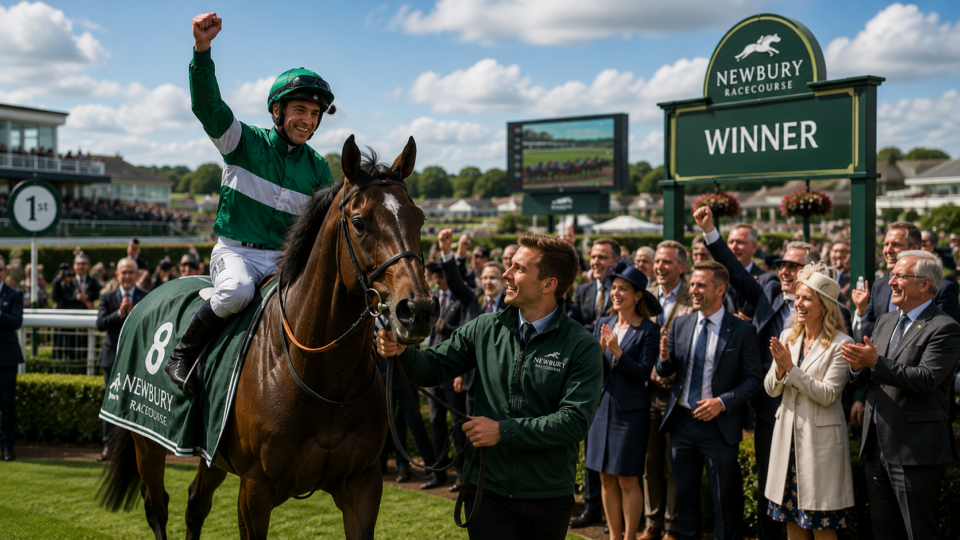
Chapter 10: The Trainer – The Architect Behind Every Champion
Ask most racing fans to name the people responsible for a horse’s success and the jockey is usually the first person who comes to mind. After all, it is the jockey who crosses the finishing line in front of the crowd, lifting an arm in celebration as cameras capture the moment.
Speak to anyone within racing, however, and they will tell you a different story.
Long before a jockey climbs into the saddle, the trainer has already devoted months, and often years, to preparing that horse for race day. Every decision, from selecting its races to managing its fitness and wellbeing, passes through the trainer’s hands. They are strategist, coach, manager and problem-solver all at once, overseeing every aspect of a racehorse’s development.
A trainer’s work is rarely glamorous.
Most mornings begin well before sunrise and continue long after the final horse has returned to its stable. It is a profession built upon routine, patience and an exceptional understanding of horses. The greatest trainers possess an ability that is difficult to quantify. They know when to push a horse forward, when to hold it back and when to change direction entirely.
In many ways, they are the architects behind every champion.
More Than Simply Training Horses
The title “trainer” barely does the role justice.
Running a successful racing yard is rather like managing a small business, except every decision revolves around the care of living, breathing athletes.
Depending on the size of the operation, a trainer may be responsible for anything from a handful of horses to well over two hundred. Each animal has its own personality, fitness programme, feeding routine and racing ambitions, while every owner hopes their horse will receive individual attention.
Balancing those expectations requires remarkable organisation.
Alongside the horses themselves, trainers oversee teams of assistant trainers, travelling head lads, work riders, stable staff, office administrators and yard managers. Veterinary appointments must be arranged, farriers scheduled, transport organised and race entries submitted, all while ensuring every horse continues progressing towards its next target.
It is a role that demands leadership every bit as much as horsemanship.
No Two Horses Are The Same
One of the first lessons successful trainers learn is that there is no universal formula.
Two horses standing in neighbouring stables may require completely different approaches.
One may be naturally relaxed, taking everything in its stride from the moment it arrives at the yard. The next may possess abundant ability but need time to build confidence before showing its true potential.
Some horses thrive on regular racing.
Others perform best when given longer breaks between appearances.
Certain horses enjoy working in company, while others concentrate better when exercising alone.
Understanding these subtle differences is one of the defining qualities of elite trainers.
The best rarely force horses into a rigid system.
Instead, they adapt their methods around the individual standing in front of them.
Reading A Horse
Perhaps the greatest skill a trainer develops is the ability to read a horse.
Unlike human athletes, horses cannot explain how they are feeling.
Instead, trainers rely on observation accumulated through years of experience.
A horse that appears slightly less enthusiastic walking to the gallops.
One that finishes its breakfast more slowly than usual.
Another whose stride seems fractionally shorter during morning exercise.
To most people these changes would pass unnoticed.
To an experienced trainer, they can provide valuable clues.
Sometimes they indicate nothing more than a horse having an off day.
On other occasions they reveal the earliest signs of illness or discomfort, allowing problems to be addressed before they become serious.
This attention to detail is one of the reasons racing’s most successful trainers are often admired as exceptional horsemen first and foremost.
Planning A Season
Winning races is not simply about finding the fastest horse.
It is about placing that horse in the right race at exactly the right time.
Planning a season therefore becomes something of a chess match.
Every race has its own conditions.
Some are restricted by age.
Others by official rating.
Many are run over different distances or on varying types of ground.
The trainer’s task is to identify opportunities where their horse is most likely to perform well.
For a promising three-year-old, that journey may begin in a maiden before progressing towards the 2,000 Guineas or The Derby.
A talented jumper might spend the autumn building fitness before targeting the Cheltenham Festival in March.
Meanwhile, a dependable handicapper could run regularly throughout the season, gradually climbing the ratings with each success.
Every horse follows its own path.
Designing that path is one of the trainer’s greatest responsibilities.
Working With Owners
Every racehorse has an owner, and maintaining those relationships forms another important part of a trainer’s work.
Some owners have spent decades in racing and understand every aspect of the sport.
Others may be experiencing racehorse ownership for the very first time.
Regardless of experience, owners understandably want regular updates on their horses’ progress.
Good trainers communicate openly and honestly.
They celebrate the highs together, but they also manage expectations when things do not go according to plan.
Not every horse becomes a champion.
In fact, most do not.
Helping owners enjoy the journey, regardless of results, is one of the less visible but equally important parts of the job.
Race Day Decisions
When race day finally arrives, much of the trainer’s work has already been completed.
Even so, important decisions remain.
The trainer walks the course, assessing the going and confirming that conditions suit the horse.
Equipment is checked one final time.
The jockey receives detailed instructions discussing likely pace, preferred tactics and any characteristics of the horse that may influence the ride.
Once the horse leaves the parade ring, however, the trainer can do little more than watch.
Months of preparation now rest in the hands of horse and jockey.
It is often said that training is about making hundreds of decisions before race day so that very few need to be made during it.
The Highs And Lows Of Racing
Few professions experience emotional swings quite like horse training.
Victory can bring immense satisfaction, especially when months of careful planning finally come together exactly as intended.
Yet disappointment is never far away.
A horse may suffer a minor setback days before an important race.
Changing ground conditions may force a carefully planned target to be abandoned.
A horse can run below expectations for reasons that remain impossible to explain.
Successful trainers quickly learn to accept these uncertainties.
Patience is one of their greatest assets.
Tomorrow always brings another opportunity.
Britain’s Great Training Centres
Although successful trainers can be found throughout the country, several locations have become synonymous with British racing.
Newmarket remains the sport’s historic headquarters, home to hundreds of miles of gallops and some of the world’s most famous training establishments.
Lambourn, often known as the Valley of the Racehorse, has developed into another major centre, with horses exercising across the Berkshire Downs every morning.
Further north, Middleham in North Yorkshire has produced generations of outstanding racehorses, while numerous successful trainers continue to operate from centres across the Midlands, the West Country and Scotland.
Each location possesses its own character, but all share the same early mornings, unwavering routines and commitment to producing healthy, happy racehorses.
More Than Winners
It is tempting to judge trainers solely by the number of races they win.
While success on the racecourse is undoubtedly important, those within the sport often value something else just as highly.
Good trainers are respected because they consistently place the welfare of their horses first.
They know when to wait.
They know when a horse needs more time.
They know that lasting success is built on patience rather than shortcuts.
The finest trainers rarely describe themselves as miracle workers.
Instead, they speak about listening to their horses, understanding their individual needs and allowing talent to develop naturally.
It is an approach that has produced countless champions over the centuries and continues to define British racing today.
The next time you see a horse crossing the finishing line in front, spare a thought for the person watching quietly from the stands or the winner’s enclosure. While the applause rightly belongs to horse and jockey, the performance you have just witnessed is almost certainly the result of months of careful planning by a trainer whose work began long before anyone else arrived at the racecourse.
Chapter 11: Stable Staff – The Unsung Heroes of British Racing
If you ask a winning trainer who deserves the credit after a big race, there is a good chance the answer will not begin with themselves.
More often than not, they will point towards the stable staff.
These are the people who arrive before dawn every morning, seven days a week, in all weathers, to care for the horses long before owners, trainers or racegoers appear. They are the first to greet the horses each day and often the last to leave at night, building relationships that extend far beyond routine feeding and grooming.
While the public naturally celebrates trainers and jockeys after a famous victory, those working behind the scenes know that stable staff form the backbone of every successful racing yard. Without their dedication, patience and exceptional horsemanship, the sport simply could not function.
Horse racing may last only a few minutes.
Caring for racehorses is a full-time commitment that never stops.
A Day Begins Before Sunrise
Life in a racing yard starts remarkably early.
During much of the year, stable staff arrive while it is still dark, often between five and six o’clock in the morning. Before the first horse leaves for exercise, every stable must be checked, feeds prepared and horses assessed to ensure they are healthy and ready for the day ahead.
The yard gradually comes to life.
Stable doors slide open.
Buckets rattle gently across the concrete.
The unmistakable sound of horses nickering in anticipation of breakfast fills the air.
Although every yard has its own routines, the atmosphere is usually calm and purposeful. Horses thrive on consistency, and experienced stable staff understand the importance of maintaining familiar routines that help each animal remain relaxed and content.
Long before the first racegoer buys a racecard or places a bet, a considerable amount of work has already been completed.
Knowing Every Horse As An Individual
Perhaps the greatest misconception about stable staff is that they simply look after whichever horse happens to be standing in front of them.
In reality, many develop close relationships with particular horses over several seasons.
Every horse has its own personality.
Some are affectionate and enjoy attention.
Others are playful, curious or quietly independent.
A few can be mischievous, finding inventive ways to test the patience of even the most experienced groom.
Learning these personalities is an essential part of the job.
One horse may become anxious if another leaves the yard first.
Another might refuse to drink unless water is offered in a familiar bucket.
Some enjoy being fussed over, while others prefer a quieter approach.
These small details are rarely visible to the public, yet they help create the trust that allows horses to thrive throughout their careers.
It is not unusual to hear stable staff describe their horses almost as members of the family.
After spending countless hours together every day, those bonds become entirely understandable.
Grooming And Daily Care
Looking after a racehorse involves far more than preparing it to run.
Every day includes a wide range of routine tasks that contribute directly to the horse’s health and wellbeing.
Horses are groomed carefully to keep their coats healthy and to allow staff to check for even the slightest cuts, swellings or signs of discomfort.
Feet are cleaned and inspected before and after exercise.
Stables are mucked out several times a day to maintain a clean, comfortable environment.
Fresh bedding is prepared, water buckets replenished and feed carefully measured according to each horse’s individual requirements.
While these jobs may seem repetitive, they provide valuable opportunities to observe the horse closely.
Often, the first indication that something is not quite right comes from a groom who notices a subtle change in behaviour or appetite during these everyday routines.
Riding Out
Many stable staff also spend part of each morning riding work on the gallops.
Known as work riders, these experienced horsemen and horsewomen exercise horses according to the trainer’s instructions, helping to build fitness while also providing valuable feedback about how each horse feels.
A trainer standing beside the gallops can observe movement and attitude from a distance, but the rider experiences the horse directly.
Does it feel enthusiastic?
Has it settled well?
Is it moving freely?
Does it seem stronger than it did last week?
These observations help trainers make informed decisions about future training and race planning.
It is another example of how successful racing depends upon teamwork rather than any single individual.
Travelling To The Races
When horses travel to race meetings, they rarely go alone.
Each runner is usually accompanied by a travelling groom, whose responsibility is to care for the horse throughout the day.
From loading the horsebox early in the morning to preparing the horse for the parade ring, every detail is managed carefully.
The groom ensures equipment is ready, keeps the horse calm in unfamiliar surroundings and remains nearby until the jockey climbs aboard.
After the race, attention immediately returns to the horse.
It is cooled down, offered water if appropriate and checked carefully before beginning the journey home.
Only once the horse has returned safely to its stable does the groom’s day finally begin to draw to a close.
Celebrating Success
While photographers focus on the owner, trainer and jockey, those within the sport know exactly who else deserves recognition.
One of racing’s most heartwarming traditions takes place after a big winner returns to the winner’s enclosure.
The stable staff.
Many racecourses now make a point of acknowledging the groom responsible for the winning horse, recognising the countless hours of dedication that made the victory possible.
For those working in racing, this acknowledgement means a great deal.
Although they rarely seek the spotlight, seeing a horse they have cared for every day achieve success brings enormous pride.
In many ways, those victories feel deeply personal.
A Career Built On Passion
Working with racehorses is physically demanding.
The hours are long.
Weekends are often spent at race meetings.
Holidays can be difficult to arrange because horses require care every day of the year.
It is certainly not a profession people choose for an easy life.
They choose it because they love horses.
Speak to stable staff and you quickly discover that very few measure success purely in terms of prize money or famous winners.
Instead, they talk about watching nervous young horses grow in confidence, seeing injured horses return to racing or witnessing a long-term favourite finally achieve the victory everyone believed it deserved.
Those moments make the early mornings worthwhile.
Opportunities Within Racing
Stable work also provides the starting point for many careers within the sport.
Numerous successful trainers, jockeys and racing managers began by working on the yard, learning their trade through practical experience rather than classrooms.
Every morning spent riding work or caring for horses builds knowledge that cannot easily be taught from books.
The racing industry continues to invest heavily in education and professional development, ensuring the next generation of stable staff receive the skills needed to maintain Britain’s reputation as one of the world’s leading racing nations.
It is a profession that rewards dedication, curiosity and an enduring respect for the horse.
The Heart Of Every Racing Yard
Visit any successful training establishment and one thing soon becomes obvious.
The buildings matter.
The gallops matter.
The facilities matter.
But it is the people who truly bring the yard to life.
Stable staff provide the constant care and quiet professionalism that allows racehorses to flourish. They notice the details others miss, celebrate the victories without seeking recognition and remain devoted to their horses through every triumph and disappointment.
The next time you watch a horse walking proudly back into the winner’s enclosure, spare a thought for the groom standing quietly nearby.
There is every chance they have spent years caring for that horse, through freezing winter mornings, long journeys to race meetings and countless ordinary days that nobody else ever sees.
Their work may take place away from the television cameras, but it is woven into every success the sport celebrates.
For that reason alone, stable staff deserve to be recognised not simply as part of horse racing, but as its very heart.
Chapter 12: The Jockey – Skill, Strength and Split-Second Decisions
To many people watching horse racing for the first time, the jockey appears almost secondary to the horse.
From a distance, they seem little more than brightly coloured silks perched lightly in the saddle as a field charges towards the finishing line. The horse’s power naturally draws the eye, while the jockey’s role can appear deceptively simple.
Nothing could be further from the truth.
Behind every successful ride lies years of experience, remarkable physical fitness and an ability to make critical decisions in fractions of a second. Travelling at speeds approaching 40 miles per hour, often surrounded by a dozen or more rivals, jockeys must judge pace, positioning and timing with extraordinary precision. A single hesitation can turn victory into defeat, while one inspired decision can become the defining moment of an entire season.
It is a profession that demands courage, discipline and complete trust between horse and rider.
While racehorses are rightly celebrated as the stars of the sport, the partnership they form with their jockey is one of the defining features of horse racing.
A Partnership Built on Trust
Horse racing is unlike almost any other sport because success depends on two athletes working together as one.
A racehorse may possess immense natural ability, but without a jockey capable of understanding its strengths and responding to the race as it unfolds, that ability is rarely fully realised.
Likewise, even the world’s greatest jockey cannot manufacture speed or stamina that simply is not there.
The relationship works because each depends entirely on the other.
Good jockeys spend time learning how individual horses like to race.
Some are happiest bowling along close to the leaders, travelling comfortably within themselves before quickening in the closing stages.
Others prefer to settle quietly near the rear of the field, conserving energy before producing a late burst of acceleration.
Understanding these preferences is every bit as important as physical strength.
The finest jockeys rarely force horses into an unfamiliar style. Instead, they adapt their riding to suit the horse beneath them.
More Than Riding Fast
People unfamiliar with racing often assume the jockey’s job is simply to ride as quickly as possible.
In reality, race riding is an exercise in judgement.
Every race develops differently.
The early pace may be stronger than expected.
Rain may have softened the going overnight.
Another jockey may decide to challenge earlier than anticipated.
Each of these factors requires an immediate response.
During a race there is no opportunity to pause and reconsider.
Every decision must be made instinctively while travelling at tremendous speed.
Should the jockey remain patient or make an early move?
Is there enough room to challenge along the rail, or is it safer to switch wider?
Has the horse got enough left to sustain a long run towards the finish, or would waiting another few seconds produce a stronger effort?
These are the questions jockeys answer almost without thinking, yet years of experience lie behind every instinctive choice.
Strength Without Size
One of the characteristics that surprises newcomers is how physically demanding race riding really is.
From a distance, jockeys appear almost motionless.
Look more closely, however, and it becomes obvious that they are constantly working.
Rather than sitting heavily in the saddle, jockeys balance in a crouched position with much of their weight supported by the stirrups. Maintaining that posture over the course of a race requires exceptional leg strength, balance and core stability.
At the same time, they must remain relaxed enough to allow the horse complete freedom of movement.
Too much interference can disrupt the horse’s natural rhythm.
Too little communication and valuable momentum may be lost.
Achieving this balance is one of the reasons race riding is such a specialised skill.
Many elite jockeys train with the same dedication as Olympic athletes, spending hours in the gym to maintain strength and flexibility while carefully managing their weight throughout the season.
Judging the Pace
If there is one quality that separates good jockeys from great ones, it is the ability to judge pace.
Every horse has a limit.
Ask for maximum effort too early and the horse may tire before reaching the finishing line.
Wait too long and there may be insufficient ground left to catch the leaders.
Finding the perfect moment to challenge is one of racing’s greatest arts.
Sometimes that moment arrives approaching the final furlong.
Sometimes it comes much earlier, particularly in steadily run races where tactical positioning becomes increasingly important.
Watching experienced jockeys glide through the field with apparent ease often creates the illusion that the race is unfolding exactly as planned.
The reality is usually very different.
They are constantly adapting, assessing rivals, monitoring their own horse and anticipating how the race is likely to develop over the next few seconds.
It is decision-making under enormous pressure.
Flat Jockeys and Jump Jockeys
Although many people simply refer to “jockeys”, the sport is divided into two distinct disciplines.
Flat jockeys specialise in races without obstacles, where tactical speed, positioning and timing often prove decisive.
Their races are generally shorter, with opportunities disappearing almost as quickly as they appear.
Precision is everything.
National Hunt jockeys, meanwhile, face a very different examination.
Not only must they judge pace over considerably longer distances, but they must also guide their horses safely over hurdles and fences while conserving enough energy for the closing stages.
A successful jump jockey combines tactical awareness with exceptional balance and bravery.
Some riders have enjoyed success in both disciplines, but many choose to specialise, developing the skills best suited to their chosen branch of the sport.
Life Beyond Race Day
For professional jockeys, race day represents only a small part of the job.
Much of their week is spent riding work at training yards, helping trainers assess horses before upcoming races.
These early morning gallops allow jockeys to build valuable relationships with horses while providing feedback about fitness, attitude and progress.
Later in the day they may travel hundreds of miles between racecourses, sometimes riding at two or even three different meetings in a single afternoon.
During the busiest periods of the season, the schedule can be relentless.
Long journeys, changing weather and constant pressure become part of everyday life.
Yet ask most jockeys why they continue, and the answer is usually simple.
There is no feeling quite like winning a race.
The Colours That Tell a Story
One of the most recognisable features of horse racing is the colourful silks worn by jockeys.
These colours do not belong to the jockey.
They belong to the owner.
Every registered owner has unique racing colours, making it possible for spectators to identify their horses even from a considerable distance.
Some colour combinations have become famous in their own right, carried by generations of outstanding racehorses.
Others represent families whose involvement in racing stretches back decades.
Although spectators often associate victory with the jockey crossing the line first, those colours serve as a reminder that racing has always been a team sport.
Every success belongs to a partnership extending far beyond the saddle.
Pressure at the Highest Level
Few sporting occasions generate pressure quite like the closing stages of a major race.
Imagine riding into the home straight at Royal Ascot with tens of thousands of spectators watching every movement.
Or approaching the final fence of the Cheltenham Gold Cup, knowing that one perfect jump could secure your place in racing history.
These moments define careers.
They are also the moments when the best jockeys appear at their calmest.
Years of preparation, thousands of races and countless hours spent riding work each morning have prepared them for precisely this situation.
The crowd sees only the final furlong.
The jockey draws upon a lifetime of experience.
More Than the Person in the Saddle
It is easy to celebrate the winning jockey after a famous race.
The raised whip, the smile crossing the finishing line and the applause in the winner’s enclosure are all part of horse racing’s great theatre.
Yet the best riders rarely speak first about themselves.
Instead, they praise the horse, thank the trainer and acknowledge the stable staff who prepared the animal so carefully.
Perhaps that reflects the true nature of the sport.
Horse racing has never been about individual glory alone.
Every victory is built upon trust, teamwork and mutual respect between horse and human.
The jockey may be the person the public recognises most readily, but they are also one part of a partnership that begins long before race day and continues long after the applause has faded.
It is that partnership, forged through patience, skill and shared purpose, that remains one of the most compelling aspects of British horse racing.
Chapter 13: Owners – The People Who Make Racing Possible
Every race begins with a field of horses wearing colourful racing silks, each set of colours representing the hopes and ambitions of an owner.
Some have spent a lifetime involved in horse racing, breeding champions and competing at the highest level. Others may have bought into a syndicate only a few months earlier, experiencing the thrill of ownership for the very first time. Their backgrounds, professions and reasons for becoming involved in racing may differ enormously, yet they all share one common dream.
To watch a horse carrying their colours cross the finishing line in front.
For many people outside the sport, owners are often seen simply as the people who pay the bills. While financial investment is undoubtedly part of ownership, it tells only a small part of the story. Most owners become involved because they love horses, enjoy competition and want to experience one of the most rewarding partnerships in sport.
The victories are unforgettable, but so too are the early mornings on the gallops, conversations with trainers, visits to the yard and the quiet satisfaction of watching a horse develop from an inexperienced youngster into a confident racehorse.
Owning a racehorse is rarely just about winning races.
It is about becoming part of the journey.
Every Horse Has Someone Behind It
No racehorse reaches the racecourse by accident.
Before a trainer can begin preparing a horse, someone has made the decision to purchase, breed or lease it. That individual, partnership or syndicate becomes the horse’s owner and assumes responsibility for every aspect of its racing career.
Some owners have only one horse.
Others have dozens spread across different training yards throughout Britain and Ireland.
There are famous owners whose colours are recognised around the world, while countless others enjoy racing quietly with a single horse trained close to home.
The scale may vary, but the experience is remarkably similar.
Every owner waits anxiously before a race, celebrates every success and hopes the next outing might produce another memorable afternoon.
Buying A Racehorse
There is no single route into ownership.
Some people purchase young horses at public auction, where hundreds of Thoroughbreds are offered for sale each year. These sales are among the most fascinating events in the racing calendar, attracting trainers, bloodstock agents and owners from across the world.
Walking around the sales grounds, buyers study each horse carefully.
They assess its conformation, movement and temperament while also examining its pedigree in detail. A well-bred youngster may command an enormous price, particularly if close relatives have already enjoyed success on the racecourse.
Yet racing has always retained an element of unpredictability.
History is full of modestly priced horses that developed into champions, just as there have been expensive purchases that never fulfilled expectations.
That uncertainty is part of the sport’s enduring appeal.
Syndicates Have Changed Racing
One of the biggest developments in recent decades has been the growth of racehorse syndicates.
Rather than purchasing a horse outright, a group of people shares the costs and experiences of ownership.
For many newcomers, syndicates provide the perfect introduction.
Members receive regular updates from the trainer, visit the yard to see their horse at home and enjoy the excitement of race days without bearing the full financial commitment of sole ownership.
Some syndicates consist of friends or family members.
Others welcome hundreds of members from across the country, united by a shared passion for racing.
Their popularity has helped make ownership more accessible than ever before and introduced thousands of new people to the sport.
Choosing The Right Trainer
Once a horse has been purchased, one of the owner’s most important decisions is selecting a trainer.
This choice is rarely based solely on reputation.
Owners often consider location, communication, facilities and the trainer’s experience with particular types of horses.
Some trainers specialise in precocious two-year-olds.
Others have built their reputation developing staying horses or champions for National Hunt racing.
Just as importantly, owners look for someone whose approach they trust.
Racehorse ownership is built upon partnership.
The trainer provides expertise and guidance, while the owner provides support and long-term commitment.
The strongest relationships often last for many years.
Life As An Owner
For most owners, race days represent only a small part of the experience.
Much of the enjoyment comes from following a horse’s progress throughout the year.
A visit to the training yard offers the chance to watch morning exercise, speak with the trainer and see firsthand how the horse is developing.
Owners receive updates after important pieces of work, discuss future race plans and celebrate the small milestones that never appear in the headlines.
Perhaps the horse has settled better during training.
Perhaps it has strengthened physically over the winter.
Perhaps it has simply matured into a more confident athlete.
These moments create an emotional connection that extends far beyond the results recorded in the form book.
The Thrill Of Race Day
Nothing quite compares with seeing your own horse walk into the parade ring.
Months of preparation have led to this moment.
Friends and family gather together, final instructions are exchanged between trainer and jockey, and the anticipation begins to build.
When the runners canter to the start, excitement gives way to nervous silence.
Then the race begins.
For the next minute or two, or sometimes considerably longer, emotions fluctuate wildly.
Hope.
Expectation.
Disbelief.
Excitement.
Every stride seems to matter just a little more when your own colours are among the runners.
Whether the horse wins or finishes unplaced, race day creates memories that owners rarely forget.
Success Means Different Things
Winning Britain’s biggest races remains the ultimate ambition.
Lifting trophies at Royal Ascot, the Cheltenham Festival or after the Grand National represents the pinnacle of the sport.
Yet many owners would tell you that success cannot always be measured by famous victories.
For some, watching a horse overcome injury and return to racing is every bit as satisfying.
Others treasure a first winner at a local racecourse or the progress of a homebred horse that has exceeded every expectation.
Racing has a remarkable way of making every achievement feel personal.
It is one reason owners remain so passionate, even during seasons when victories prove elusive.
Owners And The Future Of Racing
Owners contribute far more than simply purchasing horses.
Their investment supports trainers, jockeys, stable staff, breeders, veterinarians, farriers, transport companies and racecourses across the country.
In many respects, they provide the foundation upon which the entire racing industry is built.
Without owners willing to invest in young Thoroughbreds and support their development, British racing could not continue at its current scale.
That contribution extends well beyond the racecourse itself, helping sustain rural communities and preserving skills that have been passed from one generation to the next.
The Dream Never Changes
Speak to owners who have enjoyed decades of success and you’ll often hear the same excitement that inspires someone attending the races with their first syndicate horse.
The dream remains remarkably simple.
To see your horse healthy.
To watch it fulfil its potential.
And, if fortune smiles, to hear the commentator call your colours first as the winning post approaches.
That dream has remained unchanged for centuries.
It is the reason owners continue to invest their time, their patience and their passion into a sport capable of delivering moments of joy unlike almost any other.
Behind every horse standing quietly in the parade ring is someone who dared to imagine what might be possible. Sometimes that dream ends in the winner’s enclosure. More often it ends with memories, friendships and experiences that prove every bit as valuable as the trophies themselves.
And for almost every owner, that is reason enough to begin the journey all over again.
Chapter 14: Race Day – What Happens From Arrival to the Winner’s Enclosure
For racegoers, the excitement of race day often begins as they walk through the gates, racecard in hand, listening to the growing buzz of anticipation around the course. The grandstands slowly begin to fill, bookmakers chalk up their prices, horses start arriving in gleaming horseboxes and conversations inevitably turn to favourites, outsiders and predictions for the afternoon ahead.
For everyone working behind the scenes, however, race day started many hours earlier.
Long before the first spectators arrive, stable staff have already travelled across the country with their horses. Officials have inspected the course, veterinary teams have completed their preparations and racecourse staff have ensured everything is ready for what may be a day involving thousands of visitors and dozens of runners.
Although every meeting has its own character, from a quiet weekday fixture to the pageantry of Royal Ascot or the electric atmosphere of the Cheltenham Festival, the sequence of events follows a familiar rhythm. Understanding that routine helps first-time racegoers appreciate not only what they are watching, but also the remarkable organisation required to stage even a single race.
Horses Arrive Before The Crowds
One of the least visible parts of race day takes place well before the gates open to the public.
Horseboxes begin arriving throughout the morning, each carrying carefully prepared racehorses that may have travelled from training yards hundreds of miles away. Upon arrival, stable staff escort their horses into secure racecourse stables, where they are given time to settle after their journey.
The atmosphere here is notably different from the excitement developing elsewhere around the course.
There is little shouting or unnecessary activity. Horses are creatures of routine, and travelling grooms work hard to maintain a calm environment, checking equipment, offering water where appropriate and ensuring each horse remains relaxed before its race.
For many runners, this temporary stable becomes home for several hours before the afternoon’s real business begins.
The Clerk of the Course Has Already Been Busy
Before a single horse sets foot on the track, another important figure has been assessing the conditions.
The Clerk of the Course is responsible for preparing the racing surface and ensuring it is safe for competition. In the days leading up to a meeting they monitor weather forecasts, arrange irrigation if necessary and inspect every section of the course.
On race day itself, further inspections take place before official updates on the going are issued.
These reports are followed closely by trainers, jockeys and punters alike because underfoot conditions can dramatically influence how a race unfolds. A horse that excels on soft ground may struggle when conditions become firm, while another may improve significantly if overnight rain has eased the surface.
Although spectators may notice little more than well-kept grass, the racing surface is one of the most carefully managed aspects of the entire meeting.
The Parade Ring
As each race approaches, attention begins to shift towards one of the racecourse’s most popular areas.
The parade ring.
Here, horses are led quietly in circles by their grooms while owners, trainers and spectators study them before the race. It is one of the few opportunities to see Thoroughbreds at close quarters before they compete, allowing racegoers to admire their athleticism, composure and condition.
Experienced racing enthusiasts often spend considerable time watching horses in the parade ring.
Does a horse appear calm and relaxed?
Is it walking freely?
Does it seem fit and healthy?
While appearances alone never determine the result, the parade ring offers valuable clues and adds another fascinating dimension to the day’s racing.
Meanwhile, trainers discuss final tactics with their jockeys, making any last-minute adjustments before the horses leave for the track.
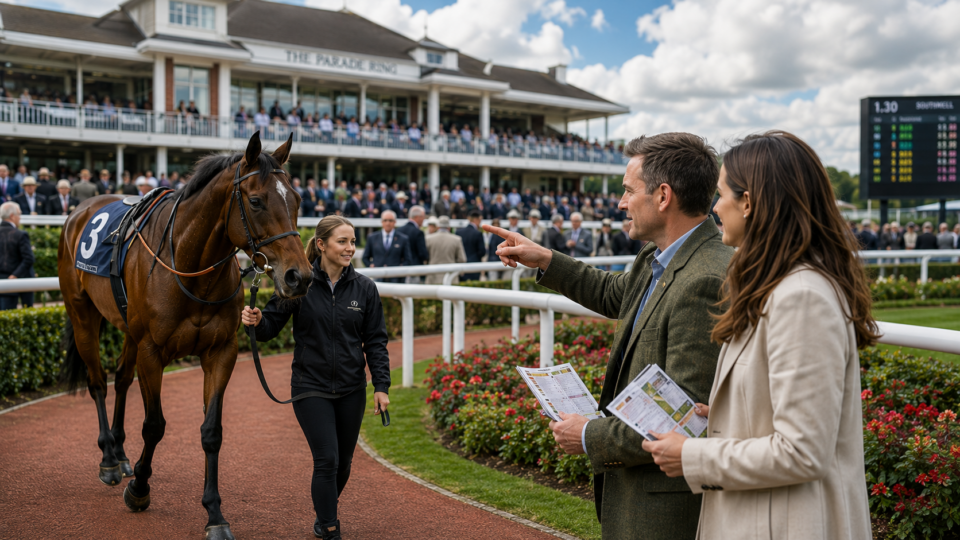
Weighing Out
Not far from the parade ring lies one of racing’s most private and tightly regulated areas.
The weighing room.
Before every race, jockeys must weigh out with all the equipment they intend to carry, including the saddle and any additional weights required under the race conditions.
This process ensures every horse competes carrying precisely the allotted weight.
Even small discrepancies matter.
If the combined weight falls below the required amount, lead weights are added to the saddle cloth until the correct figure is reached.
These checks may seem painstaking, but they reflect racing’s long-standing commitment to fairness and consistency.
Only once everything has been verified can the jockey join their horse in the parade ring.
Going to Post
With the jockey aboard and final instructions delivered, horses leave the parade ring and make their way towards the start.
For spectators, this is often one of the most picturesque moments of the afternoon.
The field walks quietly across the course before gradually breaking into an easy canter, allowing both horse and rider to loosen up before the race.
Not every horse behaves identically.
Some remain completely relaxed.
Others become noticeably more animated as they sense competition approaching, pulling eagerly against the reins or bouncing excitedly beneath their jockey.
Far from being unusual, these individual quirks are simply another reminder that racehorses possess personalities every bit as distinctive as the people who ride them.
The Start
How a race begins depends upon the discipline.
In Flat racing, runners are loaded carefully into starting stalls. Some walk in without hesitation, while others require gentle encouragement from experienced stall handlers whose calm professionalism helps ensure every horse begins on equal terms.
Once the starter is satisfied that the field is ready, the gates fly open simultaneously.
In National Hunt racing, there are no starting stalls. Instead, horses gather behind tapes stretched across the course. The starter waits until the field is correctly aligned before releasing the tapes and sending the runners on their way.
Whichever discipline is involved, the objective is always the same.
To provide every horse with the fairest possible start.
The Race Unfolds
Once the race begins, months of preparation are compressed into a matter of minutes.
The early stages often establish the pace, with jockeys settling their mounts into positions they believe offer the greatest chance of success. Some horses race prominently from the outset, while others are deliberately restrained, conserving energy for a challenge later in the contest.
To inexperienced spectators, the action may appear chaotic.
Yet beneath the surface lies remarkable tactical complexity.
Jockeys constantly assess the tempo, monitor rivals, search for clear running and judge precisely when to ask their horse for maximum effort.
On the jumping course, another dimension is added as horses meet hurdles or fences at racing speed, demanding concentration and balance from both horse and rider.
Every race tells its own story.
Some are won through patience.
Others through bold front-running tactics.
Many are decided only in the final few strides.
That uncertainty is one of the reasons horse racing continues to captivate millions.
Crossing the Finishing Line Is Not the End
As the winner passes the post, the crowd’s attention naturally turns towards celebration.
For those working with the horses, however, another important routine immediately begins.
Each runner is eased down after the line before returning steadily towards the unsaddling area. Stable staff greet the horses, remove equipment and begin cooling them down carefully after their exertions.
Veterinarians and officials remain on hand throughout, monitoring welfare and ensuring every horse returns safely from the race.
Even after the excitement of a dramatic finish, the welfare of the horse remains the highest priority.
Weighing In
Before any result becomes official, jockeys must complete one final procedure.
They return to the weighing room carrying exactly the same equipment used during the race.
Known as weighing in, this final check confirms that the correct weight has been carried throughout the contest.
Only after these checks have been completed can the result be formally declared.
For newcomers, this often explains the brief pause between the horses crossing the line and the result becoming official.
It is another example of the detailed safeguards that help preserve confidence in the sport.
The Winner’s Enclosure
Perhaps nowhere captures the emotion of horse racing more vividly than the winner’s enclosure.
Here, owners congratulate trainers, jockeys embrace stable staff and photographers gather to record a moment that may represent years of dedication finally rewarded.
The horse, often remarkably calm after its efforts, stands proudly while applause rings around the enclosure.
For some connections, this may be one of countless victories.
For others, it could be the first winner they have ever owned or trained.
The emotions are often identical.
Relief.
Joy.
Pride.
Sometimes even disbelief.
It is one of the few places where every part of racing comes together. The owner who believed in the horse, the trainer who planned its campaign, the stable staff who cared for it every day and the jockey who guided it to victory all share the same achievement.
More Than a Few Minutes of Racing
To someone watching from home, a race may last only two or three minutes.
Spend a day at the racecourse, however, and it quickly becomes clear that those few minutes are only the centrepiece of something much larger.
Race day is a carefully choreographed sequence involving hundreds of people working quietly behind the scenes, from officials preparing the course before dawn to stable staff ensuring every horse returns safely home after the final race.
Understanding that process changes the way many people watch the sport.
The next time the starter releases the field, you will know that every runner represents months of preparation, countless early mornings and the combined efforts of an entire team working towards a single moment.
And once the horses have crossed the finishing line, the story does not end. For most, it simply marks the beginning of preparations for the next race, the next challenge and, perhaps, the next unforgettable day at the races.
Chapter 15: Understanding a Racecard – How to Read the Story Behind Every Runner
One of the first things newcomers notice when they arrive at a racecourse is that almost everyone seems to be studying a racecard.
Some flick through the pages while sipping coffee before the first race. Others compare notes with friends, circle runners with a pen or quietly examine statistics moments before the horses enter the parade ring. To an outsider, it can feel almost like another language, filled with unfamiliar abbreviations, numbers and symbols that appear impossible to decipher.
Fortunately, it is far less complicated than it first appears.
A racecard is simply a summary of everything you need to know about a race and the horses taking part. Rather than relying on guesswork, it allows racegoers to understand each runner’s recent form, achievements and suitability for the conditions. Every line contains clues that help explain why one horse may be fancied, while another faces a more difficult challenge.
Learning to read a racecard transforms the experience of watching horse racing.
Instead of seeing a collection of anonymous horses, you begin to recognise individuals with different strengths, preferences and stories. Every runner arrives with its own history, and the racecard provides the first chapter.
Every Race Begins With The Basics
At the top of each racecard you will find the essential details of the contest itself.
These include the race time, distance, prize money, age restrictions and the class of race being run. You will also see the official description, which often explains whether the race is a handicap, maiden, novice or conditions event.
For experienced racegoers, these details immediately establish the quality and nature of the contest.
A six-furlong sprint at a summer evening meeting presents an entirely different examination from a three-mile chase in midwinter. Before considering the individual runners, it is always worth understanding exactly what sort of race they are about to contest.
As you become more familiar with racing, these headings quickly begin to paint a picture of the challenge awaiting each horse.
The Horse’s Name
The most obvious entry is the horse’s name, yet even this often tells a story.
Some names reflect a horse’s pedigree.
Others honour family members, favourite places or historical figures.
Many contain subtle references that only the owner fully understands.
Because every registered Thoroughbred must have a unique name approved by the relevant authorities, racehorse names are wonderfully varied. Some are elegant and traditional, while others display humour, wordplay or clever literary references.
After following racing for a while, many enthusiasts discover that certain names remain unforgettable long after the horse has retired.
Great champions have a habit of making their names part of sporting history.
Recent Form Figures
One of the first columns most people notice consists of a seemingly random collection of numbers and letters.
These are known as form figures, and they summarise a horse’s recent performances.
The numbers represent finishing positions.
A figure of 1 means the horse won.
2 indicates second place.
3 means third, and so on.
The figures are read from left to right, with the most recent run appearing at the end of the sequence.
Letters also appear from time to time.
For example:
P indicates the horse was pulled up.
F means it fell.
U signifies an unseated rider.
R shows the horse refused to race or refused an obstacle.
Although these figures provide a useful snapshot, they never tell the complete story.
A horse finishing fifth in a top-class race may actually have produced a stronger performance than one winning a much weaker contest.
Experienced racegoers therefore use form figures as a starting point rather than a final judgement.
Official Ratings
Another important number is the Official Rating, often abbreviated to OR.
This figure is allocated by the official handicapper and represents the horse’s assessed ability.
Generally speaking, the higher the rating, the better the horse has performed.
Ratings play a particularly important role in handicap races, where they determine how much weight each horse must carry.
The principle is straightforward.
Higher-rated horses carry more weight in an attempt to give every runner a fair chance of winning.
Although the mathematics behind handicapping can seem complicated initially, understanding the basic idea makes racecards much easier to interpret.
Rather than seeing weight as a punishment, it is better viewed as the mechanism that helps create competitive racing.
Weight Carried
Alongside each horse’s name you will also see the weight it is due to carry.
This is shown in stones and pounds, the traditional system still used throughout British racing.
For beginners, the exact numbers are usually less important than understanding why they differ.
In many races, particularly handicaps, weight reflects ability.
The better the horse, the greater the burden it is asked to carry.
In non-handicap races, however, weights are usually determined by the race conditions, with factors such as age and sex influencing the allocation.
Over time, experienced followers of racing learn when relatively small weight differences are likely to matter and when other factors deserve greater attention.
Trainer And Jockey
Every racecard lists both the trainer and jockey for each runner.
These names often provide useful context.
Some trainers excel with young horses making their debut.
Others have outstanding records at particular racecourses or during certain times of year.
Likewise, some jockeys have particularly strong partnerships with individual horses.
This does not mean the most famous trainer or jockey always wins.
Far from it.
Horse racing remains wonderfully unpredictable.
Nevertheless, recognising successful partnerships can help explain why certain runners attract considerable support before a race.
Draw
In many Flat races, particularly those run over shorter distances, the draw can have a significant influence.
The draw simply refers to the starting stall allocated to each horse.
Depending on the racecourse layout, some stall positions may occasionally prove advantageous, particularly when large fields compete over sprint distances.
At other tracks, the draw has little or no effect at all.
Understanding when it matters comes with experience, but it is another example of how seemingly small details can influence the outcome of a race.
Going And Distance
Perhaps no two pieces of information deserve greater attention than the going and the race distance.
Not every horse performs equally well under the same conditions.
Some flourish on soft, testing ground where stamina becomes the decisive factor.
Others produce their best performances on firm, fast surfaces that allow them to use their natural speed.
Distance is equally important.
A horse successful over one mile may struggle to maintain its speed over twelve furlongs, while a proven stayer could find shorter races developing far too quickly.
One of the most valuable habits beginners can develop is asking a simple question before every race.
Does today’s distance and going suit this horse?
Very often, the answer explains why a horse is expected to improve or why it may struggle despite previous good form.
Equipment
You may occasionally notice small letters beside a horse’s name indicating that it will wear headgear or other equipment.
Abbreviations such as b for blinkers, v for visor or p for cheekpieces simply identify equipment designed to help a horse concentrate or perform more effectively.
These additions should not immediately be viewed as positive or negative.
Instead, they provide further context about the horse and the trainer’s approach.
Sometimes equipment produces dramatic improvement.
Sometimes it makes very little difference.
Either way, it forms another small piece of the overall picture.
Reading The Whole Story
Perhaps the biggest mistake beginners make is focusing on a single statistic.
The horse with the highest rating.
The most recent winner.
The leading jockey.
While each of these factors matters, none exists in isolation.
Experienced racegoers gradually learn to view the racecard as a complete story.
A horse may have disappointing recent form, but perhaps those races came on unsuitable ground.
Another may be stepping up in distance for the first time after finishing strongly over shorter trips.
A lightly raced youngster may possess far greater potential than an exposed older rival whose form is already well established.
The racecard provides all of these clues.
The skill lies in learning how they fit together.
There Is Always More To Learn
One of the joys of horse racing is that even lifelong enthusiasts continue discovering new details hidden within the form.
No racecard can guarantee the winner.
If it could, there would be very little excitement.
Instead, it provides information that allows every spectator to form their own opinion before the stalls open or the starter releases the tapes.
With experience, those columns of numbers and abbreviations gradually become familiar.
What once appeared confusing begins to tell a compelling story of previous victories, difficult defeats, changing conditions and fresh opportunities.
The next time you pick up a racecard, resist the temptation to see it as a page full of statistics.
Think of it instead as the biography of every horse in the race, condensed into a few carefully chosen lines. Once you understand how to read those lines, every meeting becomes richer, more engaging and infinitely more rewarding, because you are no longer simply watching a race. You are following the unfolding chapters of each horse’s career.
Chapter 16: The Going – Why the Ground Beneath the Hooves Matters So Much
If there is one phrase you will hear repeatedly in British horse racing, it is “the going.”
Commentators mention it before every race. Trainers discuss it in post-race interviews. Punters study it carefully before placing a bet, while owners often watch weather forecasts with almost as much interest as the races themselves.
To newcomers, this can seem slightly puzzling.
After all, surely a race is simply run on grass?
In reality, the condition of that grass can transform an entire meeting. Two races run over the same course and distance can unfold in completely different ways depending on whether the ground is firm after weeks of sunshine or soft following several days of rain. Some horses seem to glide effortlessly across testing ground, while others produce their very best performances only when the surface is fast and dry.
Understanding the going is one of the biggest steps towards understanding horse racing itself.
It influences tactics, race planning and even where horses compete throughout the season. More than almost any other factor, it reminds us that racing takes place outdoors, where nature remains one of the sport’s most influential participants.
What Does “Going” Mean?
Quite simply, the going describes the condition of the racing surface.
On turf racecourses, this is determined primarily by moisture within the ground. Heavy rainfall creates softer conditions, while prolonged dry weather produces firmer ground.
Although this sounds straightforward, the effect on racehorses is profound.
Imagine running across a firm pavement before trying the same distance on a wet, muddy field. The effort required is completely different.
The same principle applies to Thoroughbreds.
On firm ground, horses can generate speed more easily because less energy is lost with every stride. Softer conditions demand considerably more effort, placing greater emphasis on stamina and endurance rather than outright pace.
Every racehorse therefore develops preferences, just as athletes often favour certain conditions or playing surfaces.
The Official Descriptions
British racing uses a standard set of terms to describe the going, allowing everyone involved in the sport to understand the conditions before racing begins.
At one end of the scale lies Heavy, where the ground is extremely wet and testing. Races become searching examinations of stamina, with horses often finishing tired after battling through energy-sapping conditions.
Next comes Soft, still demanding but generally offering a slightly more forgiving surface. Many outstanding staying horses relish these conditions, particularly during the winter months.
Good to Soft and Good occupy the middle ground.
Many trainers regard good ground as close to ideal because it provides a fair test without excessively favouring either speed or stamina. It is also the surface upon which many of Britain’s biggest Flat races are contested.
Beyond this comes Good to Firm, before finally reaching Firm, where prolonged dry weather has created a fast racing surface. Here, races are often run at an exceptionally strong pace, rewarding horses capable of producing rapid acceleration.
These descriptions may sound subtle, but even a small change can alter a trainer’s plans dramatically.
Why Horses Have Preferences
One of the fascinating aspects of horse racing is that no two Thoroughbreds are exactly alike.
Some possess a long, economical stride that allows them to move comfortably across soft ground without becoming unbalanced. Others have a quicker action better suited to firm conditions, where they can skim across the surface with minimal resistance.
These preferences are influenced by a combination of physical build, action and natural ability.
They are also discovered gradually.
A young horse may not reveal its favourite conditions until several races into its career. Trainers therefore pay close attention to every performance, learning which surfaces allow each horse to produce its very best.
This is why you will often hear trainers withdrawing horses after unexpected rainfall or waiting patiently for dry weather before declaring a runner.
They are not simply avoiding inconvenience.
They are trying to place their horse in conditions where it has the greatest opportunity to succeed.
The Weather Is Always Part of the Story
Unlike many sports played on artificial surfaces or indoors, horse racing remains deeply connected to the British climate.
Rain arriving overnight can completely alter the complexion of an important meeting.
A dry, sunny week may steadily transform the ground from soft to good, changing the type of horse expected to perform well.
As a result, weather forecasts become an important part of race planning.
Trainers often monitor forecasts several days before entries close, knowing that changing conditions may influence whether a horse runs at all. Owners do the same, while racegoers quickly learn that discussing the weather is not merely small talk. It is a genuine part of understanding the day’s racing.
There are occasions when significant rainfall arrives between declarations and the race itself, forcing connections to make difficult decisions about whether to continue with their plans or wait for another opportunity.
Patience frequently proves just as valuable as ambition.
Measuring the Going
The official description of the going is not based purely on opinion.
Before racing, the Clerk of the Course carries out detailed inspections of the track, combining visual assessment with specialist equipment designed to measure the firmness of the ground.
These inspections are repeated whenever conditions change, ensuring trainers, jockeys and owners receive the most accurate information possible.
Even so, racecourses are large places.
The ground may ride slightly differently around sharp bends than it does on a long straight, while shaded areas sometimes retain more moisture than exposed sections of the track.
Experienced jockeys quickly become aware of these subtle differences during a race and may adjust their route accordingly.
It is another reminder that racing is rarely as simple as it first appears.
Going on All-Weather Tracks
The importance of the going is greatest on turf, but Britain also stages racing on all-weather surfaces.
These tracks, made from specially engineered materials, are designed to provide greater consistency throughout the year while remaining less affected by rain or frost than natural grass.
That does not mean every all-weather surface rides identically.
Different materials create slightly different characteristics, and some horses undoubtedly perform better on certain artificial surfaces than others.
Nevertheless, the variations are generally far smaller than those experienced on turf racecourses, making all-weather racing particularly valuable during the winter months when adverse weather might otherwise lead to abandoned meetings.
When the Ground Decides the Race
Every racing enthusiast can recall occasions when the going completely changed expectations.
A heavily backed favourite may struggle simply because the ground is softer than ideal.
An outsider ignored by many before the race suddenly comes alive after conditions change in its favour.
These outcomes are not unusual.
They are part of the sport’s enduring unpredictability.
Indeed, experienced racegoers often begin studying the going before looking at any other piece of information on the racecard.
Only once they understand the conditions do they start assessing which horses are most likely to benefit.
For beginners, adopting the same habit is one of the quickest ways to deepen their understanding of racing.
Nature Remains the Great Leveller
Despite all the advances in breeding, veterinary medicine, nutrition and sports science, horse racing remains a sport that cannot control the weather.
Perhaps that is part of its charm.
Every meeting unfolds against a backdrop shaped by the seasons, the climate and the landscape itself. Rain can create opportunities for one horse while frustrating another. A week of sunshine may completely transform the character of a famous race.
Rather than viewing the going as another technical term to memorise, it is better to think of it as part of the story each race tells.
The horses remain the same.
The jockeys remain the same.
The racecourse remains the same.
Yet by changing the ground beneath their hooves, nature can produce an entirely different contest.
That uncertainty, and the endless challenge of understanding how horses will respond to it, is one of the reasons horse racing continues to fascinate newcomers and lifelong enthusiasts alike.
Chapter 17: Handicaps Explained – How Horse Racing Creates Fair Competition
Watch a few race meetings and you will soon notice that many contests are described as handicaps.
For newcomers, the term can sound rather mysterious. Why should a horse receive a handicap? Surely every race should begin with all runners carrying exactly the same weight?
The answer lies at the heart of what makes British horse racing so compelling.
If the best horses always competed against inferior rivals on identical terms, the results would often become predictable. The strongest runner would simply win more often than not, leaving little room for drama or genuine competition. Handicapping exists to create a fairer contest by giving every horse, from seasoned campaigners to improving youngsters, a realistic opportunity to succeed.
It is one of the reasons British racing produces so many thrilling finishes.
By asking the highest-rated horses to carry more weight than their rivals, handicaps aim to narrow the gap in ability. The objective is not to punish successful horses but to create races where skill, tactics and determination matter just as much as raw talent.
For many racing enthusiasts, handicaps represent the sport at its most fascinating.
Why Handicaps Exist
Every horse possesses a different level of ability.
Some are naturally gifted athletes capable of competing in Group races or Grade 1 contests, while others find their level in more modest company. Without some form of balancing mechanism, many races would become predictable, with the same horses dominating week after week.
Handicapping seeks to address that imbalance.
The principle is surprisingly simple.
Horses considered to have greater ability carry more weight.
Those with lower ratings carry less.
By doing so, the sport attempts to give every runner a genuine chance of winning, creating the closely matched fields that make racing so entertaining to watch.
It is not an exact science, nor is it intended to guarantee a photo finish every time.
Instead, it provides a framework that encourages competitive racing throughout the season.
The Official Handicapper
The person responsible for this system is the official handicapper.
After every race, performances are carefully assessed. Rather than focusing solely on where a horse finished, the handicapper considers the quality of the opposition, the race conditions, the distances between the runners and numerous other factors.
From this assessment, every horse is awarded an Official Rating, usually referred to simply as its OR.
This number represents the handicapper’s opinion of the horse’s current ability.
As horses improve, their ratings rise.
If they struggle to reproduce previous form over several races, those ratings may gradually fall.
In this way, the handicap system constantly adapts throughout a horse’s career.
It is an ongoing process rather than a permanent judgement.
Carrying More Weight
Once official ratings have been established, the weights for handicap races can be calculated.
The highest-rated horse in the race carries the greatest weight, with every other runner receiving a corresponding allowance according to the difference in their ratings.
At first glance, this may seem harsh.
Why should a horse be penalised for being talented?
The answer is that handicapping is designed to produce competition rather than reward previous achievements.
The horse has already earned recognition through its rating.
The additional weight simply attempts to balance the contest.
Whether it succeeds depends upon many other factors, including the horse’s current wellbeing, the race conditions and the skill of the jockey.
Does Weight Really Matter?
One of the questions newcomers often ask is whether a few extra pounds can genuinely influence the result.
The answer is yes.
Although racehorses are immensely powerful athletes, even relatively small differences in weight can become significant over the closing stages of a race, particularly when several runners possess similar ability.
Imagine two evenly matched runners approaching the final furlong.
If one has been carrying a few pounds less throughout the race, that slight advantage may preserve just enough energy to make the difference in the final strides.
Of course, weight is only one factor among many.
An improving horse may comfortably overcome a higher burden.
Another may fail despite carrying considerably less.
That uncertainty is precisely what keeps handicaps so intriguing.
An Improving Horse
Perhaps the most exciting type of handicap runner is the improving horse.
Young Thoroughbreds, in particular, often develop rapidly as they gain experience. Their official rating reflects what they have achieved so far, not necessarily what they are capable of achieving in the future.
This creates one of racing’s most interesting possibilities.
A horse may enter a handicap carrying a rating that soon proves too low because it has improved significantly since its previous run.
If that improvement is confirmed by victory, the handicapper will respond by increasing the horse’s rating before its next appearance.
This constant adjustment helps maintain competitive balance while rewarding genuine progress.
It also explains why racing followers are always searching for horses that appear to be improving faster than the handicapper can assess them.
Experience Counts
At the other end of the spectrum are experienced handicappers.
These are horses whose abilities are generally well understood after many seasons of racing. Their ratings tend to fluctuate more gradually because there is already a substantial body of evidence upon which the handicapper can rely.
Far from making these horses less interesting, it often makes them wonderfully dependable competitors.
Many become favourites with racegoers through their consistency, returning year after year to contest the same meetings and building loyal followings along the way.
Some never compete at the highest level, yet they enjoy long and successful careers because the handicap system continually provides opportunities to race against rivals of comparable ability.
Not Every Race Is A Handicap
It is important to remember that handicaps represent only one part of British racing.
Many of the sport’s greatest contests are run under level weights or conditions determined by age and sex rather than official ratings.
The Derby, the 2,000 Guineas and the Cheltenham Gold Cup, for example, are designed to identify the very best horses rather than equalise the field.
Handicap races serve a different purpose.
They provide opportunities for horses of varying ability to compete in closely matched contests throughout the season, ensuring that exciting racing exists at every level of the sport.
Without them, much of British racing’s competitive depth would simply disappear.
More Than Mathematics
Although official ratings and weight allocations are expressed through numbers, handicapping is not merely an exercise in arithmetic.
It reflects years of observation, judgement and experience.
The handicapper must assess performances honestly while recognising that horses, like human athletes, can improve, regress or simply have an off day.
No system is perfect.
Debates about ratings are part of racing’s culture and have been for generations.
Owners may feel their horse has been treated harshly.
Trainers occasionally believe a rival has escaped with a lenient mark.
These discussions are not signs of failure.
They are evidence of a living system constantly responding to new information.
One of Racing’s Greatest Ideas
To someone discovering horse racing for the first time, handicaps may initially appear unnecessarily complicated.
Look beyond the numbers, however, and the underlying idea is remarkably elegant.
Rather than allowing ability alone to dictate every outcome, the sport attempts to create contests where preparation, tactics, improving form and a little good fortune all play meaningful roles.
That philosophy has helped shape British racing for well over a century.
It is why so many handicap races are decided only in the closing strides and why horses of modest reputation can sometimes defeat rivals with far grander records.
Every handicap begins with the same ambition: to give every runner a fair chance.
Whether that chance is ultimately taken depends not on mathematics alone, but on the countless variables that make horse racing one of Britain’s most absorbing and unpredictable sports.
Chapter 18: Equipment Explained – Why Some Racehorses Wear Headgear and Other Aids
Spend a day at the races and you will soon hear commentators mentioning blinkers, cheekpieces, visors or tongue ties. These pieces of equipment often appear beside a horse’s name on the racecard, prompting newcomers to wonder whether they indicate an injury or some hidden problem.
In most cases, they do not.
Like athletes in many sports, racehorses are individuals. Some are naturally focused from the moment they step onto the racecourse, while others can become distracted by crowds, rival horses or the unfamiliar surroundings of a busy race meeting. Trainers therefore have a range of carefully regulated equipment available to help individual horses perform at their best.
The important point is that this equipment is never intended to make a horse faster than its natural ability.
Instead, it helps certain horses use the ability they already possess.
A horse that loses concentration during a race cannot demonstrate its full potential. Equipment simply aims to remove distractions, improve comfort or encourage confidence, allowing the horse to focus on the task in front of it.
As with every aspect of racing, the emphasis remains on understanding the individual rather than applying the same solution to every horse.
Every Horse Thinks Differently
One of the themes running throughout British racing is that no two Thoroughbreds are exactly alike.
Some horses are wonderfully straightforward.
They walk calmly through the parade ring, settle immediately after the start and respond willingly to every instruction from their jockey.
Others possess just as much talent but express it rather differently.
A young horse may become fascinated by the crowd lining the rails.
Another may glance repeatedly at rivals instead of concentrating on the race ahead.
Some become overly enthusiastic, using valuable energy before the contest has properly begun, while others need encouragement to remain fully engaged.
These differences are not signs of poor temperament.
They simply reflect the individuality that makes horses such fascinating athletes.
The trainer’s task is to understand those personalities and decide whether a small adjustment might help the horse perform more effectively.
Blinkers
Perhaps the best-known piece of racing equipment is the blinkers.
Blinkers consist of a hood fitted with cups beside the horse’s eyes, restricting its rear and side vision.
The idea is straightforward.
By limiting what the horse can see around it, blinkers encourage greater concentration on the race unfolding directly ahead.
Some horses respond remarkably well.
A horse that previously wandered across the track or became distracted by nearby rivals may suddenly race with much greater purpose.
Others show little noticeable difference at all.
Because blinkers can significantly influence behaviour, trainers generally introduce them only after careful consideration rather than as a routine part of training.
Their appearance on a racecard often attracts attention because they represent an attempt to unlock a horse’s full potential.
Cheekpieces
Cheekpieces are among the most commonly used forms of headgear in modern racing.
Unlike blinkers, they do not restrict vision.
Instead, strips of sheepskin attached to the bridle gently narrow the horse’s field of view without preventing it from seeing other runners altogether.
Many trainers view cheekpieces as a more subtle alternative.
They provide a degree of focus while allowing the horse to remain aware of its surroundings, making them particularly suitable for horses that require only a little encouragement to concentrate.
Because they are less restrictive, cheekpieces are often tried before stronger forms of headgear.
Visors
A visor sits somewhere between blinkers and cheekpieces.
Like blinkers, it partially restricts vision, but the cups contain narrow slits that allow the horse to retain a little more awareness of what is happening around it.
This balance can prove beneficial for certain horses.
Some require greater focus than cheekpieces provide but respond too strongly to the complete restriction created by traditional blinkers.
The visor therefore offers a compromise, encouraging concentration while still allowing limited peripheral vision.
Choosing between these different options is rarely straightforward.
It depends entirely on the individual horse and the trainer’s understanding of its behaviour.
Hoods
Not all equipment is designed to sharpen concentration.
Some is intended to promote calmness instead.
A hood covers the horse’s ears and is often made from materials that reduce surrounding noise.
For horses that become anxious in busy environments, this can make a noticeable difference.
Imagine arriving at a packed sporting stadium with thousands of spectators cheering all around you.
For some horses, the atmosphere of a major race meeting can feel equally overwhelming.
A hood helps soften those external distractions, allowing nervous or excitable horses to remain more relaxed before and during the race.
Many horses wear hoods while travelling or warming up before the race, with some continuing to wear them throughout the contest itself.
Tongue Ties
Unlike most racing equipment, a tongue tie is not designed to influence concentration.
Instead, it addresses a physical issue.
A tongue tie gently secures the horse’s tongue in a position intended to help maintain a clear airway during strenuous exercise.
Racehorses place enormous demands upon their respiratory systems.
Even a minor interference with breathing can affect performance during the closing stages of a race.
For horses that experience such difficulties, a tongue tie may help them breathe more comfortably while galloping at full speed.
Its use is carefully regulated, and the equipment must be declared publicly before the race, ensuring complete transparency.
Shadow Rolls and Other Equipment
Occasionally, racegoers encounter less familiar items such as a shadow roll.
This soft sheepskin roll fits across the horse’s nose and is primarily used to help animals that are distracted by shadows on the ground.
Some horses hesitate when moving from bright sunlight into darker areas of the course or become overly aware of changing light conditions.
The shadow roll encourages them to keep their attention focused ahead rather than reacting to visual distractions beneath their feet.
Although less common than blinkers or cheekpieces, it demonstrates just how individual the needs of racehorses can be.
First-Time Headgear
One detail that often catches the eye on a racecard is the notation indicating that a horse is wearing particular equipment for the first time.
This naturally generates interest.
If a trainer has decided to introduce blinkers or cheekpieces after several previous runs, there is usually a reason.
Perhaps the horse has shown signs of losing concentration.
Perhaps it has finished its races strongly after becoming detached from the field early on.
Perhaps the trainer simply believes the horse has matured enough to benefit from a different approach.
First-time headgear does not guarantee improvement.
Sometimes it produces an immediate positive response.
Sometimes it changes very little.
Like so much in horse racing, every horse reacts differently.
Welfare Always Comes First
Modern racing operates under strict rules governing the use of equipment.
Everything must comply with regulations designed to protect both horse and rider, and any equipment used during a race must be declared officially before the runners go to post.
This transparency allows owners, trainers, officials and racegoers alike to understand exactly what each horse will wear.
More importantly, it reflects the sport’s continuing commitment to welfare.
Equipment is not introduced casually or without purpose.
Its role is to improve comfort, communication or concentration while allowing the horse to perform naturally and safely.
Small Details That Can Make a Difference
For newcomers, the various abbreviations printed beside a horse’s name can initially seem like unnecessary complications.
With a little understanding, however, they become just another part of the fascinating story behind each runner.
Every piece of equipment reflects a trainer’s judgement about the horse as an individual. It may represent months of observation, careful experimentation at home and a belief that a small adjustment could help unlock better performance.
Sometimes those decisions prove decisive.
More often, they simply help a horse produce the level of ability it already possesses.
That is perhaps the best way to think about racing equipment.
It is not a shortcut to success or a substitute for talent.
It is another example of the extraordinary attention to detail that defines British horse racing, where the smallest refinements, applied thoughtfully and with the horse’s welfare at heart, can make all the difference on race day.
Chapter 19: Britain’s Greatest Racing Festivals – Where History, Sport and Tradition Meet
Horse racing takes place almost every day of the year somewhere in Britain, yet certain weeks occupy a special place in the sporting calendar.
These are the festivals that racing fans anticipate months in advance. Hotels fill long before the first race is run, trainers carefully plan entire seasons around them and owners dream of seeing their colours carried to victory on some of the sport’s grandest stages. Success at these meetings can define careers, transforming good horses into household names and placing trainers and jockeys among the sport’s elite.
For spectators, the appeal extends well beyond the racing itself.
Every festival possesses its own character. Some are steeped in centuries of royal tradition, others celebrate courage and endurance, while a few have become famous for combining world-class sport with unforgettable social occasions. Together they showcase the extraordinary variety that makes British racing unique.
Although every racecourse has its own story to tell, these meetings represent the moments when the sport captures the attention of the wider public and reminds everyone why horse racing remains such an enduring part of Britain’s sporting landscape.
The Cheltenham Festival
If National Hunt racing has a spiritual home, it is surely the Cheltenham Festival.
Held each March against the backdrop of the Cotswold Hills, the Festival represents the pinnacle of jump racing. For four days, the finest hurdlers, chasers and staying horses in Britain and Ireland compete in races that trainers spend an entire season trying to win.
The atmosphere is unlike anything else in racing.
As the runners charge uphill towards the finishing line, the famous Cheltenham roar echoes around the course, creating one of the sport’s most recognisable sounds. It begins with the opening race on the first day, when months of anticipation are finally released as the starter lets the field go.
Victories here are treasured because they are so difficult to achieve.
The Champion Hurdle, Queen Mother Champion Chase, Stayers’ Hurdle and the Cheltenham Gold Cup are contests that define champions, while countless other races have become prestigious prizes in their own right.
For many within the sport, there is simply no greater stage in jump racing.
Royal Ascot
Where Cheltenham celebrates National Hunt racing, Royal Ascot represents the very best of the Flat season.
Few sporting events combine history, elegance and elite competition quite so successfully.
Founded in the early eighteenth century and closely associated with the Royal Family ever since, Royal Ascot has become one of Britain’s most recognisable sporting occasions. The famous Royal Procession, immaculate lawns and traditional dress codes create an atmosphere unlike any other race meeting in the world.
Yet behind the pageantry lies outstanding racing.
Throughout five remarkable days, many of the world’s finest sprinters, milers, middle-distance horses and stayers compete for some of the most prestigious prizes in Flat racing. Victories in races such as the Gold Cup, St James’s Palace Stakes and Queen Anne Stakes often become defining moments in a horse’s career.
Royal Ascot succeeds because it never allows tradition to overshadow sport.
The racing remains every bit as memorable as the spectacle surrounding it.
The Grand National Festival
Even people who rarely follow horse racing recognise the Grand National.
Run at Aintree Racecourse, it is Britain’s most famous horse race and one of the best-known sporting events anywhere in the world.
For generations, families have gathered around televisions on Grand National day, many choosing one horse simply because they like its name or colours. It is an occasion that reaches far beyond regular racing enthusiasts.
The race itself is unlike any other.
Its unique fences, including Becher’s Brook, The Chair and Canal Turn, have become legendary, while the four-mile-plus distance demands exceptional stamina, jumping ability and determination.
Winning the Grand National secures an enduring place in sporting history.
Yet the Festival surrounding the race has developed into a major meeting in its own right, featuring three days of high-quality racing that celebrate every aspect of National Hunt competition.
Glorious Goodwood
Few racecourses possess a setting as beautiful as Goodwood.
Perched high on the Sussex Downs with sweeping views across the surrounding countryside, it provides the backdrop for one of Flat racing’s most distinctive summer festivals.
Known affectionately as Glorious Goodwood, the meeting combines first-class racing with a relaxed atmosphere that reflects its unique location.
Unlike some major festivals, Goodwood feels intimate despite attracting outstanding horses from Britain and overseas.
Its undulating course provides a searching examination of balance and agility, ensuring that success here is always richly deserved.
Many visitors return year after year not only because of the quality of the racing but because few sporting venues can rival the scenery that surrounds it.
The Ebor Festival
York’s four-day Ebor Festival has long been regarded as one of the highlights of the late summer Flat season.
The historic Knavesmire provides a magnificent stage for championship racing, while the meeting regularly attracts some of the finest horses still in training.
Its feature race, the Ebor Handicap, is among the richest handicap contests in Europe and remains a coveted prize for owners, trainers and jockeys alike.
Alongside it sit prestigious Pattern races that often influence the closing stages of the Flat season, giving the Festival significance well beyond Yorkshire itself.
York combines tradition with warmth, creating an atmosphere that welcomes experienced racing followers and first-time visitors in equal measure.
The St Leger Festival
The oldest of Britain’s five Classics provides the centrepiece of another historic meeting.
Held each September at Doncaster Racecourse, the St Leger Festival celebrates one of the sport’s oldest and most respected traditions.
The St Leger Stakes, first run in 1776, represents the final Classic of the Flat season and the longest of the five.
Winning it requires stamina, maturity and resilience, qualities that often distinguish exceptional three-year-olds from merely talented ones.
For racing historians, the Festival provides a direct link to the sport’s earliest organised competitions.
For modern enthusiasts, it continues to produce memorable contests that shape the future careers of horses destined for breeding as well as further success on the racecourse.
More Than Just the Biggest Races
While these festivals dominate headlines, they are only part of Britain’s remarkably varied racing calendar.
Meetings such as the July Festival at Newmarket, the Guineas Festival, the November Meeting at Cheltenham and the Scottish Grand National Festival each possess their own traditions and devoted followings.
Across the country, smaller racecourses also stage festivals that hold enormous significance within their local communities.
Whether it is a summer evening meeting beside the sea or a historic fixture that has welcomed racegoers for generations, every festival contributes to the rich tapestry of British racing.
The scale may differ, but the sense of occasion rarely does.
Festivals Create Racing History
Look back through the history of British racing and many of its greatest moments have taken place during festival weeks.
Legendary horses have confirmed their greatness.
Young jockeys have announced themselves on the biggest stage.
Trainers have achieved lifelong ambitions after decades of dedication.
Owners have watched dreams become reality in front of thousands of spectators.
These moments become part of racing folklore because they happen where the competition is strongest and the stakes are highest.
Every champion is remembered not simply for winning races, but for winning the races that mattered most.
A Celebration of Everything Racing Represents
The greatest racing festivals are about far more than prize money or famous trophies.
They celebrate centuries of tradition while showcasing the modern sport at its very best. They bring together horses, trainers, jockeys, owners, stable staff and spectators in shared appreciation of the remarkable partnership between horse and human.
Whether your first experience of racing comes at the grandeur of Royal Ascot, the thunderous excitement of Cheltenham, the unique challenge of Aintree or the rolling Sussex hills of Goodwood, you quickly realise that these meetings are more than sporting events.
They are annual celebrations of Britain’s racing heritage.
For a few unforgettable days each year, the country’s finest racecourses become places where history is written, lifelong memories are made and the next generation of champions earns its place alongside the legends that came before.
Chapter 20: Betting on Horse Racing – A Beginner’s Guide to Understanding the Basics
For better or worse, betting has been closely associated with horse racing for centuries.
Walk through any British racecourse and you will see bookmakers calling out prices, racegoers comparing odds in their racecards and groups of friends debating which horse they fancy in the next race. Television coverage displays constantly changing prices alongside every runner, while newspapers and racing websites devote entire sections to form analysis and predictions.
For someone new to the sport, it can sometimes feel as though betting is the main attraction.
In reality, it is simply one way in which many people choose to engage with racing.
Thousands of racegoers spend an afternoon at the course without placing a single bet, enjoying the atmosphere, admiring the horses and appreciating the competition itself. Others enjoy studying the form and backing a horse because they believe it has been underestimated.
Neither approach is more authentic than the other.
Understanding betting is useful because it helps explain the language of horse racing, but enjoying the sport has never depended upon gambling.
Why Betting Became Part of Racing
Horse racing and betting have grown alongside one another for hundreds of years.
As organised racing developed during the seventeenth and eighteenth centuries, spectators naturally began making friendly wagers on which horse they believed would win. Over time these informal bets evolved into licensed bookmakers, official betting markets and, eventually, the sophisticated systems that exist today.
Betting helped stimulate interest in racing, encouraging people to follow horses, trainers and jockeys throughout the season.
At the same time, racing provided an ideal sporting contest upon which opinions could differ.
No two races unfold in exactly the same way.
Weather changes.
Ground conditions vary.
Young horses improve.
Experienced campaigners rediscover their best form.
These uncertainties create the competitive environment that has always attracted racing followers.
Even so, the sport itself has always been much larger than betting alone.
Understanding Odds
The first thing most newcomers notice is the odds displayed beside each horse.
At first glance they can appear confusing, but they simply represent two things.
Firstly, they indicate how likely the market believes a horse is to win.
Secondly, they determine how much a successful bet would return.
In Britain, odds are traditionally shown as fractions.
A horse priced at 5/1 is considered less likely to win than one priced at 2/1, while a horse at 10/1 is regarded as a more speculative chance.
It is important to remember that these prices reflect opinion rather than certainty.
They are created by bookmakers and influenced by the betting market, not by the horses themselves.
History is full of outsiders producing unforgettable victories despite being given little chance beforehand.
That unpredictability remains one of racing’s greatest attractions.
The Favourite
Every race has a favourite.
This is simply the horse available at the shortest odds because it is considered the most likely winner by the betting market.
Being favourite, however, offers no guarantees.
Some favourites justify expectations with impressive victories.
Others fail to perform for any number of reasons.
Perhaps the pace develops differently than expected.
Perhaps the going proves unsuitable.
Perhaps another horse simply improves more than anticipated.
While favourites win many races, they lose plenty as well.
One of the first lessons every racing follower learns is that reputation alone never crosses the finishing line.
Win and Each-Way Bets
The simplest wager in racing is a win bet.
Exactly as the name suggests, your chosen horse must finish first for the bet to succeed.
An each-way bet works slightly differently.
It combines two separate bets.
One part is placed on the horse to win, while the other part is placed on the horse to finish in one of the designated places, usually depending on the number of runners and the race conditions.
If the horse wins, both parts of the bet are successful.
If it finishes in the places without winning, only the place portion pays a return.
Each-way betting has become particularly popular in large-field handicaps and major festivals where competitive fields make predicting the winner especially difficult.
Starting Price
You will often hear commentators refer to a horse’s Starting Price, usually abbreviated to SP.
This is the official price of a horse at the moment the race begins.
Throughout the day, bookmakers may adjust their odds in response to betting activity.
A horse attracting strong support may shorten in price, while another attracting little interest may drift to longer odds.
The Starting Price represents the consensus of those market movements when the race officially starts.
Although many people now place bets at fixed odds before the off, SP remains an important reference point throughout British racing.
Bookmakers at the Racecourse
One of the most distinctive sights at any race meeting is the line of bookmakers standing in front of colourful betting pitches.
Calling out prices has become part of the soundtrack of British racing.
For many visitors, these bookmakers are as much a part of the racecourse atmosphere as the parade ring or the grandstand.
Modern racegoers also have access to betting through licensed online operators, allowing odds to be compared quickly across different platforms.
Regardless of where a bet is placed, however, the basic principles remain exactly the same.
Betting Is Never Certain
One misconception sometimes held by newcomers is that experienced racing followers somehow know which horse will win.
The reality is rather different.
Horse racing is inherently unpredictable.
That unpredictability is precisely what makes the sport so compelling.
Even the most knowledgeable trainers occasionally see their strongest fancied horses beaten.
Champion jockeys lose far more races than they win.
Professional tipsters disagree with one another every day.
If certainty existed, racing would lose much of its fascination.
The challenge lies not in finding guaranteed winners, because none exist, but in forming an informed opinion based on the available evidence.
Enjoy Racing First
For anyone attending the races for the first time, there is no obligation to place a bet.
Many experienced racegoers recommend spending an afternoon simply watching the horses, studying the parade ring, reading the racecard and enjoying the atmosphere before deciding whether betting adds to the experience.
Those who do choose to have a wager should view it as entertainment rather than investment.
A small bet can add excitement to a race, but it should never become the reason for attending.
The horses, the competition and the occasion remain the true attractions.
Gambling Responsibly
Responsible gambling is an essential part of modern racing.
Bet only what you can comfortably afford to lose, decide on a budget before you begin and never chase losses by placing larger bets in an attempt to recover previous ones.
Horse racing is unpredictable by nature.
No betting strategy removes that uncertainty.
If gambling stops being enjoyable or begins affecting your finances, relationships or wellbeing, it is important to seek support promptly.
The overwhelming majority of racegoers treat betting as an occasional form of entertainment, and that remains the healthiest way to approach it.
One Part of a Much Bigger Picture
Betting undoubtedly forms part of British racing’s history and culture, but it is only one chapter in a much larger story.
The sport existed long before modern bookmakers, and its greatest appeal has always rested on the remarkable partnership between horse and rider, the skill of trainers, the dedication of stable staff and the thrill of elite competition.
Understanding betting allows you to follow conversations more easily, interpret the odds displayed on television and appreciate another aspect of race day.
It does not define whether you are a racing fan.
Some of the most passionate followers of the sport rarely place a bet at all.
Whether you enjoy analysing the form before backing a horse or prefer simply to cheer the runners home from the grandstand, the excitement remains the same when the stalls open or the starter releases the tapes.
Because, in the end, every race begins with possibility, and that sense of anticipation is something every racegoer shares, regardless of whether they have money on the result or not.
Chapter 21: Visiting a Racecourse – What to Expect on Your First Day at the Races
For many people, their first visit to a racecourse begins with a mixture of excitement and uncertainty.
Perhaps they have watched horse racing on television for years but have never experienced it in person. Perhaps they have been invited by friends, received hospitality tickets or decided to explore one of Britain’s historic racecourses while visiting the local area. Whatever brings them through the gates, newcomers often discover that a day at the races feels very different from what they expected.
It is more relaxed.
More welcoming.
And far more immersive.
Television naturally focuses on the races themselves, but attending a meeting allows you to appreciate everything that surrounds them. You can stand beside the parade ring as the horses prepare, watch jockeys receive their final instructions, hear the growing anticipation as runners approach the start and feel the thunder of hooves as they flash past only a few metres away.
Even between races there is always something happening.
Families picnic beside the course during summer meetings. Friends gather around bookmakers discussing the next race, while others simply enjoy lunch overlooking the finishing straight. Every racecourse has its own atmosphere, yet all share the same unique blend of sport, tradition and hospitality.
For many visitors, one day at the races quickly becomes the first of many.
Choosing the Right Racecourse
Britain is fortunate to possess one of the richest collections of racecourses anywhere in the world.
From world-famous venues such as Ascot, Cheltenham, Aintree and Newmarket to charming rural courses surrounded by rolling countryside, every racecourse offers a slightly different experience.
Some meetings attract more than 60,000 spectators and feature championship racing watched around the globe.
Others provide a quieter afternoon where visitors can stand close to the rails, speak with fellow racegoers and enjoy a more intimate atmosphere.
Neither experience is better.
For a first visit, many people actually enjoy a smaller meeting where it is easier to explore the course, watch the horses in the parade ring and move freely between different viewing areas.
The beauty of British racing is that every racecourse has developed its own character over centuries, giving visitors countless opportunities to discover somewhere new.
Arriving at the Racecourse
Unlike many sporting events, horse racing rewards those who arrive early.
Doing so provides time to collect a racecard, familiarise yourself with the layout and enjoy the atmosphere before the first race begins.
Most racecourses are remarkably easy to explore.
The parade ring, grandstands, bookmakers, restaurants and viewing areas are all clearly signposted, while friendly staff are usually happy to help first-time visitors find their way.
Arriving early also offers the chance to watch the horses as they begin appearing around the stables and parade ring, adding another layer of appreciation before racing gets underway.
Rather than rushing from one race to the next, the best race days unfold at an unhurried pace.
Understanding the Different Enclosures
One feature that sometimes surprises newcomers is that many racecourses are divided into different enclosures.
Traditionally, these areas offer varying levels of access around the course.
General admission often provides excellent viewing of the racing itself, while premium enclosures may include access to additional viewing terraces, restaurants, bars or hospitality facilities.
Some meetings also feature exclusive members’ areas with their own traditions and dress requirements.
Although the names vary between racecourses, the principle remains similar.
Whichever enclosure you choose, you will still experience the excitement of the racing, with opportunities to watch the horses at close quarters and enjoy the atmosphere that makes every meeting unique.
What Should You Wear?
One of the most common questions asked by first-time visitors concerns clothing.
The answer depends largely on the meeting you are attending.
Events such as Royal Ascot are internationally famous for their formal dress codes, particularly within certain enclosures, where morning dress and elegant occasion wear remain an important part of the tradition.
Most race meetings, however, are considerably more relaxed.
Smart casual clothing is perfectly appropriate at the majority of fixtures, and comfort should never be overlooked. British weather has a habit of changing unexpectedly, so practical footwear and a waterproof jacket can often prove just as valuable as a smart outfit.
The important thing is to check the guidance provided by your chosen racecourse before travelling.
Beyond a handful of prestigious occasions, visitors generally discover a wide variety of styles reflecting the welcoming nature of modern racing.
Between the Races
One of the pleasures of attending a race meeting is that the day never feels rushed.
Races are usually spaced around 30 to 40 minutes apart, giving visitors plenty of time to explore.
Many people watch the horses in the parade ring before wandering towards the rails to see them canter to the start.
Others browse racing memorabilia, enjoy refreshments or simply soak up the atmosphere from a grandstand overlooking the course.
If you are attending with friends or family, these quieter moments often become just as memorable as the races themselves.
Conversations about the previous contest give way to predictions for the next, while children frequently become fascinated by seeing the horses up close for the first time.
It is this rhythm, alternating between anticipation and excitement, that gives a race meeting its distinctive character.
Watching the Horses Up Close
Perhaps the greatest advantage of visiting a racecourse is the opportunity to appreciate the horses themselves.
Television captures the action brilliantly, but it cannot fully convey the size, athleticism and elegance of a Thoroughbred standing only a few metres away.
Watching horses walk calmly around the parade ring offers a chance to admire the extraordinary care they receive.
Their coats shine after meticulous grooming, muscles ripple beneath the skin and every movement reflects the power that will soon be unleashed once the race begins.
For many first-time visitors, this is the moment when horse racing truly comes alive.
The horses cease to be names printed in a racecard and become individual athletes, each with its own personality and presence.
Food, Hospitality and Entertainment
Modern racecourses offer far more than racing alone.
Restaurants range from informal cafés to fine dining overlooking the finishing straight, while many meetings feature live music, family entertainment and themed events after the final race.
Summer evening fixtures have become particularly popular, combining racing with concerts that attract visitors who may never previously have attended a race meeting.
Family days often include children’s activities, fairground attractions and opportunities to meet retired racehorses, helping introduce a new generation to the sport.
These additions have broadened racing’s appeal without diminishing its traditions, ensuring there is something to enjoy whether you are a lifelong enthusiast or attending purely out of curiosity.
A Day That Stays With You
Ask regular racegoers what first captured their imagination and few will mention studying form or understanding betting odds.
Instead, they remember moments.
The first time they heard the horses galloping towards the finishing line.
The silence before the starter released the field.
The roar of the crowd as two runners battled stride for stride in the closing stages.
Or simply the sight of magnificent Thoroughbreds walking proudly back into the winner’s enclosure after producing performances of extraordinary courage and athleticism.
These experiences are difficult to recreate anywhere else.
Horse racing engages all the senses, from the sound of hooves on turf to the anticipation that builds before every start. It is a sport best appreciated in person, where history, competition and atmosphere combine to create something far richer than the few minutes each race occupies.
More Than Just a Sporting Event
A day at a British racecourse is about far more than watching horses compete.
It is an opportunity to experience centuries of sporting heritage, admire some of the world’s finest equine athletes and witness the dedication of the trainers, jockeys and stable staff whose work makes every meeting possible.
Whether you leave having backed a winner, discovered a favourite horse or simply enjoyed an afternoon in beautiful surroundings, you are likely to understand why generations of racegoers continue returning year after year.
Because once you have stood beside the finishing post as the field thunders past, watched champions emerge from the parade ring and shared in the applause as winners return to the enclosure, it becomes clear that British horse racing is not merely something to watch.
It is something to experience.
Chapter 22: Frequently Asked Questions About Horse Racing
Is horse racing difficult to understand?
Not at all. Like any sport, horse racing has its own terminology, traditions and rules, which can seem unfamiliar at first. Once you understand the basics, such as the difference between Flat and National Hunt racing, how a racecard works and why the going matters, everything quickly begins to make sense.
Most experienced racing fans learned gradually by watching races, asking questions and following horses over time. The more meetings you attend or watch, the more familiar the sport becomes.
What is the difference between Flat racing and National Hunt racing?
Flat racing takes place on courses without obstacles and places the emphasis on speed, tactical positioning and acceleration. Distances range from five furlongs to around two miles.
National Hunt racing, often called jump racing, features hurdles and fences that horses must negotiate while racing. These contests are generally longer and demand greater stamina, jumping ability and endurance.
Both disciplines require exceptional horses and skilled jockeys, but they provide very different tests.
How fast do racehorses run?
Top-class Thoroughbreds regularly reach speeds approaching 40 miles per hour, particularly in sprint races run on fast ground.
Average speeds vary depending on the distance, the going and whether the race is on the Flat or over jumps. A five-furlong sprint on firm ground is naturally run at a much quicker pace than a three-mile steeplechase in heavy conditions.
How long does a horse racing career last?
Most Thoroughbreds begin racing at two or three years of age.
Flat horses often compete for several seasons before retiring to breeding or another career, while many jump horses continue racing well into their teens because National Hunt performers generally mature later and enjoy longer careers.
Every horse is different, and retirement is always based on what is considered best for the individual horse.
Do all racehorses become breeding horses?
No.
Only a relatively small number retire to become stallions or broodmares.
Many former racehorses enjoy second careers in other equestrian disciplines, including eventing, showjumping, dressage and riding clubs. Others become pleasure horses or participate in retraining programmes that help them transition into life after racing.
The versatility of Thoroughbreds means they often adapt extremely well once their racing careers have finished.
Why do jockeys have to be so light?
The allocation of weight is an important part of British racing, particularly in handicaps.
Because horses carry carefully calculated weights, jockeys must remain naturally light while still possessing the strength, balance and fitness required to ride elite equine athletes at high speed.
Modern jockeys follow carefully managed nutrition and fitness programmes similar to those of other professional athletes.
Why do some horses carry more weight than others?
In handicap races, better horses carry more weight than lower-rated rivals.
The aim is to create fairer, more competitive races by reducing the natural advantage enjoyed by the highest-rated horses.
In other races, the weight carried may be determined by age, sex or the race conditions rather than official ratings.
What do the different colours worn by jockeys represent?
The colourful racing silks belong to the owner, not the jockey.
Every registered owner has a unique set of colours that allows spectators to identify their horses quickly during a race.
Many famous racing colours have become closely associated with great owners and legendary horses over several generations.
Can anyone own a racehorse?
Yes.
Although sole ownership requires a significant financial commitment, many people become involved through racehorse syndicates, partnerships or racing clubs, allowing ownership to be shared between multiple members.
These options have made ownership far more accessible than it once was and introduced thousands of people to the sport.
Do racehorses enjoy racing?
Healthy Thoroughbreds are naturally athletic animals that have been selectively bred for speed, stamina and willingness to gallop.
Many display obvious enthusiasm for training and competition, becoming excited as they approach the gallops or the racecourse.
Like all elite athletes, however, they require careful management, regular veterinary attention and appropriate rest to ensure their wellbeing throughout their careers. Modern British racing places horse welfare at the centre of everything it does.
What happens if a race is abandoned?
Occasionally, extreme weather or safety concerns make racing impossible.
Heavy snow, waterlogged ground, dense fog or exceptionally high temperatures can all result in meetings being abandoned.
Although disappointing for everyone involved, these decisions are always made with the safety of horses, jockeys, officials and spectators as the highest priority.
What is the biggest horse race in Britain?
There is no single answer because different races represent different achievements.
The Grand National is Britain’s most famous race and attracts the widest public audience.
The Cheltenham Gold Cup is widely regarded as the pinnacle of steeplechasing.
On the Flat, races such as The Derby and the King George VI and Queen Elizabeth Stakes are among the sport’s greatest prizes.
Each occupies a special place within British racing history.
Is betting necessary to enjoy horse racing?
Absolutely not.
Many people attend race meetings purely to enjoy the horses, the atmosphere and the sporting spectacle.
Others appreciate the history, architecture and traditions associated with Britain’s racecourses.
Betting is simply one aspect of the sport that some people choose to enjoy responsibly. It is entirely possible to become a passionate racing fan without ever placing a wager.
How can I learn more about horse racing?
The best way is to continue watching races, visiting different racecourses and asking questions.
Reading racecards, following horses throughout the season and learning about trainers, jockeys and racing history gradually builds confidence and understanding.
Like any lifelong interest, horse racing rewards curiosity.
The more you discover, the richer every race becomes.
Why has horse racing remained popular for so long?
Few sports combine history, athletic excellence, strategy, tradition and unpredictability quite as successfully as horse racing.
Every race tells a different story.
Every horse develops along its own path.
Every season produces new champions while adding fresh chapters to a history stretching back hundreds of years.
That combination of heritage and uncertainty continues to attract millions of spectators every year, ensuring horse racing remains one of Britain’s most enduring sporting traditions.
Conclusion: A Sport Unlike Any Other
Horse racing is often described as the Sport of Kings, but that title tells only part of its story.
At its heart, British racing is a celebration of partnership.
It is the partnership between horse and jockey, trainer and owner, groom and stable staff, racecourse and community. It is a sport where centuries-old traditions continue to sit comfortably alongside modern sports science, where historic racecourses welcome new generations of spectators, and where every season offers fresh opportunities for remarkable horses to write their own place in history.
For newcomers, racing can initially seem filled with unfamiliar terminology and complex rules. Yet as you have discovered throughout this guide, the foundations are surprisingly straightforward. Once you understand the different types of races, the role of trainers and jockeys, the importance of the going, the purpose of handicaps and the stories told by a racecard, the sport begins to reveal itself in an entirely different light.
You no longer see twenty horses simply running around a racecourse.
You recognise months of careful preparation.
You understand the tactical decisions unfolding during the race.
You appreciate the work of stable staff before dawn, the judgement of the trainer planning an entire season and the split-second decisions made by the jockey in the closing stages.
Most importantly, you begin to see the horse not merely as a competitor, but as the remarkable athlete at the centre of everything.
Whether your interest lies in the pageantry of Royal Ascot, the drama of the Grand National, the intensity of the Cheltenham Festival or the quiet pleasure of a summer evening meeting at your local racecourse, British racing offers an extraordinary variety of experiences. Some people are drawn by the history, others by the horses, the competition, the countryside or simply the atmosphere of a day spent among friends.
That diversity is one of the sport’s greatest strengths.
There is no single way to enjoy horse racing.
You may become fascinated by pedigrees and breeding, learn to read form like a seasoned analyst, travel the country exploring Britain’s unique racecourses or simply return each year to the meetings that have become family traditions.
Every enthusiast begins in exactly the same place: with curiosity.
If this guide has achieved anything, it is to show that horse racing is far more than the few minutes a race occupies. It is a living part of Britain’s cultural and sporting heritage, shaped by generations of horsemen and women, sustained by thousands of dedicated professionals and centred upon one of the most magnificent athletes in the natural world.
The next time you stand beside a racecourse rail or watch a field charging towards the finishing line, you will not simply see a race.
You will recognise the history beneath the turf, the months of preparation behind every runner and the countless people whose quiet dedication has made that moment possible.
And perhaps, like so many before you, you will discover that one visit to the races is never quite enough. It is simply the beginning of a lifelong fascination with one of Britain’s greatest sporting traditions.