

The Tote Placepot is a six-leg horse racing pool bet. You need at least one selection to achieve a qualifying place in each of the six races.
Unlike a conventional accumulator, your horses do not normally need to win. Unlike a fixed-odds bet, you also do not know your final potential return when placing the bet.
Placepot stakes from bettors are combined into a pool. After the applicable deduction, the remaining pool is divided between the successful units.
That combination makes the Placepot particularly suited to a full afternoon’s racing. One ticket can remain active across six consecutive races, while multiple selections allow you to increase your coverage in difficult legs.
This page explains the mechanics and strategy behind the bet. Readers deciding where to place one should use our Best Placepot Betting Sites comparison instead.
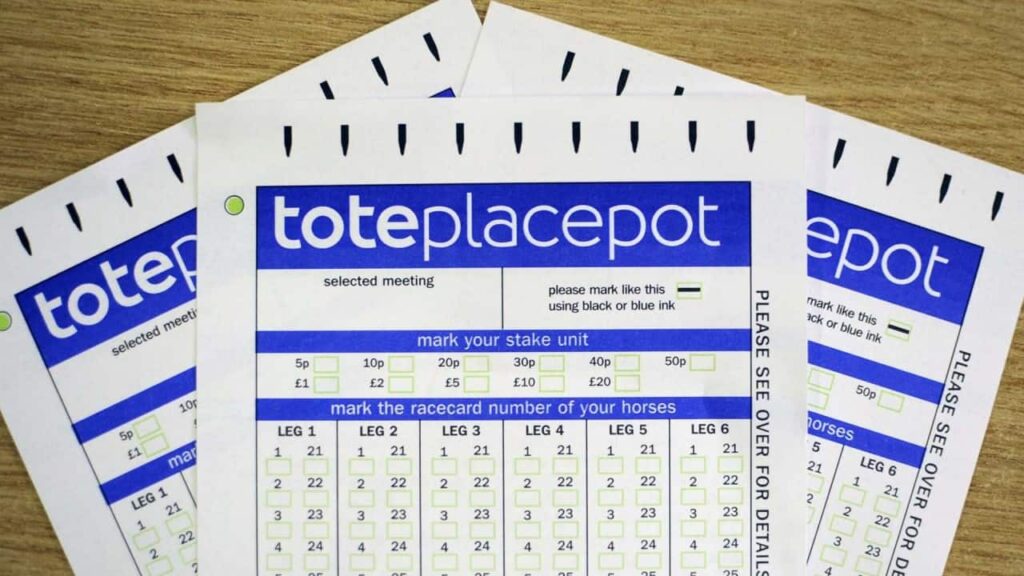
What is a Tote Placepot?
A Placepot is a much-loved bet, placed by both amateur and professional gamblers because it’s a means of winning a large pot of cash for a small outlay.
The bet involves selecting horses that “place” in the first six races at a race meeting.
The prize money is a pool of money made up of every bet placed on the Tote Placepot – this is then split between the lucky winners. This means the payout differs every time.
Every UK racecourse meeting will offer a placepot. This typically covers only the first six races of the meeting, unless they’re feeling generous and do more, and the minimum stake is 5p!
Free Placepot with Tote
Tote is offering all new or existing customers a Free Placepot every Saturday.
Opt-in using the link below, and you can claim a free £1 Placepot to use on any of Saturday’s Placepot pools.
The opt-in link will work from around 6 pm each Friday, but you can join Tote for free at any time.

New customers online only. Register and bet a min £/€5 at odds of 1/1 (2.0) or greater across sports or racing within 7 days of registration to qualify. Receive £/€10 Tote Credit, £/€10 Free Sports Bet within 48 hours of qualifying bet settlement. Qualifying bet is the first racing pool or sports bet added to bet slip. Voided/non-runner bets will not qualify; subsequent bet will be qualifying bet. 7-day expiry. 18+. One per customer. Selected customers only. Full T&Cs apply. Gambleaware.org.Full T&Cs apply.
Full T&C's ApplyWhat Is A Tote Placepot?
A Tote Placepot requires you to find a qualifying placed horse in each of six specified races at a meeting.
The standard Placepot generally covers the first six races.
You can select one horse in each leg or use several horses to create multiple combinations, known as permutations.
A basic ticket might look like this:
| Leg | Selection |
|---|---|
| Leg 1 | Horse A |
| Leg 2 | Horse B |
| Leg 3 | Horse C |
| Leg 4 | Horse D |
| Leg 5 | Horse E |
| Leg 6 | Horse F |
That is a single Placepot line.
If every horse achieves the required place in its race, the line survives all six legs and receives the appropriate share of the pool.
If Horse C fails to place in Leg 3, the line loses even if all five other selections qualify.
How Many Places Count In A Placepot?
The number of qualifying places depends on the number of runners and, in larger fields, whether the race is a handicap.
The standard Tote Placepot terms are:
| Race | Qualifying Places |
|---|---|
| 4 Or Fewer Runners | Winner Only |
| 5-7 Runners | 1st And 2nd |
| 8 Or More Runners | 1st, 2nd And 3rd |
| Handicap With 16+ Runners | 1st, 2nd, 3rd And 4th |
This is one of the first things to check when analysing a Placepot.
A four-runner race may look easier than a 16-runner handicap, but only the winner qualifies in the four-runner race. Four horses qualify in the large handicap.
Field size therefore changes both the difficulty of a leg and how you should construct the ticket.
Placepot Example
Consider a fictional six-race card.
You decide to use:
- Leg 1: Two Selections
- Leg 2: One Selection
- Leg 3: Three Selections
- Leg 4: One Selection
- Leg 5: Two Selections
- Leg 6: One Selection
Your Placepot contains:
2 × 1 × 3 × 1 × 2 × 1 = 12 lines
At 50p per line:
12 × £0.50 = £6 total stake
At 10p per line:
12 × £0.10 = £1.20 total stake
This is the Placepot calculation every bettor should understand before adding extra horses.
[INSERT BRITISH RACECOURSES PLACEPOT PERMUTATION SUPPORTING IMAGE HERE]
What Is A Placepot Perm?
A Placepot perm is created when you use more than one selection in one or more legs.
Suppose you select:
- Leg 1: Two Horses
- Leg 2: Two Horses
- Leg 3: One Horse
- Leg 4: Three Horses
- Leg 5: Two Horses
- Leg 6: One Horse
The number of lines is:
2 × 2 × 1 × 3 × 2 × 1 = 24
A 50p unit stake would cost:
24 × £0.50 = £12
The calculation gives you the number of lines. You then multiply the lines by your chosen unit stake to find the total cost.
How Quickly Can Placepot Permutations Grow?
The numbers can become large surprisingly quickly.
| Selections In Each Leg | Number Of Lines |
|---|---|
| 1 × 1 × 1 × 1 × 1 × 1 | 1 |
| 2 × 1 × 2 × 1 × 2 × 1 | 8 |
| 2 × 2 × 2 × 2 × 2 × 2 | 64 |
| 3 × 3 × 3 × 3 × 3 × 3 | 729 |
| 4 × 4 × 4 × 4 × 4 × 4 | 4,096 |
Selecting four horses in each race does not mean you have made 24 selections.
It creates 4,096 different six-leg combinations.
That is why the best Placepot tickets are rarely built by simply adding more horses to every difficult race.
What Is The Minimum Placepot Stake?
Tote currently allows very small online Placepot units.
Through Tote.co.uk, the standard Placepot permits 1p unit stakes, while the minimum total online bet is 50p.
Those two figures mean different things.
A 1p unit does not mean you can necessarily submit a single 1p Placepot ticket. The total bet must still satisfy the minimum total stake.
For example, a 50-line permutation at 1p per line creates:
50 × £0.01 = £0.50
Minimums can differ through bookmaker partners or other betting channels, so check the displayed bet slip rather than relying on an old printed minimum.
What Is A Placepot Banker?
A banker is a leg in which you make only one selection.
Bankers are central to Placepot construction because they keep the number of permutations under control.
Consider:
2 × 3 × 1 × 2 × 1 × 2
This creates:
24 lines
Legs 3 and 5 are bankers.
If you instead used two horses in those races:
2 × 3 × 2 × 2 × 2 × 2
you would have:
96 lines
The additional coverage has quadrupled the size of the ticket.
A strong banker therefore gives you more scope to spread selections in races where you have less confidence.
The risk is obvious. If your banker fails to achieve the required place, every line on the ticket loses.
New customers online only. Register and bet a min £/€5 at odds of 1/1 (2.0) or greater across sports or racing within 7 days of registration to qualify. Receive £/€10 Tote Credit, £/€10 Free Sports Bet within 48 hours of qualifying bet settlement. Qualifying bet is the first racing pool or sports bet added to bet slip. Voided/non-runner bets will not qualify; subsequent bet will be qualifying bet. 7-day expiry. 18+. One per customer. Selected customers only. Full T&Cs apply. Gambleaware.org.Full T&Cs apply.
Full T&C's ApplyHow To Choose A Placepot Banker
The shortest-priced favourite is not automatically the best banker.
You are looking for a horse with a strong probability of achieving the required finishing position.
Analyse the same factors that matter when assessing any horse race:
- Recent Form
- Race Class
- Handicap Rating And Weight
- Going
- Distance
- Course Suitability
- Draw
- Likely Pace
- Trainer Form
- Jockey Booking
- Field Size
- Number Of Qualifying Places

horse racing form guide explains how to assess a horse’s previous performances, while the
handicap racing guide covers weights and ratings.
A horse that wins infrequently can still make an excellent Placepot selection if it regularly runs to its level and finishes in the frame.
Should You Bank On The Favourite?
Sometimes.
A strong favourite in a race paying three places can have a very high probability of keeping your ticket alive.
The complication is that the Placepot is a pool bet.
You are competing for a share of the same pool as other successful tickets.
If an obvious odds-on favourite places, a large proportion of Placepot units may survive that leg.
If a vulnerable favourite finishes outside the qualifying places, many rival tickets can disappear.
That does not mean you should oppose favourites indiscriminately.
A 4/5 favourite that looks extremely solid may still be the correct banker. A weak-looking favourite at
5/2 in a competitive race presents a different decision.
Placepot analysis therefore involves both probability and pool popularity.
How Are Placepot Dividends Calculated?
Placepot betting uses a pool rather than conventional fixed odds.
Stakes from participants are combined to create the gross pool.
The standard Placepot deduction is currently 27%, leaving a net pool of 73% before the dividend is calculated from the successful units.
A simplified example illustrates the principle.
Suppose:
Gross Pool = £100,000
After a 27% deduction:
Net Pool = £73,000
If the equivalent of 100 £1 units survive all six legs, the simplified dividend would be:
£73,000 ÷ 100 = £730 to a £1 unit
A successful 50p unit would then be worth £365.
The actual Tote calculation and settlement rules govern real pools, but this example shows why Placepot dividends can vary so dramatically.
The prices of the six individual horses do not simply multiply together as they would in an accumulator.
Why Can Placepot Dividends Be So Different?
The number of surviving units has a major effect.
Imagine six heavily backed favourites all achieve a place.
Many tickets survive, so the pool is shared widely.
Now imagine an odds-on banker finishes outside the places in Leg 2 and another popular favourite fails in Leg 5.
A large number of units may disappear.
The remaining successful tickets then divide the net pool between fewer surviving units.
This explains why blindly following the most obvious six selections can be a poor approach even when those horses look likely to place.
What Is Tote+ On A Placepot?
Tote+ can enhance eligible bets placed directly through Tote digital channels.
Tote+ currently applies a 5% enhancement to eligible Placepot dividends, subject to the current Tote+ terms and the pool being designated as eligible.
The 10% enhancement applies to eligible Win and Place pools, not the standard Placepot.
Tote+ also has qualifying conditions, including a minimum qualifying dividend.
Tote+ guide covers the feature separately, but always check the current terms displayed by Tote before betting because promotions can change.
Tote Placepot Versus Fixed-Odds Betting
A Placepot behaves very differently from a conventional bookmaker bet.
| Feature | Tote Placepot | Fixed-Odds Bet |
|---|---|---|
| Price Known When Betting | No | Yes |
| Return Based On Pool | Yes | No |
| Six Legs | Standard Format | Optional |
| Selections Usually Need To Place | Yes | Depends On Bet |
| Multiple Horses Per Leg | Yes | Different Multiple Structure |
| Dividend Depends On Other Successful Stakes | Yes | No |
This distinction is why Placepot analysis should not simply copy a six-fold accumulator strategy.
horse racing betting sites comparison covers conventional bookmaker accounts, while the Placepot remains a specialist pool product.
Placepot Versus An Accumulator
A six-fold accumulator normally requires all six fixed-odds selections to win.
A Placepot works differently.
Your selections generally need to place, not win, and the final return comes from the pool dividend.
That changes the type of horse you might select.
A consistent runner with a strong probability of finishing second or third can be valuable in a Placepot even when you do not consider it the most likely winner.
How To Build A Better Placepot
A good Placepot starts with analysing the six races as a group rather than immediately choosing a horse in Leg 1.
Analyse All Six Legs First
Read the entire six-race sequence.
Identify the races where you have strong convictions and those where several horses have realistic chances.
This helps determine where to bank and where to spread.
Find Your Strongest Banker
A banker keeps the ticket affordable.
Look for a horse whose chance of achieving the required place appears stronger than the alternatives.
A banker does not need to win.
Identify The Most Difficult Legs
Large handicaps, races with lightly raced horses and contests containing several similarly rated runners can warrant additional coverage.
A difficult race is where a second or third selection may add genuine value to the ticket.
Check The Number Of Places
Do not assume every race pays three Placepot places.
A four-runner race is win-only under standard terms.
A 16-runner handicap pays four qualifying positions.
That can materially alter your assessment of a horse’s chance of keeping the ticket alive.
Calculate The Perm Before Adding More Horses
Every additional selection affects all the combinations connected to that leg.
A ticket can move from affordable to excessive with a few clicks.
Calculate the number of lines and total stake before confirming it.
Look For Vulnerable Popular Horses
A favourite that appears highly likely to place can be a sensible selection.
A favourite with doubts over the going, distance, draw, pace setup or current form deserves closer examination.
Successfully opposing a heavily used horse can transform the value of a Placepot ticket.
Set The Budget First
Decide how much you are prepared to stake before constructing the final permutation.
Then adjust the unit stake and coverage to fit that figure.
Do not build a huge perm first and justify the cost afterwards.
How Form Matters In A Placepot
Placepot analysis rewards reliability.
A horse with form figures such as:
2-3-2-4-2
may be more attractive for a Placepot than a runner showing:
1-8-7-1-9
depending on the races and conditions involved.
The second horse has won more recently, but its performances are volatile.
The first horse may have a stronger probability of occupying one of the required places.
Raw finishing positions are only a starting point. Check class, distance, going and how each race unfolded before treating consistency as meaningful.
How Going Affects Placepot Selections
Ground conditions can turn an apparently strong banker into a risky selection.
A horse with excellent Good-ground form may face a very different test on Heavy ground.
Look for evidence that the runner handles the expected conditions rather than assuming overall form transfers automatically.
horse racing going guide explains the official British going descriptions and how conditions affect races.
How The Draw Can Affect A Placepot
Draw bias matters most where stall position has a demonstrable effect on the race.
Sprints at some courses can favour particular sections of the track depending on distance, field size, going and rail configuration.
A horse does not become an automatic Placepot selection because it has a favourable draw, but the draw should form part of the wider race analysis.
This becomes particularly relevant when deciding between two closely matched runners.
How Pace Can Affect A Placepot
Pace is another reason a strong horse can fail to place.
A front-runner may face several rivals wanting the lead, producing an unsustainably strong early pace.
A hold-up horse can encounter traffic or find itself poorly positioned in a slowly run race.
Our horse racing pace bias and pace maps guides explain how race shape can affect performance.
For Placepots, you are asking a specific question:
Is the likely race setup conducive to this horse finishing in a qualifying position?
Using Multiple Selections In Difficult Legs
Multiple selections are useful when they buy meaningful protection.
Suppose a 14-runner handicap contains three runners you rate significantly above the rest.
Using all three may be justified if the surrounding legs contain strong bankers.
But selecting six horses simply because the race looks difficult can make the ticket expensive without giving you a genuine analytical edge.
Each additional selection should have a reason for being included.
What Happens With A Non-Runner?
A horse can become a non-runner after you have submitted your Placepot.
Under the standard Tote substitution procedure, your selection is transferred to the relevant Starting Price favourite.
If there are joint or co-favourites, the applicable Tote rules determine the replacement, with racecard number used to resolve the selection where required.
This means a late non-runner does not necessarily kill the Placepot ticket.
It can, however, leave you with a different horse from the one you originally analysed.
Can You Select The Favourite?
Yes.
Tote Placepot betting allows the use of the unnamed favourite under the applicable rules.
That is different from selecting a specific horse that happens to be favourite when you submit the bet.
The unnamed favourite is determined by the Tote’s settlement rules at the relevant point.
Understand that distinction before using it.
What Happens In A Dead Heat?
A dead heat can affect conventional fixed-odds returns because the stake may be divided according to dead-heat settlement rules.
Placepot treatment is different.
Where horses dead-heat for a qualifying Placepot position, the relevant horses are treated as placed for that leg under the Tote pool rules.
What Happens If A Race Is Abandoned?
A Placepot can still be settled when one of its scheduled legs becomes void, is abandoned or otherwise has no valid result under the applicable rules.
The remaining valid legs can determine the pool, with selections in the affected leg treated according to Tote’s settlement provisions.
If an entire meeting is abandoned before any relevant racing takes place, different void/refund provisions apply.
This is another reason to treat the Placepot as a specialist pool product rather than assuming normal accumulator settlement.
Can You Place A Placepot At Every UK Meeting?
Tote states that the standard Placepot is available at all UK and Irish meetings every day.
The six legs are defined for the individual pool.
The standard format should not be confused with Placepot7, which contains seven legs and can span races from different meetings.
British Racecourses has a separate Placepot7 guide for that product.
You can browse the complete UK racecourse directory when researching individual tracks and their characteristics.
Can You Place A Placepot Online?
Yes.
Placepots can be submitted online through Tote and through bookmakers offering access to Tote pools.
The online bet slip is particularly useful for permutations because it calculates the number of lines and total stake as you add selections.
Our Tote betting app review covers the mobile product separately.
Regular bookmaker users can compare alternative access through our Best Placepot Betting Sites page.
How To Place A Tote Placepot Online
The precise interface can change, but the process is straightforward:
- Log In To Your Tote Account
- Open The Multi-Leg Or Placepot Section
- Choose The Race Meeting
- Review All Six Placepot Legs
- Select At Least One Horse In Each Leg
- Add Extra Selections Where Required
- Check The Number Of Permutations
- Enter Your Unit Stake
- Check The Total Stake
- Confirm The Bet
Our Tote betting slips page includes examples of Placepot slips and other Tote bet types.
Can You Place A Placepot In A Betting Shop?
Yes, Tote pool bets can also be accessed through participating betting shops and other supported channels.
Traditional Placepot coupons use separate sections for each leg, allowing bettors to mark one or more selections in each race.
Online betting removes much of the manual arithmetic because the bet slip calculates the permutations.
Our betting shops near me directory covers high-street betting locations around the UK.
Can You Place A Placepot At The Racecourse?
Yes.
The Placepot has long been associated with a day at the races because a single bet can create interest across six races.
On-course access and minimum stakes can differ from Tote.co.uk, so check the terms displayed at the course.
Racegoers unfamiliar with the information shown on the card can use our guide to reading a racecard before making selections.
Tote Placepot Tips
British Racecourses publishes a separate daily page for Tote Placepot Tips.
Keeping daily selections separate from this page is deliberate.
This article answers the evergreen question “How does a Tote Placepot work?”
The tips page answers “Which horses are being selected for today’s Placepots?”
That separation gives both pages a clearer purpose.
Should You Follow Placepot Tips Blindly?
No.
A tip can identify a horse worth considering, but Placepot construction involves more than finding six individual selections.
A useful tip still needs to fit your overall permutation.
Consider:
- How Strong The Selection Is
- How Many Places Are Available
- Whether The Horse Should Be A Banker
- How Much Extra Coverage The Leg Needs
- How Popular The Selection Is Likely To Be
- How Adding It Changes The Total Cost
The ticket should work as a six-race structure.
Yes, a group can pool money to fund a larger Placepot.
This can allow more permutations without one person funding the entire stake.
The trade-off is that any return must be divided according to whatever arrangement the group has made.
For informal syndicates, agree the ownership percentages before placing the bet rather than after a winning ticket emerges.
Placepot Strategy: Survival Versus Value
One objective is obvious:
Survive all six legs.
But survival alone is not enough to guarantee an attractive return.
If your ticket consists entirely of the same obvious horses used by most of the pool, you may survive alongside a large number of other units.
The alternative is to deliberately take positions against one or more popular horses.
That increases the risk of elimination but can improve the potential dividend when the judgement is correct.
The strongest approach usually sits between the extremes.
Use dependable selections where their chance of placing justifies their popularity, then look for races where your analysis gives you a reason to differ from the crowd.
A More Strategic Placepot Example
Imagine the six legs look like this:
Leg 1: Competitive handicap with three credible selections.
Leg 2: Strong favourite in an eight-runner race.
Leg 3: Open novice event with two lightly raced contenders.
Leg 4: Reliable course specialist with favourable conditions.
Leg 5: Large-field handicap requiring three selections.
Leg 6: Two runners stand out on form.
A possible structure is:
3 × 1 × 2 × 1 × 3 × 2
That creates:
36 lines
At 25p per line:
£9 total stake
The two bankers allow wider coverage in Legs 1 and 5 without letting costs spiral.
This is a more disciplined approach than using two or three horses in every leg.
Common Placepot Mistakes
Adding Too Many Horses
More selections increase coverage but also multiply the cost.
Extra horses should earn their place on the ticket.
Ignoring The Number Of Qualifying Places
A four-runner race and a 16-runner handicap present very different Placepot problems.
Check the place terms before analysing the leg.
Treating The Favourite As An Automatic Banker
A favourite can be the right banker, but price alone is not enough.
Assess the horse, race conditions and likely pool popularity.
Confusing Lines With Stake
A 24-line Placepot does not automatically cost £24.
The cost depends on the unit stake.
Ignoring The Going
A strong form profile on Good ground does not guarantee the same performance on Soft or Heavy.
Ignoring Pace And Draw
A Placepot horse still needs the race to unfold favourably enough to achieve the required position.
Chasing Huge Dividends
Large historical payouts are memorable because they are unusual.
Do not build deliberately reckless tickets purely to chase an exceptional dividend.
Spending More Because You Survived Previously
Each Placepot is a separate bet.
A near miss yesterday does not make today’s ticket more likely to win.
Is A Tote Placepot Worth Betting?
The Placepot suits bettors who enjoy analysing a complete racecard and want one bet spanning several races.
Its main advantages are:
- Selections Usually Need To Place Rather Than Win
- Multiple Horses Can Be Used In Difficult Legs
- Small Unit Stakes Allow Flexible Permutations
- One Bet Can Cover Six Races
- Pool Dynamics Add A Strategic Element
Its main disadvantages are:
- One Failed Leg Can Eliminate The Ticket
- The Final Dividend Is Unknown When You Bet
- Large Permutations Can Become Expensive
- A 27% Pool Deduction Applies
- Popular Results Can Leave Many Successful Units Sharing The Pool
Neither list makes the Placepot inherently good or bad.
The important question is whether its structure suits how you like to analyse and bet on racing.
Tote Placepot Versus Placepot7
The standard Placepot contains six legs from a meeting.
Placepot7 contains seven legs and can use races from different meetings.
The underlying objective remains similar: find at least one qualifying placed horse in every leg.
Placepot7 can therefore suit bettors who enjoy the Placepot format but want a cross-meeting pool built around a selected sequence of prominent races.
The standard Placepot remains the more familiar race-meeting format.
Other Tote Pool Bets
The Placepot is one part of Tote’s wider pool-betting range.
Other products include bets based on winners, finishing orders and shorter or longer multi-leg sequences.
Our broader Tote horse racing page explains the operator and its main racing products.
The important distinction across Tote betting is that pool returns depend on money entering the pool and successful units rather than a bookmaker simply accepting your bet at fixed odds.
Tote Offers And Promotions
Tote promotions change frequently.
The old version of this page contained a Free Placepot every Saturday section and time-sensitive welcome-offer copy embedded directly into the evergreen explanation.
That type of promotion can become inaccurate quickly.
For current account promotions, use our dedicated Tote welcome offer page and check the current terms before betting.
This Placepot page should concentrate on mechanics and strategy so it remains useful when individual promotions change.
Frequently Asked Questions
What Is A Tote Placepot?
A Tote Placepot is a six-leg pool bet requiring at least one of your selections to achieve a qualifying place in each leg.
Do Placepot Horses Have To Win?
Usually not. Your selection needs to finish within the qualifying Placepot positions for that race. With four or fewer runners, only the winner qualifies under standard terms.
How Many Races Are In A Placepot?
The standard Tote Placepot contains six legs, generally the first six races at a meeting.
How Many Horses Can I Select In Each Leg?
You can use multiple selections. Each additional selection creates more permutations and can increase the total stake.
What Is A Placepot Banker?
A banker is the only selection used in a particular leg. It reduces the number of permutations but means every line loses if that horse fails to qualify.
How Do You Calculate A Placepot?
Multiply the number of selections in each of the six legs to calculate the number of lines. Then multiply the number of lines by your unit stake.
What Is The Minimum Online Placepot Stake?
Tote currently permits 1p online units for the standard Placepot, with a minimum total stake of 50p through Tote.co.uk. Other channels can use different minimums.
What Is The Placepot Pool Deduction?
The standard Placepot deduction is currently 27%, leaving a net pool of 73% before successful units are used to determine the dividend.
What Is Tote+ On A Placepot?
Eligible Placepot bets placed through Tote digital channels can currently receive a 5% Tote+ enhancement, subject to the applicable terms and pool eligibility.
Is Tote+ 10% On Placepots?
No. Current published Tote+ terms distinguish between products. Eligible Win and Place pools receive a 10% enhancement, while eligible Placepot pools are in the 5% category.
What Happens If My Placepot Horse Is A Non-Runner?
Under standard Tote rules, a qualifying non-runner is generally substituted by the applicable Starting Price favourite according to Tote’s replacement rules.
Can I Place A Placepot Through A Bookmaker?
Yes. Several bookmakers provide access to Tote pool bets. Our Best Placepot Betting Sites page compares the available routes.
Can I Place A Placepot At A Racecourse?
Yes. The Placepot is available through supported on-course Tote facilities as well as online.
Is A Placepot The Same As An Accumulator?
No. A Placepot is a pool bet based primarily on placed horses across six legs. An accumulator normally combines fixed odds and requires every selection to win.
Does Best Odds Guaranteed Apply To Placepots?
Not in the conventional bookmaker sense. A Placepot does not have a fixed price when you enter the pool, so Best Odds Guaranteed does not operate in the same way.
Do Bookmaker Extra Places Apply To A Placepot?
No. Placepot settlement follows the applicable Tote pool place terms rather than a bookmaker’s promotional each-way concessions.
Where Can I Find Today’s Placepot Selections?
British Racecourses publishes today’s Tote Placepot tips separately so daily selections do not interfere with the evergreen purpose of this page.
Summary
The Tote Placepot requires you to find a qualifying placed horse in each of six races.
You can use one selection in every leg for a single line or add extra horses to create permutations. The number of lines is calculated by multiplying the selections in each leg, after which the unit stake determines the total cost.
The strongest tickets are built around the entire six-race sequence. Bank where you have a strong opinion, spread where the race genuinely requires more coverage, check the number of qualifying places and calculate the total stake before confirming the bet.
Form, going, handicap ratings, pace, draw and course suitability all remain relevant because a Placepot selection still has to perform well enough to reach the required position.
Pool dynamics add another layer. Popular horses surviving can leave many tickets alive, while the failure of a heavily selected favourite can remove a substantial proportion of competing units.
That balance between survival, permutation cost and pool value is what makes the Tote Placepot a distinct form of horse racing betting.











